



Understanding Customer Acquisition Cost in E-commerce
Customer Acquisition Cost (CAC) represents the total expense required to convert a prospect into a paying customer. For e-commerce businesses, this metric is critical for sustainable growth and profitability.How to Calculate Your E-commerce CAC
The basic formula for calculating CAC is:
CAC = Total Marketing and Sales Costs ÷ Number of New Customers Acquired
For accurate calculations, include all acquisition-related expenses:
- Advertising spend across all platforms
- Marketing team salaries and agency fees
- Content creation and creative costs
- Sales team expenses related to acquisition
- Technology costs for marketing tools
- SEO and content marketing investments
Industry Benchmarks: How Does Your CAC Compare?
| E-commerce Industry | Average CAC | Healthy CLV:CAC Ratio |
| Fashion & Apparel | $129 | 3:1 |
| Health & Beauty | $127 | 3:1 |
| Home & Furniture | $129 | 4:1 |
| Electronics | $377 | 3:1 |
| Arts & Entertainment | $21 | 2:1 |
Calculate Your Current CAC
Download our free CAC Calculator Template to benchmark your current acquisition costs and identify opportunities for improvement.
Download Free CAC Calculator5 AI-Powered Strategies to Reduce Customer Acquisition Cost
Artificial intelligence is transforming how e-commerce businesses acquire customers by eliminating guesswork, automating optimization, and delivering unprecedented precision. Let’s explore five proven AI strategies that can significantly reduce your CAC.1. AI-Driven Precision Targeting
How It Works
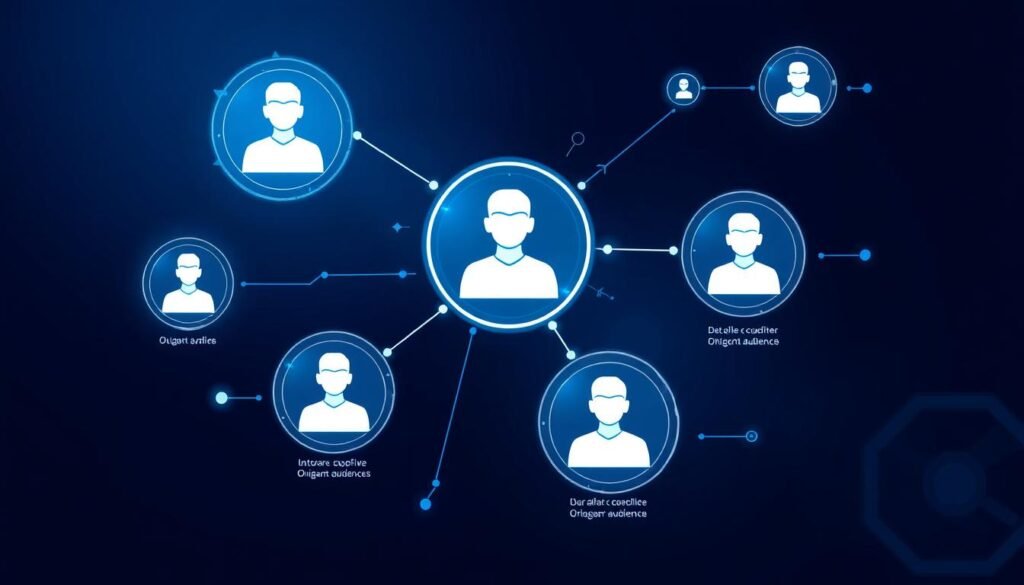
AI targeting analyzes your existing customer data to identify patterns and behaviors that indicate high-value prospects. Unlike traditional demographic targeting, AI examines hundreds of variables including purchase history, browsing behavior, engagement patterns, and even external data points to create highly specific audience segments.Implementation Steps
- Connect your CRM, e-commerce platform, and advertising accounts to create a unified data foundation
- Identify your highest-value customer segments based on purchase frequency, average order value, and retention
- Deploy AI lookalike modeling to find prospects with similar characteristics to your best customers
- Create targeted campaigns for each high-potential segment with customized messaging
- Implement continuous optimization based on conversion data
Real-World Example
Case Study: Fashion Retailer Reduces CAC by 42%
A mid-sized fashion e-commerce brand was struggling with rising acquisition costs across Facebook and Instagram. After implementing AI-powered lookalike modeling:- They identified that their highest-value customers shared specific browsing patterns and purchase timing
- AI created precise lookalike audiences based on these behavioral patterns rather than just demographics
- Ad spend was automatically allocated to the highest-performing segments
- Result: 42% reduction in CAC while maintaining the same customer volume
Expected ROI Impact
E-commerce businesses implementing AI-driven targeting typically see a 25-40% reduction in customer acquisition costs within the first 60 days, with continued improvements as the AI models learn and refine over time.2. Conversion Rate Optimization with AI Personalization
How It Works
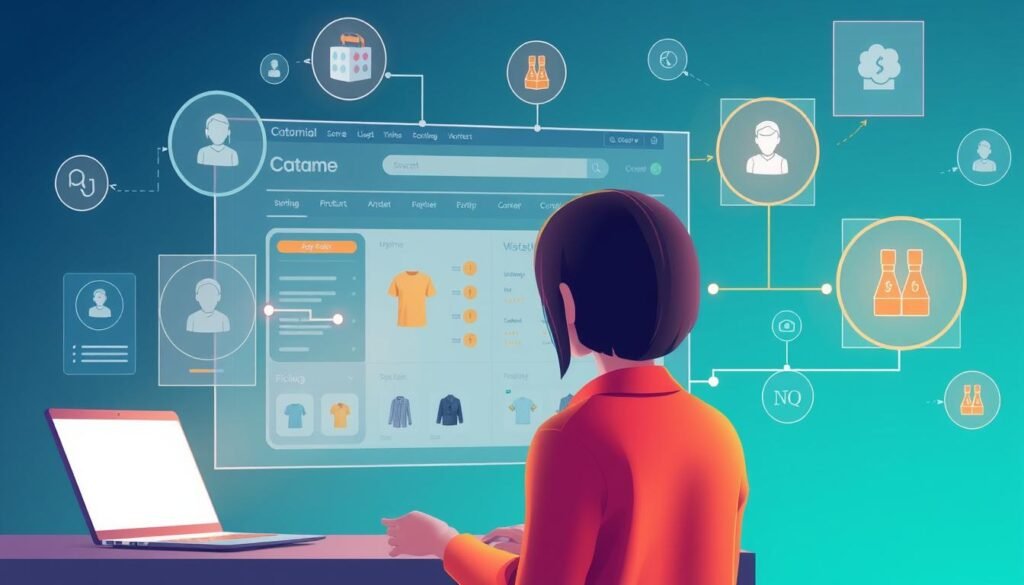
AI personalization dynamically adjusts content, offers, and user experiences based on individual visitor behavior and preferences. By delivering the right message to the right person at the right time, conversion rates increase significantly, spreading your acquisition costs across more customers.Implementation Steps
- Implement an AI personalization engine on your e-commerce site
- Create dynamic content variations for key landing pages and product descriptions
- Set up personalized product recommendations based on browsing history and purchase intent
- Deploy dynamic pricing and offer strategies for different customer segments
- Implement A/B testing at scale to continuously optimize conversion elements
Real-World Example
Case Study: Home Goods Retailer Increases Conversions by 31%
A home goods e-commerce store implemented AI personalization across their product pages and checkout flow:- The AI analyzed visitor behavior in real-time to identify purchase intent signals
- Product descriptions and imagery were dynamically adjusted based on visitor preferences
- Personalized offers were presented at optimal moments in the customer journey
- Result: 31% increase in conversion rate, effectively reducing CAC by 23%
Expected ROI Impact
AI personalization typically delivers a 15-30% improvement in conversion rates within 90 days of implementation, with the most significant gains seen in businesses with diverse product catalogs and customer segments.3. Predictive Analytics for Lead Scoring and Prioritization
How It Works
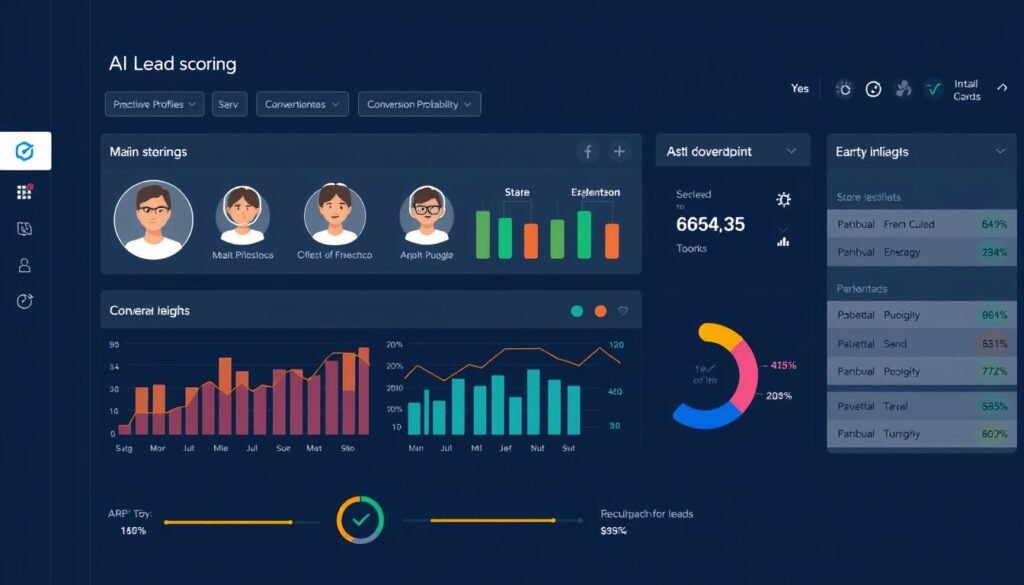
Predictive analytics uses machine learning to identify which prospects are most likely to convert, allowing you to focus resources on high-potential leads. By analyzing historical conversion data, AI models can predict future behavior with remarkable accuracy, eliminating wasted spend on low-quality prospects.Implementation Steps
- Integrate your CRM, marketing automation, and e-commerce platforms
- Implement an AI-powered predictive analytics solution
- Train the model using historical customer data and conversion outcomes
- Create lead scoring rules based on predictive conversion probability
- Prioritize marketing and sales resources based on predictive scores
Real-World Example
Case Study: Electronics Retailer Cuts Ad Waste by 38%
An electronics e-commerce business implemented predictive lead scoring to optimize their advertising spend:- The AI analyzed thousands of past transactions to identify patterns that indicated purchase readiness
- Visitors were scored in real-time based on their likelihood to convert
- Marketing budgets were automatically reallocated toward high-scoring segments
- Result: 38% reduction in wasted ad spend with 12% increase in overall conversions
Expected ROI Impact
Businesses implementing predictive lead scoring typically see a 20-35% improvement in marketing efficiency within the first quarter, with the most significant gains coming from reduced spend on low-potential prospects.4. AI-Powered Remarketing and Abandoned Cart Recovery
How It Works
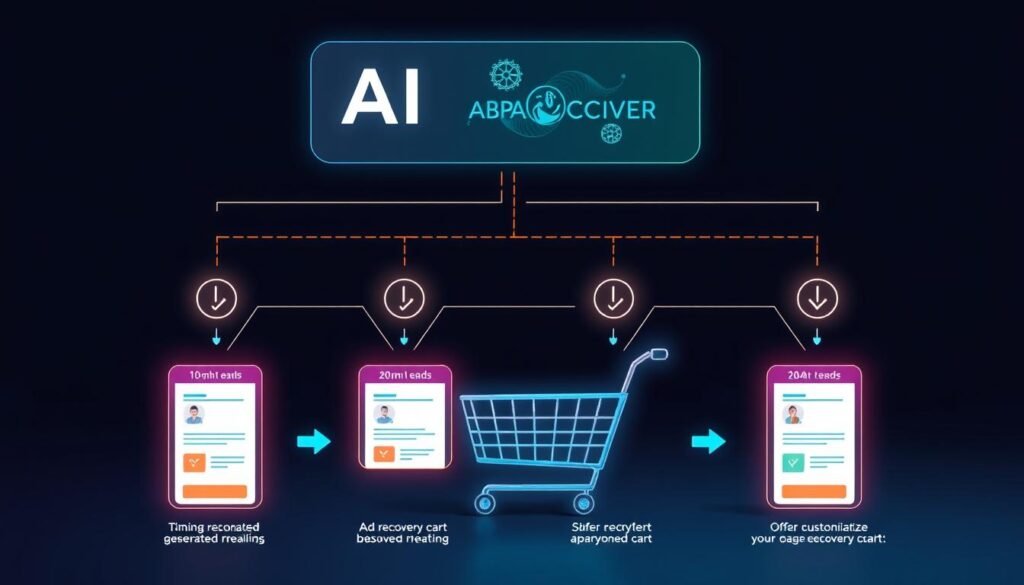
AI remarketing goes beyond simple cart abandonment emails by creating highly personalized recovery sequences based on individual behavior, preferences, and purchase intent. By analyzing why customers abandon and what motivates them to return, AI can dramatically improve recovery rates without increasing costs.Implementation Steps
- Implement an AI-powered remarketing solution that integrates with your e-commerce platform
- Create dynamic content templates for recovery messages
- Set up behavioral triggers based on abandonment patterns
- Implement personalized incentive strategies based on customer value and intent
- Establish multi-channel recovery sequences (email, ads, SMS)
Real-World Example
Case Study: Beauty Brand Recovers 28% More Abandoned Carts
A beauty e-commerce store implemented AI-powered cart recovery:- The AI analyzed abandonment patterns to identify optimal timing for recovery messages
- Recovery sequences were personalized based on customer history and cart value
- Incentives were dynamically adjusted based on predicted conversion probability
- Result: 28% increase in cart recovery rate with only 5% increase in recovery costs
Expected ROI Impact
E-commerce businesses implementing AI-powered remarketing typically recover 15-30% more abandoned carts compared to traditional methods, with an average CAC reduction of 18-25% for these recovered customers.5. Automated Campaign Optimization with AI
How It Works
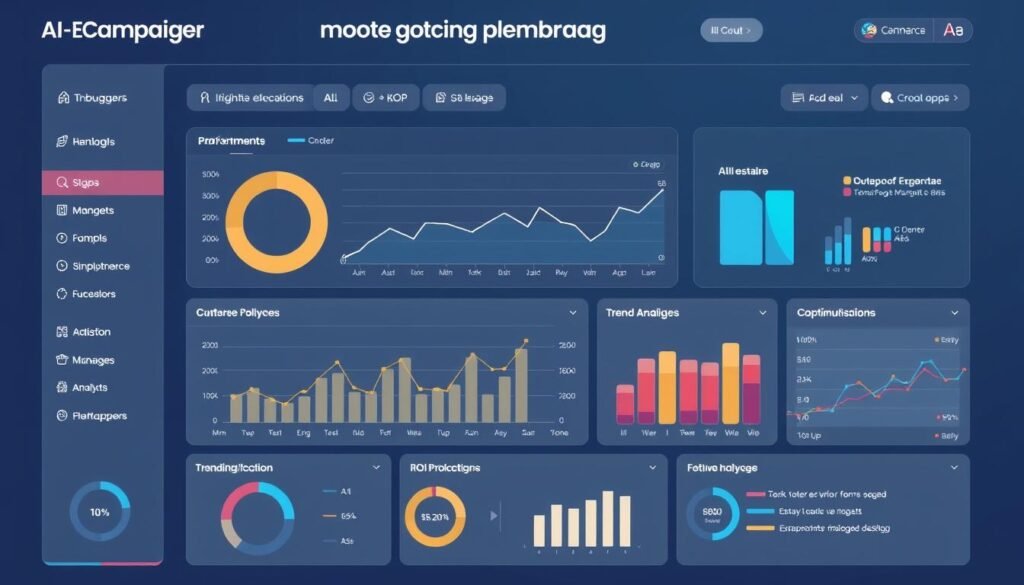
AI campaign optimization continuously analyzes performance data across all marketing channels, automatically adjusting bids, budgets, and targeting parameters to maximize results. Unlike manual optimization, AI can make thousands of micro-adjustments in real-time, ensuring your marketing spend flows to the highest-performing opportunities.Implementation Steps
- Implement an AI marketing optimization platform that connects to your advertising accounts
- Set clear campaign objectives and KPIs
- Establish budget parameters and optimization rules
- Enable automated bid management and budget allocation
- Implement cross-channel attribution modeling
Real-World Example
Case Study: Outdoor Retailer Reduces CAC by 37%
An outdoor gear e-commerce business implemented AI campaign optimization across Google, Facebook, and Instagram:- The AI continuously analyzed performance data across all channels and campaigns
- Budget was automatically reallocated from underperforming to high-performing segments
- Bid strategies were dynamically adjusted based on conversion probability
- Result: 37% reduction in overall CAC with 22% increase in ROAS
Expected ROI Impact
Businesses implementing AI campaign optimization typically see a 20-40% improvement in marketing efficiency within 30-60 days, with continued optimization as the AI learns from performance data.Comparison of Top AI Tools for Reducing E-commerce CAC
With numerous AI solutions available for e-commerce customer acquisition, choosing the right tools for your business can be challenging. This comparison will help you identify the best options based on your specific needs and budget.| AI Tool | Primary Function | Key Features | Pricing Tier | Best For |
| Enhencer AI | Audience Targeting & Lookalike Modeling | AI lookalike audiences, Predictive targeting, Multi-channel optimization | $299-$999/mo | Mid-size e-commerce with diverse product catalogs |
| Dynamic Yield | Personalization & CRO | Product recommendations, Dynamic content, A/B testing at scale | $1,000-$5,000/mo | Large e-commerce with high traffic volume |
| Klaviyo | Email Marketing & Remarketing | Predictive sending, Behavioral segmentation, Automated flows | $150-$1,000/mo | E-commerce focused on retention and remarketing |
| Marketo | Lead Scoring & Nurturing | Predictive lead scoring, Multi-touch attribution, Revenue optimization | $1,000-$3,000/mo | B2B e-commerce with complex sales cycles |
| Albert AI | Campaign Optimization | Autonomous campaign management, Cross-channel optimization, Predictive budgeting | $2,000-$10,000/mo | Enterprise e-commerce with large ad budgets |
Find the Right AI Solution for Your Business
Get a personalized recommendation based on your specific e-commerce needs, budget, and goals.
Request Free ConsultationImplementation Roadmap: Integrating AI into Your E-commerce Marketing
Successfully implementing AI to reduce customer acquisition costs requires a strategic approach. This roadmap will guide you through the process of integrating AI into your existing e-commerce marketing workflows.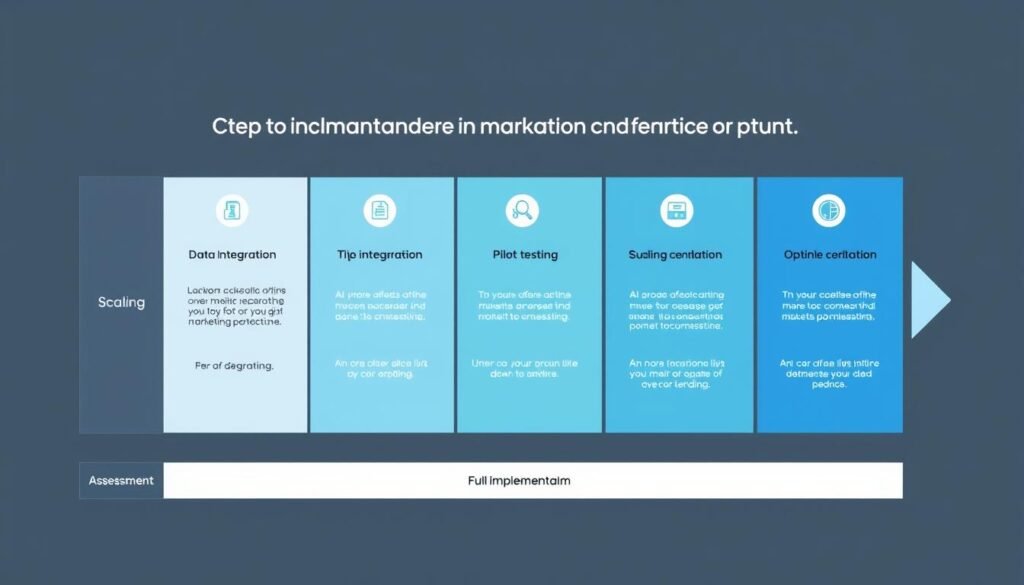
Phase 1: Assessment and Foundation (Weeks 1-2)
- Audit current CAC metrics – Calculate your current CAC by channel and segment to establish baselines
- Identify high-impact opportunities – Determine which areas of your acquisition funnel have the greatest inefficiencies
- Evaluate data readiness – Assess the quality and accessibility of your customer and marketing data
- Define clear objectives – Set specific, measurable goals for CAC reduction and ROI improvement
Phase 2: Data Integration and Preparation (Weeks 3-4)
- Connect data sources – Integrate your CRM, e-commerce platform, advertising accounts, and analytics tools
- Implement tracking – Ensure proper attribution tracking across all marketing channels
- Clean historical data – Prepare clean, structured data for AI model training
- Establish measurement framework – Set up dashboards to track CAC and related metrics
Phase 3: Pilot Implementation (Weeks 5-8)
- Select initial AI solution – Start with one high-impact area (e.g., audience targeting or remarketing)
- Run controlled tests – Implement AI alongside existing methods to measure impact
- Gather and analyze results – Compare performance metrics between AI and traditional approaches
- Refine and optimize – Make adjustments based on initial results
Phase 4: Scaling and Integration (Weeks 9-12)
- Expand successful pilots – Scale AI implementation across additional channels and campaigns
- Integrate multiple AI solutions – Implement complementary AI tools that work together
- Train team members – Ensure marketing team understands how to work with AI tools
- Develop operational processes – Create workflows that incorporate AI insights into decision-making
Phase 5: Continuous Optimization (Ongoing)
- Monitor performance – Continuously track CAC and related metrics against baselines
- Refine AI models – Regularly update and retrain AI models with new data
- Test new approaches – Experiment with emerging AI capabilities and techniques
- Scale successful strategies – Allocate more resources to highest-performing AI initiatives
Implementation Tip: Start Small, Scale Fast
Begin with a single high-impact area where AI can deliver quick wins. Use the success and learnings from this initial implementation to build momentum and justify broader adoption across your marketing operations.Common Pitfalls to Avoid When Implementing AI for CAC Reduction
While AI offers tremendous potential for reducing customer acquisition costs, there are several common mistakes that can limit its effectiveness. Being aware of these pitfalls will help you maximize your ROI and achieve sustainable CAC reduction.Poor Data Quality and Integration
AI systems are only as good as the data they’re trained on. Incomplete, inaccurate, or siloed data will significantly limit AI effectiveness.How to Avoid:
- Conduct a thorough data audit before implementation
- Invest in proper data integration across all platforms
- Implement data governance processes to maintain quality
- Use data cleaning and enrichment services if necessary
Unrealistic Expectations and Timelines
AI requires time to learn and optimize. Expecting immediate dramatic results can lead to premature abandonment of promising initiatives.How to Avoid:
- Set realistic timelines for implementation and results
- Establish clear benchmarks and incremental goals
- Focus on trend improvements rather than day-to-day fluctuations
- Educate stakeholders about AI learning curves
Over-Automation Without Human Oversight
Completely removing human judgment from the process can lead to missed opportunities and potential brand risks.How to Avoid:
- Implement AI as an augmentation to human expertise, not a replacement
- Establish clear guidelines and guardrails for AI systems
- Maintain regular human review of AI decisions and recommendations
- Create feedback loops between AI insights and human strategy
Focusing on CAC Without Considering Quality
Reducing CAC at the expense of customer quality can harm long-term business health and lifetime value.How to Avoid:
- Track customer quality metrics alongside CAC
- Monitor CLV:CAC ratio rather than just CAC
- Implement quality scoring for new customer segments
- Balance acquisition efficiency with customer value
Tool Proliferation Without Integration
Implementing multiple AI tools that don’t work together creates inefficiency and data conflicts.How to Avoid:
- Develop a cohesive AI strategy before selecting tools
- Prioritize solutions with strong integration capabilities
- Create a centralized data foundation for all AI tools
- Implement proper attribution across all systems
Neglecting Privacy and Compliance
AI implementations that ignore privacy regulations can lead to legal issues and customer trust problems.How to Avoid:
- Ensure all AI solutions are compliant with relevant regulations (GDPR, CCPA, etc.)
- Implement proper consent management
- Be transparent with customers about data usage
- Regularly audit AI systems for compliance
Future Trends in AI for E-commerce Customer Acquisition
The landscape of AI-powered customer acquisition is rapidly evolving. Understanding emerging trends will help you stay ahead of the competition and continue to reduce your CAC as technology advances.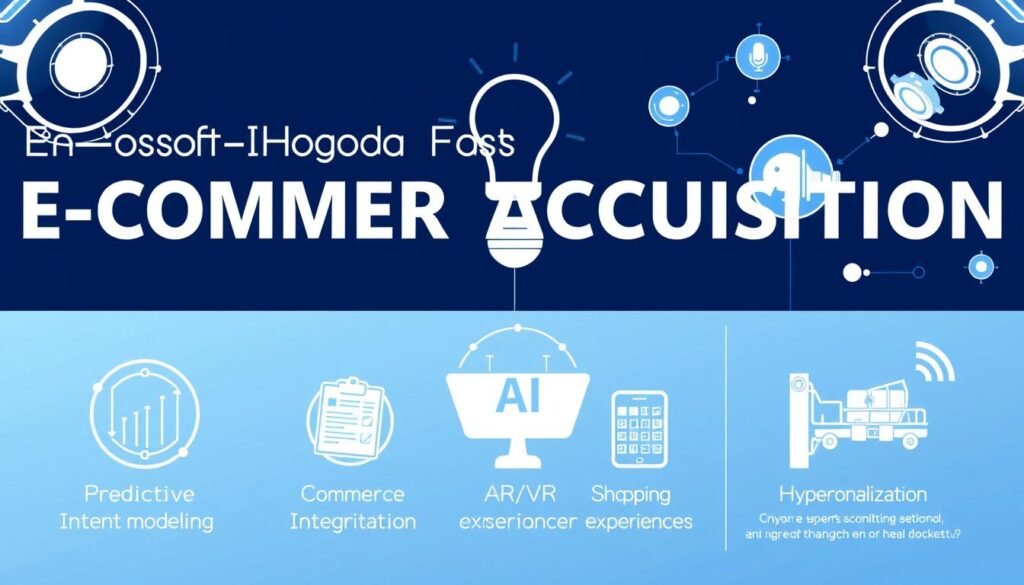
Predictive Intent Modeling
Beyond behavior analysis, AI is evolving to predict customer intent before explicit signals appear. These systems will identify potential customers earlier in their journey, allowing for more efficient acquisition strategies and lower costs. For example, AI might detect subtle browsing patterns that indicate future purchase intent, enabling you to target these prospects with highly relevant messaging before competitors even recognize them as potential customers.Voice and Visual Search Optimization
As voice assistants and visual search technologies become more prevalent, AI will optimize customer acquisition across these emerging channels. E-commerce businesses that leverage AI to optimize for voice and visual search will capture high-intent traffic at lower costs. This includes optimizing product data for voice queries, implementing visual search capabilities, and creating AI-driven content that aligns with how consumers use these technologies.Zero-Party Data Strategies
With increasing privacy regulations, AI will help businesses leverage zero-party data (information customers intentionally share) more effectively. AI-powered preference centers and interactive experiences will collect valuable customer data while respecting privacy. These systems will enable highly personalized acquisition strategies without relying on third-party cookies or tracking, maintaining efficiency even as privacy restrictions increase.Autonomous Creative Optimization
AI is beginning to generate and optimize creative assets automatically, testing thousands of variations to identify the most effective messaging, imagery, and offers for each customer segment. This capability will dramatically reduce creative production costs while improving conversion rates, leading to significant CAC reductions across all marketing channels.Cross-Platform Customer Journey Orchestration
Advanced AI systems will orchestrate seamless customer journeys across all touchpoints, automatically adjusting messaging and offers based on where each prospect is in their decision process. This holistic approach will eliminate the inefficiencies of siloed channel strategies, ensuring that acquisition budgets are allocated optimally across the entire customer journey.Stay Ahead of the Curve
Subscribe to our AI E-commerce Trends newsletter to receive quarterly updates on emerging technologies and strategies for reducing customer acquisition costs.
Subscribe to AI Trends NewsletterConclusion: Your Action Plan for Reducing CAC with AI
Reducing customer acquisition costs is no longer optional for e-commerce businesses looking to remain competitive and profitable. AI-powered solutions offer unprecedented opportunities to optimize your acquisition strategy, eliminate wasteful spending, and target high-value customers with precision.Key Takeaways
- AI targeting and lookalike modeling can reduce wasted ad spend by 25-40% by focusing on high-potential prospects
- Conversion rate optimization through AI personalization typically improves conversion rates by 15-30%
- Predictive analytics and lead scoring can improve marketing efficiency by 20-35% by prioritizing high-value prospects
- AI-powered remarketing recovers 15-30% more abandoned carts compared to traditional methods
- Automated campaign optimization delivers 20-40% improvement in marketing efficiency across channels
Your Next Steps
- Calculate your current CAC by channel and segment to establish baselines
- Identify your highest-impact opportunity for AI implementation based on your specific challenges
- Select an AI solution that addresses your priority area and integrates with your existing systems
- Implement a controlled pilot to measure impact and gather learnings
- Scale successful strategies across additional channels and campaigns
Ready to Reduce Your Customer Acquisition Costs?
Get a free, personalized CAC reduction analysis and implementation plan tailored to your specific e-commerce business.
Request Your Free CAC AnalysisFrequently Asked Questions
How quickly can AI reduce my e-commerce customer acquisition costs?
Most e-commerce businesses see initial CAC improvements within 30-60 days of implementing AI solutions. The timeline varies based on your traffic volume, data quality, and specific implementation. Simple optimizations like AI-powered bid management can show results in as little as two weeks, while more complex strategies like predictive lead scoring may take 60-90 days to reach full effectiveness as the AI learns from your data.
What’s the minimum budget needed to implement AI for CAC reduction?
While enterprise-level AI solutions can cost thousands per month, there are now accessible options for businesses of all sizes. Many platforms offer entry-level plans starting around 0-500 monthly, with costs scaling based on traffic volume and feature requirements. For smaller e-commerce businesses, focusing on one high-impact area (like AI remarketing or audience targeting) provides the best initial ROI before expanding to more comprehensive solutions.
How does AI marketing work with privacy regulations like GDPR and CCPA?
Modern AI marketing platforms are designed with privacy compliance in mind. They focus on using first-party data (information collected directly from your customers with consent) rather than relying on third-party cookies. Many AI solutions now include built-in consent management, data anonymization, and privacy-safe modeling techniques. When evaluating AI tools, always verify their compliance features and ensure they align with the specific regulations in your markets.
Do I need a data scientist to implement AI for customer acquisition?
Most modern AI marketing platforms are designed for marketers, not data scientists. They feature user-friendly interfaces, pre-built models, and automated optimization that requires minimal technical expertise. While having data expertise on your team can help with advanced customization, it’s not necessary for implementation and basic operation. Many vendors also offer onboarding support and managed services to help you get started without specialized in-house expertise.
How do AI solutions integrate with my existing e-commerce platform?
Most AI marketing solutions offer direct integrations with popular e-commerce platforms like Shopify, WooCommerce, and Magento. These integrations typically use API connections or pre-built plugins that can be installed with minimal technical effort. For custom e-commerce platforms, most AI vendors provide API documentation and implementation support. When evaluating solutions, verify their compatibility with your specific platform and the depth of integration they offer.