


In today’s digital landscape, businesses are drowning in data but starving for insights. The volume, velocity, and variety of information flowing through organizations have reached unprecedented levels, making traditional analysis methods inadequate. Many companies find themselves collecting massive amounts of data without the ability to extract meaningful value from it. This is where AI analytics software steps in, transforming raw numbers into actionable intelligence that drives strategic decisions.
The Growing Challenge of Data Complexity
Organizations across industries face similar challenges when it comes to data analysis. The sheer volume of information generated daily—from customer interactions and operational metrics to market trends and competitive intelligence—has outpaced human capacity for manual analysis. According to recent studies, companies use less than 50% of their collected data for decision-making, leaving valuable insights untapped.
Common Data Analysis Challenges
- Information overload from multiple disconnected sources
- Time-consuming manual analysis processes
- Difficulty identifying meaningful patterns in complex datasets
- Inability to process unstructured data (text, images, video)
- Lack of predictive capabilities for forward-looking decisions
- Inconsistent data quality across systems
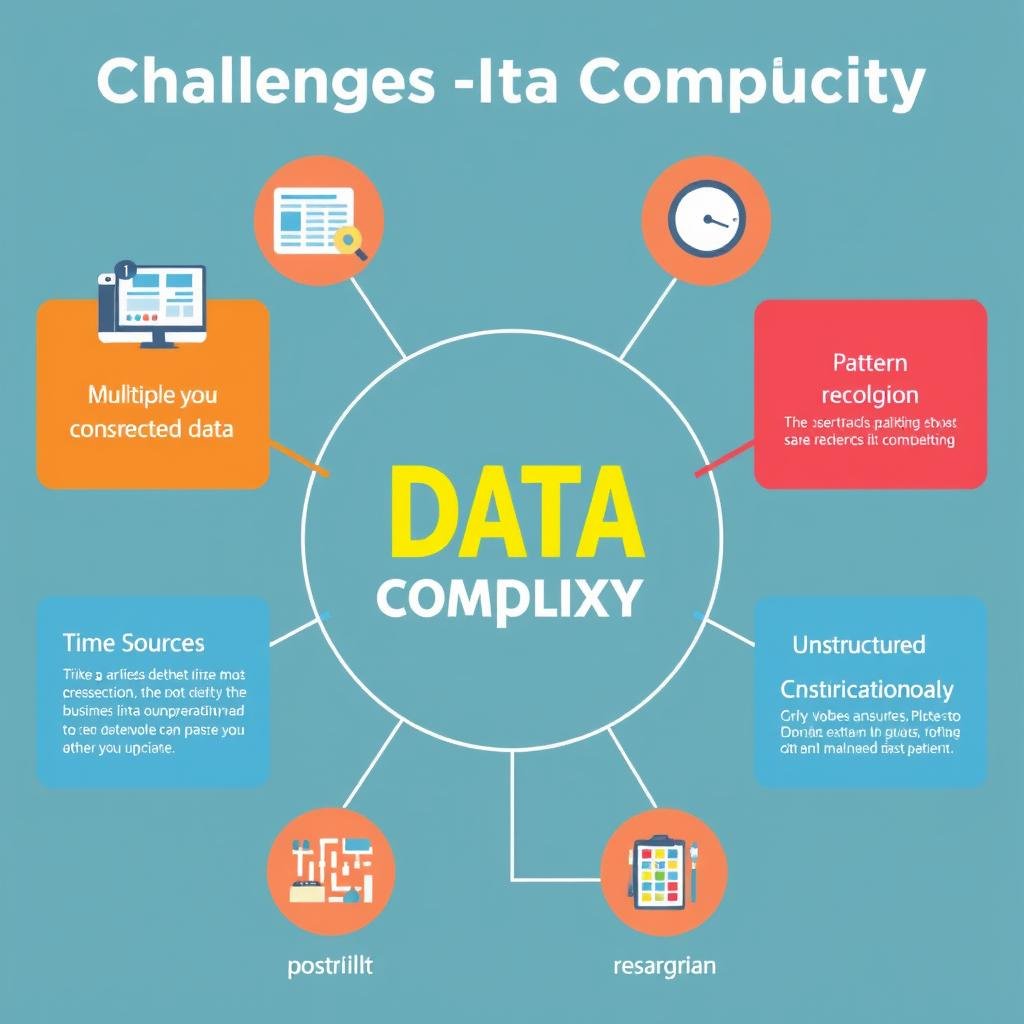
These challenges create a significant gap between data collection and value creation. Traditional business intelligence tools, while useful for historical reporting, often fall short when it comes to uncovering hidden insights, identifying non-obvious correlations, or predicting future trends with accuracy. This is precisely where AI analytics software makes a transformative difference.
What Is AI Analytics Software?
AI analytics software combines artificial intelligence technologies—including machine learning, natural language processing, and computer vision—with traditional data analysis methods to automate insight discovery and enhance decision-making. Unlike conventional analytics tools that require analysts to know what questions to ask, AI-powered solutions can identify patterns, anomalies, and opportunities that humans might miss.
How AI Analytics Differs from Traditional Analytics
| Aspect | Traditional Analytics | AI Analytics |
| Analysis Approach | Retrospective, query-based | Proactive, pattern-seeking |
| Data Processing | Primarily structured data | Structured and unstructured data |
| Insight Generation | Manual, hypothesis-driven | Automated, discovers unknown patterns |
| Predictive Capability | Limited, requires separate modeling | Built-in, continuously improving |
| User Interface | Technical, query-based | Natural language, conversational |
| Scale | Performance degrades with data volume | Designed for big data environments |
At its core, AI analytics software transforms how organizations interact with their data—shifting from manual exploration to automated discovery, from reactive reporting to proactive intelligence, and from isolated analysis to integrated decision support.
Key Capabilities of AI Analytics Software
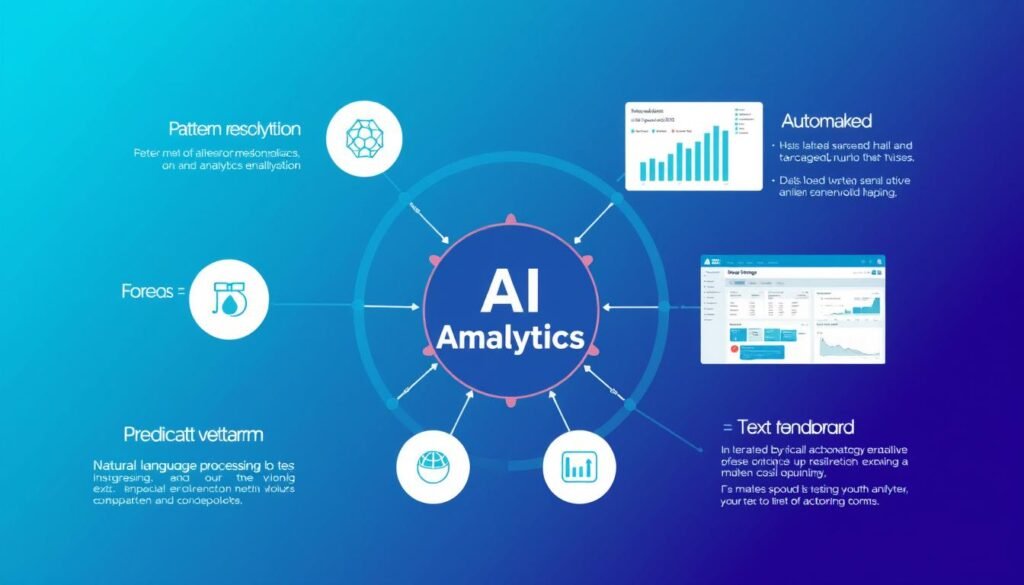
Modern AI analytics platforms leverage several advanced technologies to extract maximum value from organizational data. These capabilities work together to create a comprehensive analysis ecosystem that goes far beyond traditional reporting.
Pattern Recognition and Anomaly Detection
AI analytics excels at identifying patterns that would be impossible for humans to detect manually. Using sophisticated algorithms, these systems can analyze billions of data points to discover correlations, trends, and outliers. This capability is particularly valuable for:
- Detecting unusual customer behaviors that may indicate fraud
- Identifying operational inefficiencies across complex processes
- Spotting emerging market trends before competitors
- Recognizing quality issues in manufacturing before they cause failures
See Pattern Recognition in Action
Discover how AI analytics can automatically identify patterns in your data that you might be missing. Request a personalized demo today.
Request a DemoPredictive Analytics and Forecasting
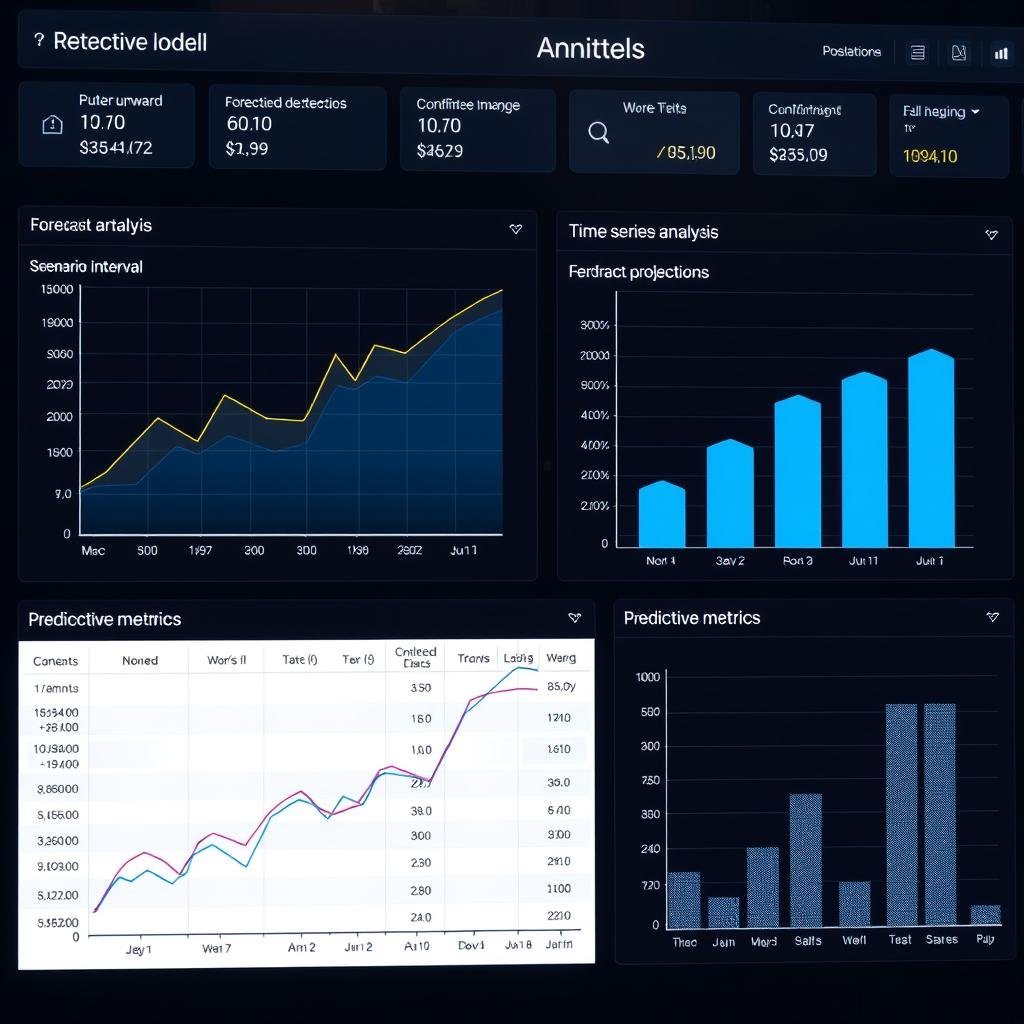
Rather than simply reporting what happened in the past, AI analytics software can forecast future outcomes with remarkable accuracy. By analyzing historical data patterns and external variables, these systems can predict:
- Customer purchasing behavior and lifetime value
- Inventory requirements to prevent stockouts
- Equipment maintenance needs before failures occur
- Market demand fluctuations and seasonal trends
- Resource requirements for upcoming projects
Natural Language Processing
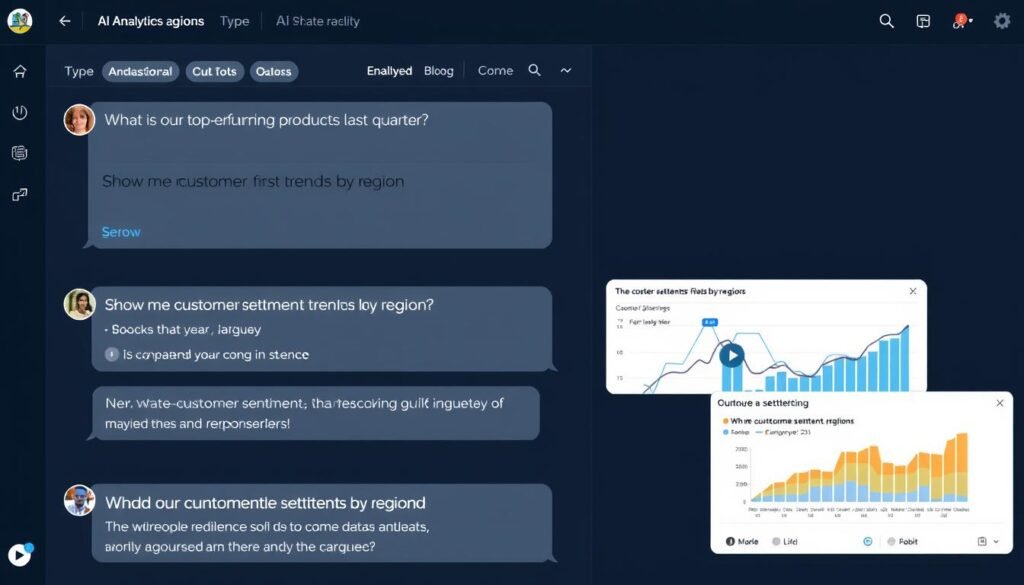
Natural language processing (NLP) enables AI analytics software to understand, interpret, and generate human language. This capability transforms how users interact with data and unlocks value from unstructured text sources:
- Conversational interfaces allow non-technical users to query data using everyday language
- Sentiment analysis extracts customer opinions from reviews, social media, and support tickets
- Text mining identifies themes and topics across large document collections
- Automated report generation creates narrative summaries of complex data
Automated Insight Generation
Perhaps the most transformative capability of AI analytics software is its ability to automatically surface insights without requiring analysts to know what to look for. These systems continuously scan data to identify:
- Statistically significant changes in key metrics
- Unexpected correlations between seemingly unrelated variables
- Root causes of performance fluctuations
- Opportunities for optimization and improvement
- Emerging risks that require attention
By automating the discovery process, AI analytics dramatically reduces the time from data collection to actionable insight, enabling organizations to respond more quickly to changing conditions.
Real-World Applications Across Industries
AI analytics software is transforming operations across virtually every industry, helping organizations unlock the full value of their data assets. Here are some compelling examples of how these tools are being applied in different sectors:
Retail and E-commerce
Retailers are leveraging AI analytics to create personalized shopping experiences and optimize operations:
- Dynamic pricing optimization based on demand patterns, competitor pricing, and inventory levels
- Customer segmentation that identifies micro-segments for targeted marketing
- Demand forecasting that reduces stockouts while minimizing excess inventory
- Customer journey analysis that identifies friction points and abandonment causes

Healthcare
Healthcare providers and payers are using AI analytics to improve patient outcomes and operational efficiency:
- Predictive models that identify patients at risk for readmission or complications
- Resource optimization that improves scheduling and reduces wait times
- Treatment effectiveness analysis across different patient populations
- Fraud detection that identifies suspicious billing patterns
- Population health management that targets interventions to high-risk groups
Financial Services
Banks and financial institutions are deploying AI analytics to manage risk and enhance customer service:
- Real-time fraud detection that identifies suspicious transactions as they occur
- Credit risk assessment that incorporates non-traditional data sources
- Investment portfolio optimization based on market trends and risk tolerance
- Customer churn prediction that enables proactive retention efforts
- Personalized product recommendations based on financial behavior
Marketing and Advertising
Marketing teams are using AI analytics to optimize campaign performance and improve ROI:
- Attribution modeling that accurately measures channel contribution
- Audience targeting that identifies high-value prospects
- Content optimization that predicts engagement and conversion potential
- Sentiment analysis that tracks brand perception across social channels
- Campaign performance forecasting that enables proactive adjustments
Transform Your Marketing Analytics
See how AI analytics can help you optimize campaign performance, improve targeting, and maximize marketing ROI.
Start Your Free TrialKey Benefits of AI Analytics Software
Organizations that successfully implement AI analytics solutions report significant advantages that directly impact their bottom line and competitive positioning. These benefits extend beyond simple efficiency gains to create strategic advantages.

Faster, More Informed Decision-Making
AI analytics dramatically reduces the time from data collection to decision by automating the analysis process and surfacing insights proactively. Organizations report:
- 60-80% reduction in time spent on routine data preparation and analysis
- Ability to make data-driven decisions in hours instead of days or weeks
- More confident decisions based on comprehensive analysis rather than sampling
- Democratized access to insights across all levels of the organization
Identifying Hidden Opportunities
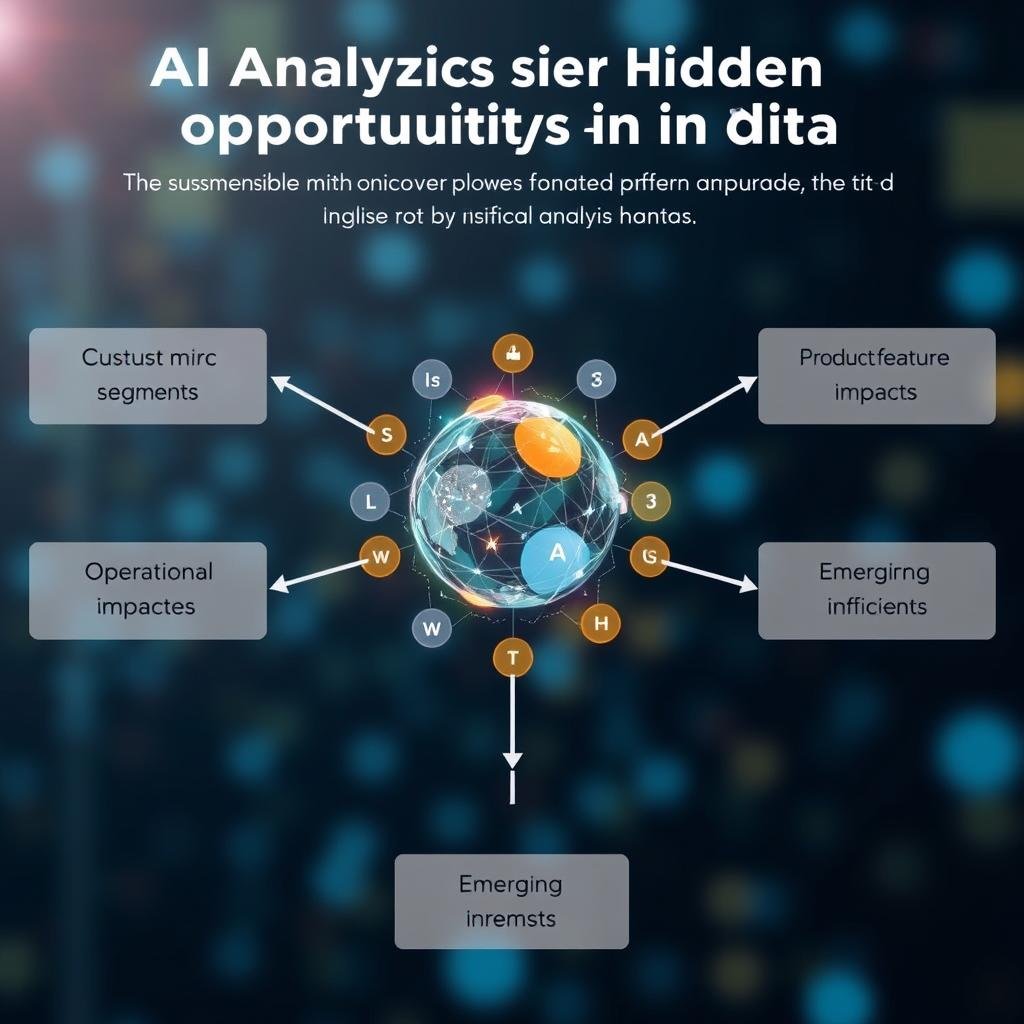
By analyzing data at scale and detecting non-obvious patterns, AI analytics uncovers opportunities that would otherwise remain hidden:
- Micro-segments of customers with unique needs and high potential value
- Product features that drive disproportionate satisfaction and loyalty
- Operational inefficiencies that can be eliminated for significant cost savings
- Cross-sell and upsell opportunities based on subtle behavior patterns
- Market trends emerging before they become obvious to competitors
Risk Mitigation and Problem Prevention
The predictive capabilities of AI analytics enable organizations to identify and address potential problems before they occur:
- Early warning of customer dissatisfaction and potential churn
- Detection of subtle quality issues before they cause product failures
- Identification of compliance risks in business processes
- Prediction of supply chain disruptions with time to develop alternatives
- Recognition of cybersecurity threats based on unusual access patterns
Competitive Advantage Through Data Mastery
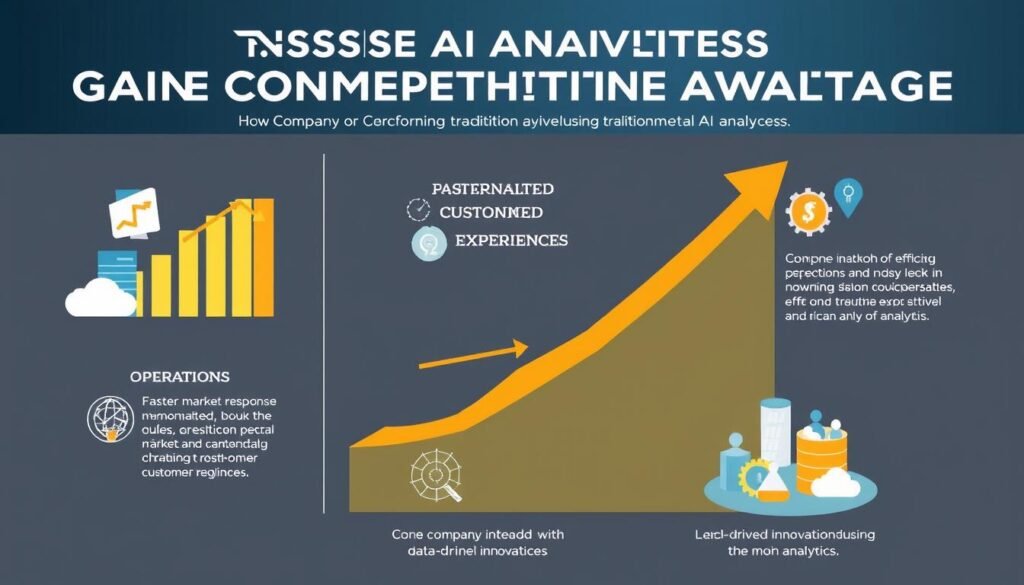
Organizations that effectively leverage AI analytics gain significant advantages over competitors who rely on traditional analysis methods:
- Faster response to changing market conditions
- More personalized customer experiences that drive loyalty
- More efficient operations that reduce costs
- Better resource allocation based on accurate forecasting
- Innovation driven by deeper customer and market understanding
Implementation Considerations and Best Practices
Successfully deploying AI analytics software requires thoughtful planning and a strategic approach. Organizations that achieve the greatest value from these tools typically follow these best practices:
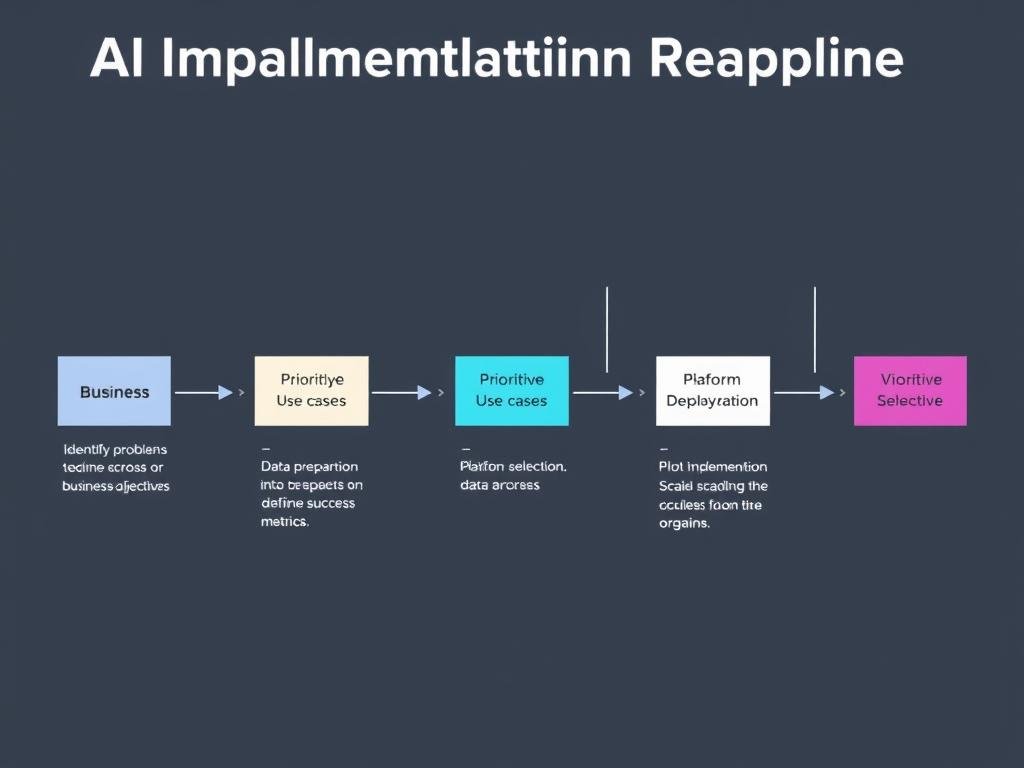
Start with Clear Business Objectives
The most successful implementations begin with specific business problems to solve rather than technology-driven initiatives:
- Identify high-value use cases with measurable outcomes
- Prioritize projects based on business impact and implementation complexity
- Define clear success metrics before beginning implementation
- Involve business stakeholders in defining requirements and use cases
Ensure Data Quality and Accessibility
AI analytics systems are only as good as the data they analyze. Successful implementations require:
- Comprehensive data inventory and quality assessment
- Data cleansing and standardization processes
- Integration of disparate data sources into a unified view
- Governance policies that ensure ongoing data quality
- Appropriate access controls that balance security with usability

Build Skills and Foster Adoption
Technology alone doesn’t create value—people using the technology effectively do. Successful organizations:
- Provide training tailored to different user roles and skill levels
- Create centers of excellence to share best practices
- Celebrate and publicize early wins to build momentum
- Incorporate AI analytics insights into regular business processes
- Develop data literacy across the organization
Choose the Right Platform for Your Needs
With numerous AI analytics platforms available, selecting the right one requires careful evaluation:
- Assess alignment with your specific use cases and industry
- Evaluate integration capabilities with your existing data infrastructure
- Consider scalability needs as your data volume and user base grow
- Examine ease of use for your target user population
- Verify security and compliance capabilities for your industry requirements
Find the Right AI Analytics Solution
Not sure which AI analytics platform is right for your organization? Our experts can help you evaluate options based on your specific needs and use cases.
Schedule a ConsultationFuture Trends in AI-Driven Data Analysis
The field of AI analytics is evolving rapidly, with several emerging trends poised to further transform how organizations derive value from their data:
Augmented Analytics
The next evolution of AI analytics will further automate the insight discovery process, making advanced analysis accessible to business users without technical expertise:
- AI-driven data preparation that automatically cleans and structures data
- Automated insight generation that proactively surfaces relevant findings
- Natural language generation that creates narrative explanations of complex analyses
- Guided analysis paths that help users explore data more effectively
Explainable AI
As AI analytics becomes more integrated into critical business processes, the ability to understand and trust AI-generated insights becomes essential:
- Transparent algorithms that reveal their reasoning process
- Confidence scoring that indicates prediction reliability
- Visual explanations of complex model decisions
- Audit trails that document how insights were generated
- Bias detection and mitigation capabilities

Edge Analytics
As IoT devices proliferate, more analytics will move to the edge—processing data where it’s generated rather than sending everything to centralized systems:
- Real-time analysis of sensor data for immediate decision-making
- Reduced latency and bandwidth requirements
- Enhanced privacy by processing sensitive data locally
- Hybrid architectures that balance edge and cloud processing
Collaborative Intelligence
The future of AI analytics will emphasize human-AI collaboration, combining the strengths of both:
- AI systems that learn from human feedback and expertise
- Interactive interfaces that facilitate human-AI dialogue
- Adaptive systems that adjust to user preferences and work styles
- Collective intelligence that combines insights from multiple experts and AI systems

From Data Confusion to Strategic Clarity
In an era where data volumes continue to grow exponentially, AI analytics software has become essential for organizations seeking to transform information overload into strategic advantage. By automating the discovery of patterns and insights, these tools enable businesses to make faster, more informed decisions based on a comprehensive understanding of their data.
The journey from data confusion to strategic clarity isn’t just about technology—it’s about creating a data-driven culture where insights flow seamlessly to decision-makers at all levels. Organizations that successfully implement AI analytics solutions gain not only operational efficiencies but also strategic advantages through deeper customer understanding, more agile operations, and the ability to anticipate market changes before competitors.
As AI analytics technology continues to evolve, the gap between data-driven organizations and their competitors will widen. Those who embrace these tools now will be best positioned to thrive in an increasingly complex and fast-paced business environment.
Ready to Transform Your Data into Strategic Insights?
Discover how AI analytics software can help your organization uncover hidden patterns, predict future trends, and make better decisions faster.