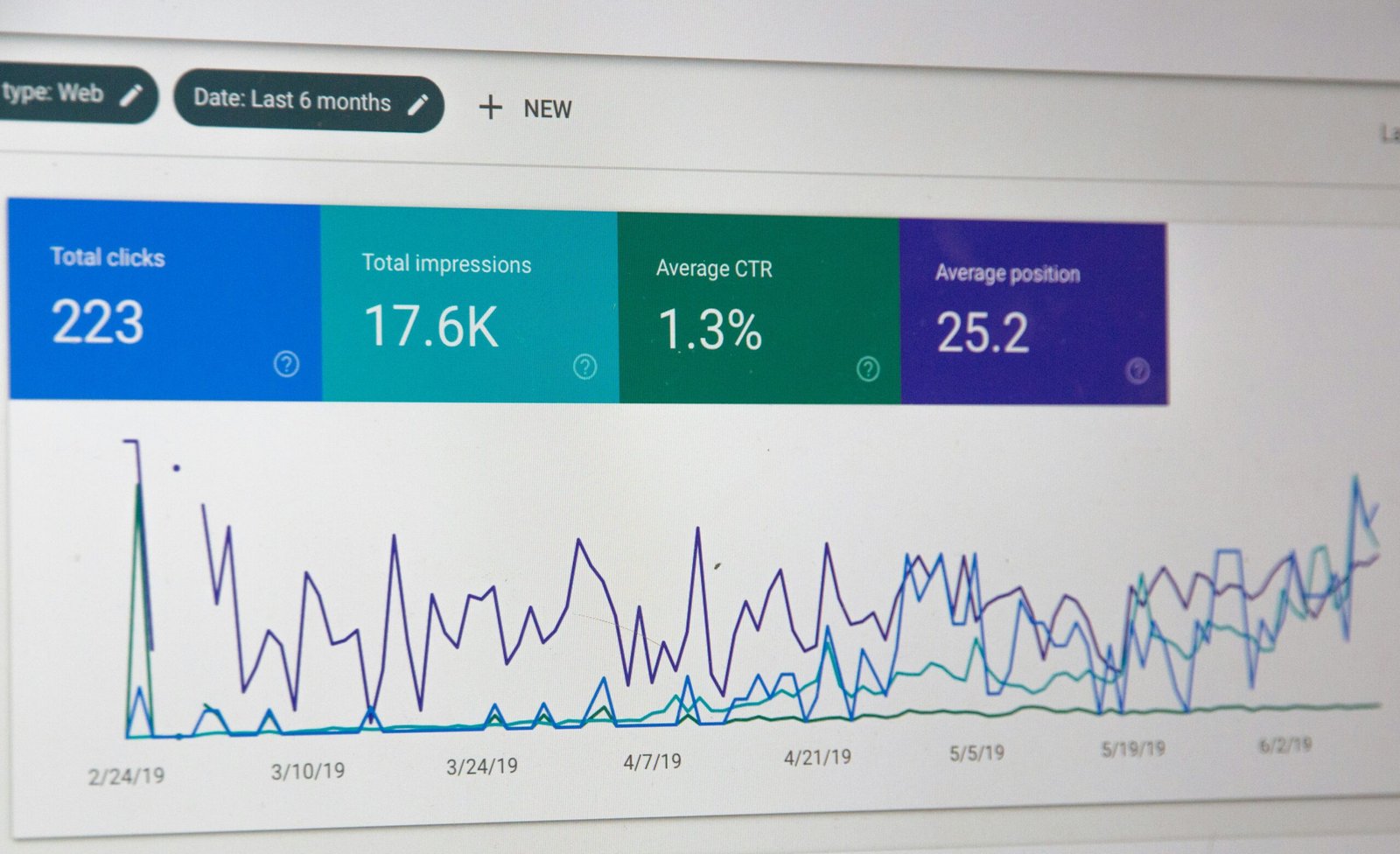




The SEO landscape is evolving at breakneck speed. What worked yesterday might not work tomorrow, and staying ahead of the competition requires both strategy and efficiency. This is where AI-powered SEO enters the picture—transforming how we research keywords, optimize content, and ultimately dominate search rankings.
In this comprehensive guide, you’ll discover exactly how artificial intelligence is revolutionizing SEO practices, with a special focus on automating the most time-consuming aspect: keyword research. Whether you’re an SEO veteran or just getting started, you’ll find actionable strategies to implement immediately and start seeing results.
The Advantages of AI-Powered SEO Over Traditional Methods
Traditional SEO methods often involve hours of manual research, endless spreadsheets, and educated guesswork. AI-powered SEO changes this paradigm entirely by leveraging machine learning and natural language processing to deliver faster, more accurate, and more comprehensive results.
Advantages of AI-Powered SEO
- Analyzes millions of data points in seconds
- Identifies patterns humans might miss
- Adapts to algorithm changes in real-time
- Scales your SEO efforts without additional headcount
- Provides predictive insights based on historical data
- Eliminates human bias from keyword selection
- Continuously learns and improves over time
Limitations of Traditional SEO
- Time-consuming manual processes
- Limited by human capacity to analyze data
- Reactive rather than proactive to changes
- Difficult to scale without significant resources
- Prone to human error and bias
- Struggles with large-scale competitive analysis
- Often relies on outdated information
According to recent industry data, SEO professionals using AI tools report saving an average of 15-20 hours per week on routine tasks like keyword research and content optimization. This time savings allows them to focus on strategy and creative aspects that still require human expertise.
“AI doesn’t replace SEO professionals—it supercharges them. It handles the data-heavy lifting so humans can focus on strategy, creativity, and the nuanced understanding of audience needs.”
Automating Keyword Research with AI: A Step-by-Step Guide
Keyword research forms the foundation of any successful SEO strategy, but it’s also one of the most time-consuming aspects. Here’s how to leverage AI to automate and enhance this critical process:
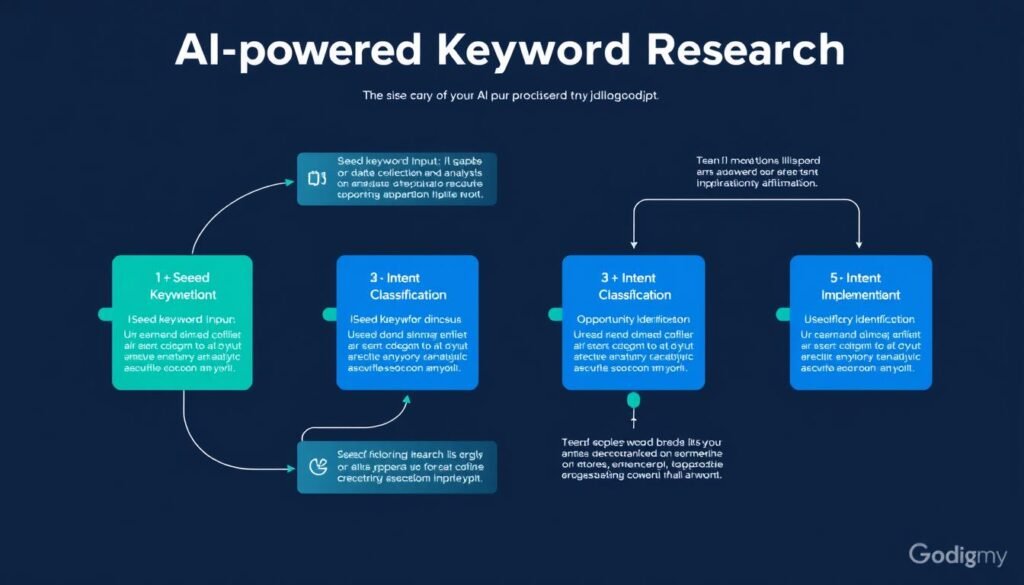
Step 1: Generate Seed Keyword Ideas with AI
Instead of manually brainstorming seed keywords, use AI to generate comprehensive lists based on your niche and goals.
How to Implement:
- Input your business niche and target audience into an AI tool like ChatGPT or Semrush’s AI Assistant
- Ask the AI to generate relevant seed keywords for your industry
- Refine the results by specifying user intent (informational, commercial, transactional)
- Export the generated seed keywords for the next step
Pro Tip: When using AI for seed keyword generation, be specific about your audience and their pain points. For example, instead of asking for “SEO keywords,” specify “SEO keywords for small e-commerce businesses struggling with product visibility.”
Step 2: Expand Your Keyword List with AI-Powered Tools
Once you have your seed keywords, AI can expand them into comprehensive lists of related terms, questions, and long-tail variations.
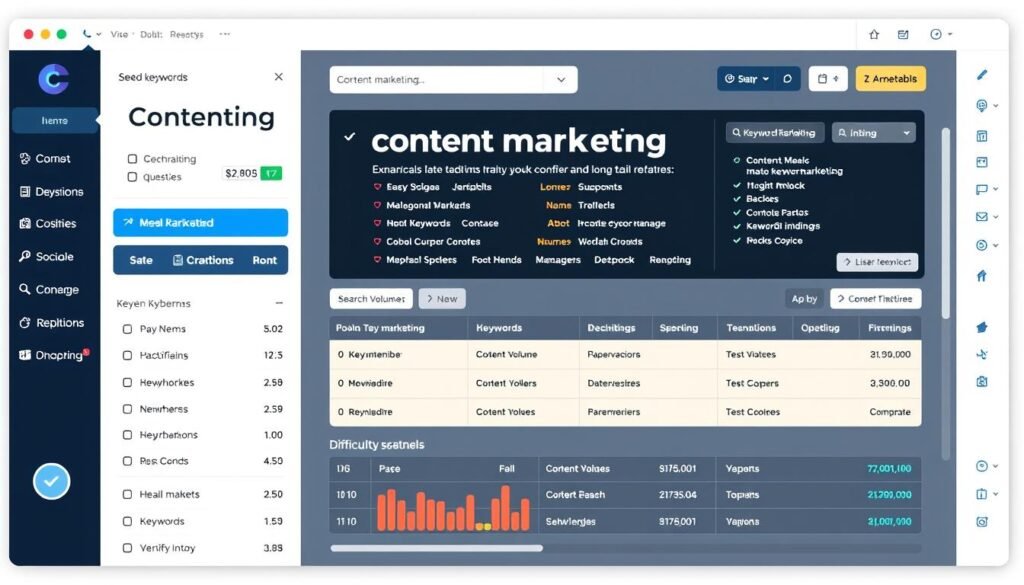
AI-powered keyword research tools can identify hundreds of relevant keyword variations in minutes, including:
Semantic Variations
AI recognizes synonyms and related concepts that humans might overlook, ensuring comprehensive coverage of your topic.
Question-Based Keywords
AI can generate all possible questions your audience might ask, perfect for featured snippets and voice search optimization.
Long-Tail Opportunities
AI excels at identifying specific, low-competition long-tail keywords that offer quick ranking opportunities.
Trending Terms
Advanced AI tools can identify emerging keywords in your niche before they become competitive.
Step 3: Analyze Search Intent at Scale
Understanding search intent is crucial for ranking success, but analyzing intent for hundreds of keywords manually is impractical. AI can classify intent automatically.
| Intent Type | What AI Looks For | Content Strategy | Example Keywords |
| Informational | Question words, “how to,” “guide,” “what is” | Comprehensive guides, tutorials, explanatory content | “how to use AI for SEO,” “what is keyword research” |
| Navigational | Brand names, specific website references | Brand pages, product landing pages | “Semrush keyword tool,” “Ahrefs site explorer” |
| Commercial | “Best,” “top,” “review,” comparison terms | Comparison posts, review articles, listicles | “best AI SEO tools,” “Semrush vs Ahrefs” |
| Transactional | “Buy,” “discount,” “pricing,” “coupon” | Product pages, pricing pages, special offers | “buy SEO software,” “AI keyword tool pricing” |
Step 4: Prioritize Keywords Based on AI-Driven Metrics
AI can analyze multiple factors simultaneously to help you prioritize which keywords to target first.
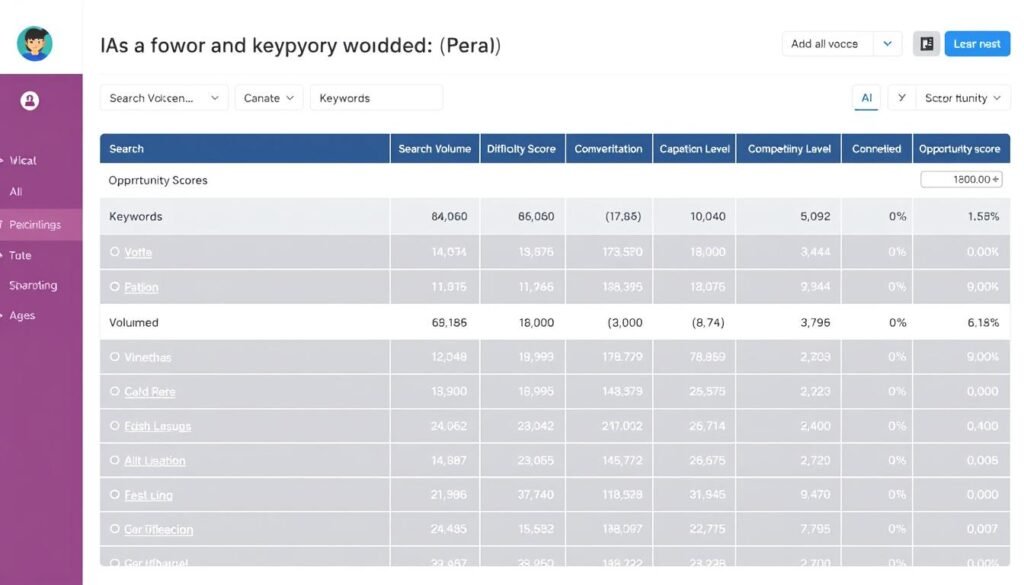
Modern AI SEO tools consider these factors when prioritizing keywords:
- Search volume and trends – AI can predict future search volume based on historical data
- Competition level – AI analyzes the authority and content quality of ranking pages
- Your website’s authority – AI compares your domain strength to competitors
- Content gaps – AI identifies keywords your competitors rank for but you don’t
- Conversion potential – Advanced AI can estimate commercial value of keywords
- Ranking difficulty – AI calculates personalized difficulty scores based on your site
Step 5: Generate Content Briefs Automatically
Once you’ve selected your target keywords, AI can create comprehensive content briefs to guide your writing or pass to your content team.
What AI-Generated Content Briefs Include:
- Suggested title options optimized for CTR
- Recommended headings and subheadings
- Primary and secondary keywords to include
- Questions to answer based on “People Also Ask” data
- Word count recommendations based on ranking pages
- Content structure based on top-performing articles
- Suggested internal and external links
Best Practices for Implementing AI-Driven SEO Strategies
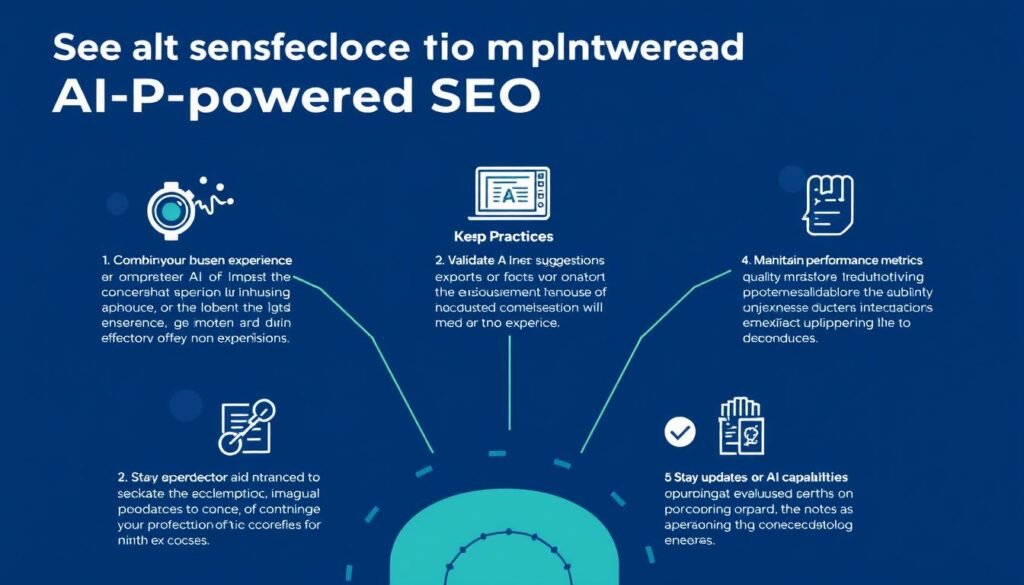
While AI offers powerful capabilities for SEO, successful implementation requires a strategic approach. Here are the best practices to ensure you get maximum value from AI-powered SEO:
1. Combine AI Intelligence with Human Expertise
AI excels at data processing and pattern recognition, but human judgment remains essential for strategy and creativity.
“The most successful SEO strategies use AI as a powerful assistant, not a replacement for human expertise. AI handles the data-heavy tasks while humans provide the strategic direction and creative thinking.”
What AI Does Best:
- Process vast amounts of data quickly
- Identify patterns and correlations
- Generate comprehensive keyword lists
- Analyze competitor content at scale
Where Humans Excel:
- Strategic decision-making
- Understanding nuanced user intent
- Creating engaging, original content
- Building authentic backlink relationships
2. Focus on User Experience, Not Just Rankings
AI can help you identify keywords and optimize content, but always prioritize the user experience over pure optimization.
Important: Google’s algorithms increasingly reward content that provides exceptional user experiences. Use AI to optimize for both search engines and users by focusing on engagement metrics like time on page, bounce rate, and user interactions.
3. Validate AI Suggestions with Real-World Data
AI tools make predictions based on available data, but these should be validated against your actual performance metrics.
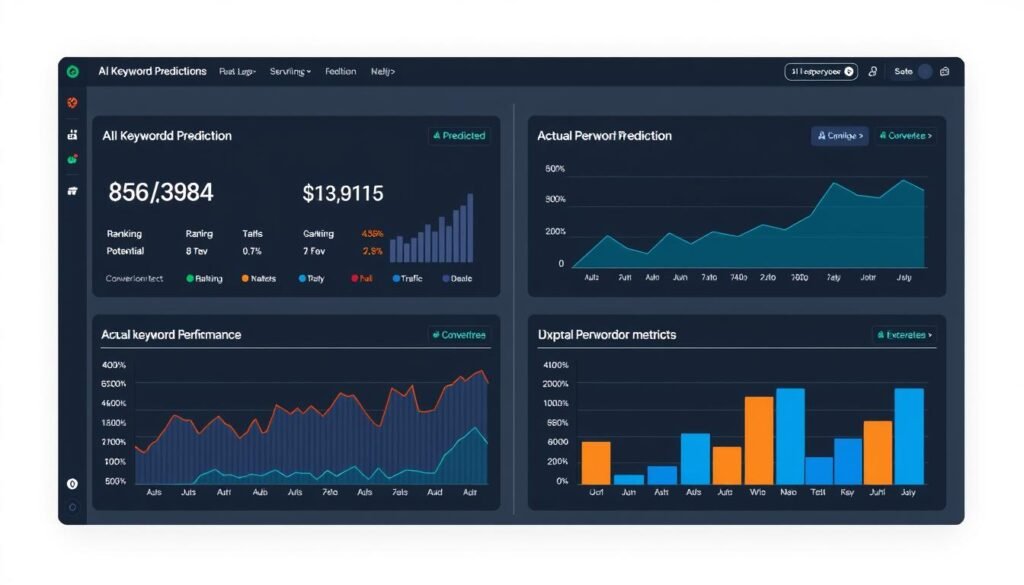
Implement a testing framework where you:
- Apply AI recommendations to a subset of your content
- Measure the impact on rankings, traffic, and conversions
- Compare results against control content
- Scale successful approaches and refine underperforming ones
4. Maintain Content Quality and Originality
While AI can help generate content ideas and optimize existing content, quality and originality remain paramount.
Do:
- Use AI for research and optimization
- Add unique insights and expertise
- Include original data when possible
- Maintain your brand voice
Don’t:
- Publish AI-generated content without editing
- Sacrifice readability for keyword density
- Create content without adding value
- Ignore your audience’s specific needs
5. Continuously Monitor and Adapt
The SEO landscape and AI capabilities evolve constantly. Establish a system for monitoring performance and adapting your approach.
Key Metrics to Monitor:
- Ranking changes for AI-optimized content vs. traditional content
- Organic traffic growth from AI-identified keywords
- Conversion rates from different keyword types
- Content engagement metrics like time on page and bounce rate
- Return on investment for AI tools and implementation time
Case Studies: Successful AI-Powered SEO Implementation
Let’s examine real-world examples of businesses that have successfully leveraged AI-powered SEO to transform their search performance.
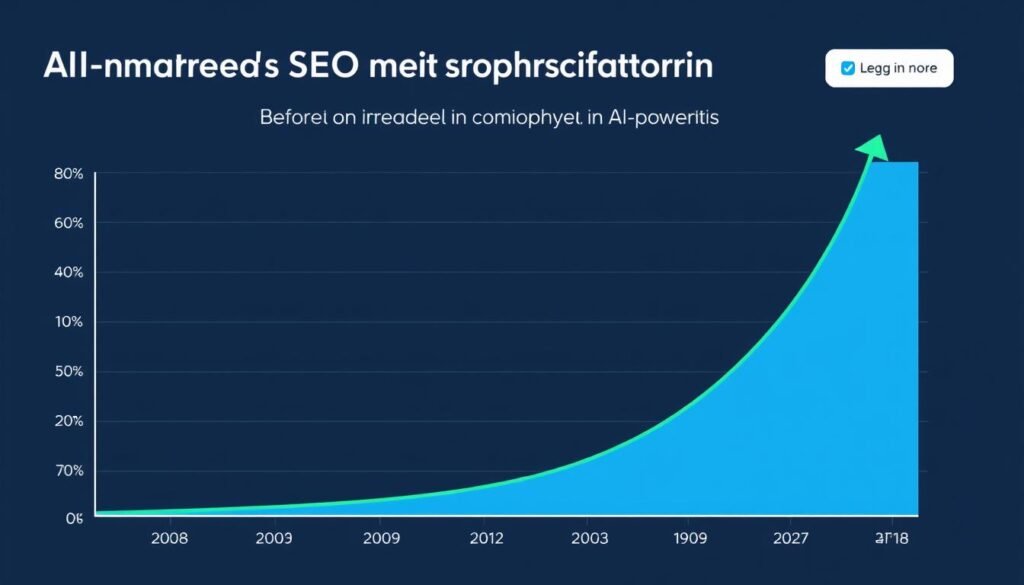
Case Study #1: E-commerce Site Increases Organic Traffic by 143%
A mid-sized e-commerce company selling home goods implemented AI-powered keyword research and content optimization across their product categories.
Challenge:
The company was struggling to compete with larger retailers for valuable commercial keywords and was seeing declining organic traffic despite regular content publishing.
AI-Powered Solution:
- Used AI to identify untapped long-tail keywords with commercial intent
- Implemented automated content briefs for product category pages
- Created AI-suggested FAQ sections based on “People Also Ask” data
- Optimized product descriptions using AI-driven semantic analysis
Results:
- 143% increase in organic traffic within 6 months
- 68% improvement in conversion rates from organic traffic
- First page rankings for 237 previously unranked keywords
- 89% reduction in time spent on keyword research and content planning
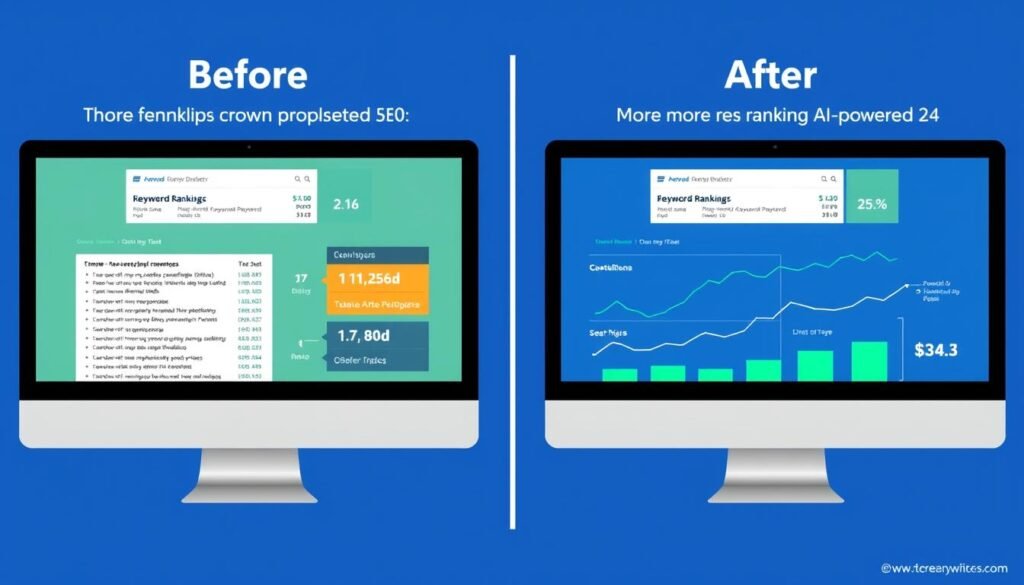
Case Study #2: B2B Software Company Dominates Competitive Keywords
A B2B software company in the project management space used AI to identify content gaps and optimize for search intent.
Challenge:
The company was struggling to rank for high-value keywords dominated by established competitors with much higher domain authority.
AI-Powered Solution:
- Used AI to analyze top-ranking content and identify gaps in competitor coverage
- Created AI-generated content briefs focused on addressing those gaps
- Implemented automated intent classification to align content with user needs
- Used AI to identify strategic internal linking opportunities
Results:
- Achieved first page rankings for 18 high-competition keywords within 3 months
- Increased organic lead generation by 78%
- Reduced content production costs by 35% while improving quality
- Decreased bounce rate by 24% due to better search intent alignment
“The common thread in successful AI SEO implementation is not just using the technology, but using it strategically. Companies that align AI capabilities with clear business goals consistently outperform those who adopt AI without a plan.”
Future Trends in AI and SEO Integration
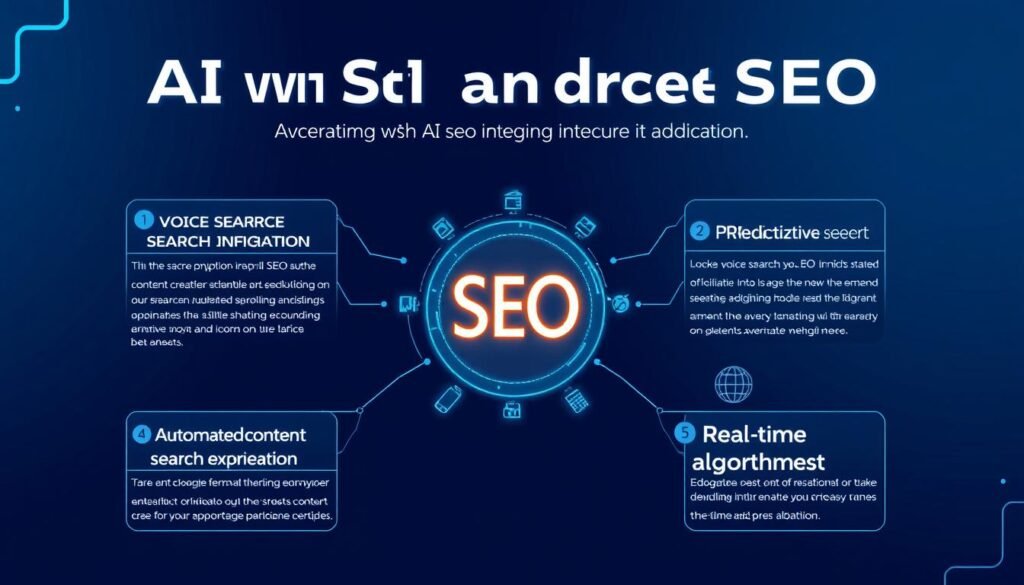
The integration of AI and SEO continues to evolve rapidly. Here are the key trends to watch and prepare for:
1. Predictive SEO
AI systems are becoming increasingly capable of predicting future search trends and algorithm changes before they happen.
What to expect: Advanced AI tools will soon provide predictive recommendations, suggesting content topics and optimizations based on forecasted search trends rather than just historical data.
2. Hyper-Personalized Search Results
Search engines are moving toward increasingly personalized results based on user behavior, location, and preferences.
AI-powered SEO will need to optimize not just for keywords but for specific audience segments, with content that can adapt to different user intents and preferences. This will require more sophisticated audience analysis and content variation strategies.
3. Multimodal Search Optimization
As search engines enhance their ability to understand images, video, and audio, SEO will expand beyond text optimization.
Visual Search Optimization
AI tools will help optimize images and videos for search by analyzing visual content and suggesting improvements for better visibility in image and video search results.
Voice Search Enhancement
AI will identify natural language patterns specific to voice searches and recommend content optimizations to capture this growing search segment.
4. Automated Content Creation and Optimization
AI content generation capabilities are advancing rapidly, moving toward creating more original, high-quality content with less human intervention.
Important note: While AI content creation is improving, the most successful approach will likely remain a collaboration between AI systems and human experts, with AI handling research and optimization while humans provide strategic direction and creative elements.
5. Real-Time SEO Adaptation
Future AI systems will monitor search results and user behavior in real-time, automatically adjusting content and optimization strategies to maintain or improve rankings.
This will enable websites to respond instantly to algorithm updates, competitor changes, or shifts in user behavior without manual intervention.
Top AI-Powered SEO Tools to Consider
Based on our analysis and experience, here are the most effective AI-powered SEO tools to consider for your keyword research and optimization efforts:
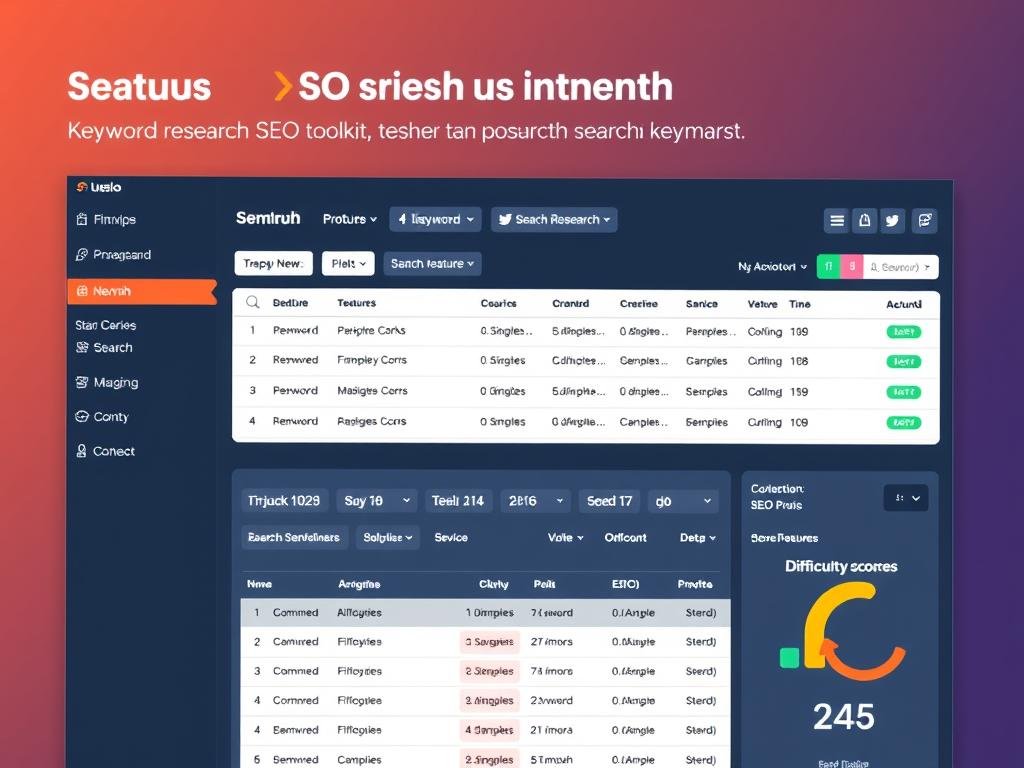
Semrush
Semrush offers a comprehensive suite of AI-powered SEO tools, including their AI Keyword Magic Tool, Content Optimizer, and AI Assistant for content creation.
Key AI Features:
- AI Keyword Magic Tool – Generates comprehensive keyword lists with intent classification
- Personal Keyword Difficulty – AI-calculated difficulty scores based on your specific domain
- AI Content Optimizer – Analyzes top-ranking content and provides optimization recommendations
- AI Writing Assistant – Helps create SEO-optimized content briefs and drafts
Best for: Comprehensive SEO management with advanced AI capabilities for keyword research, content optimization, and competitive analysis.
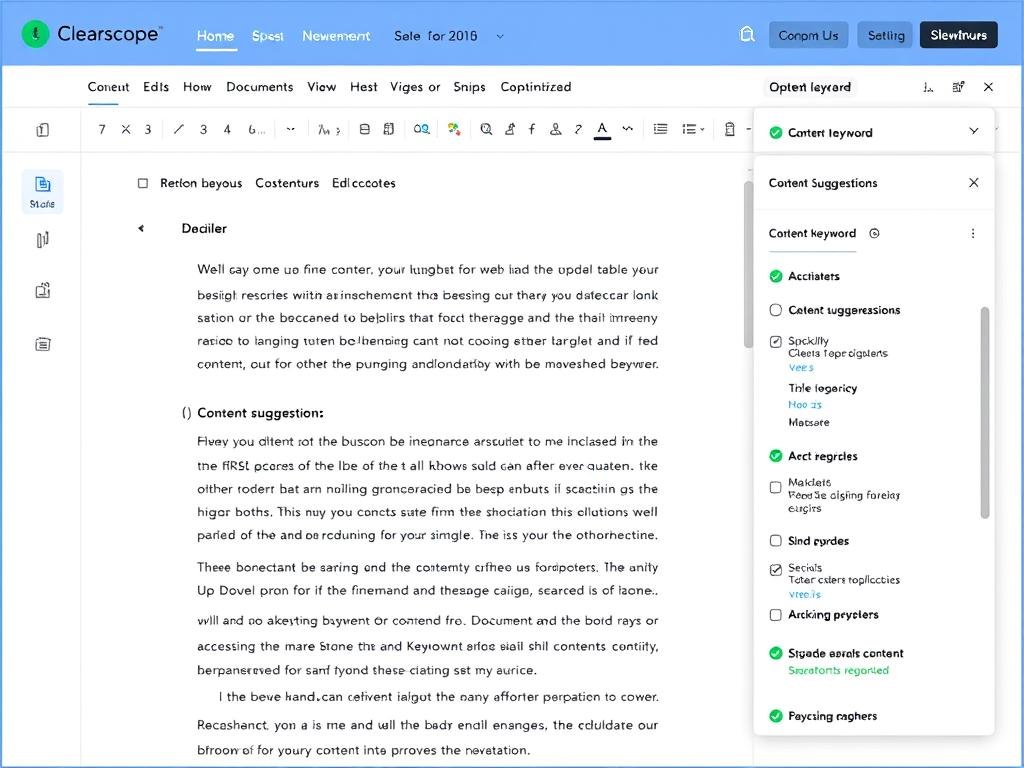
Clearscope
Clearscope uses AI to analyze top-ranking content and provide data-driven recommendations for creating competitive content.
Key AI Features:
- Content Grader – AI-powered analysis of content relevance and comprehensiveness
- Term Recommendations – Suggests semantically related terms to include
- Content Brief Generator – Creates detailed briefs based on top-performing content
- Google Docs Integration – Real-time optimization suggestions as you write
Best for: Content optimization and creation with a focus on semantic relevance and competitive analysis.
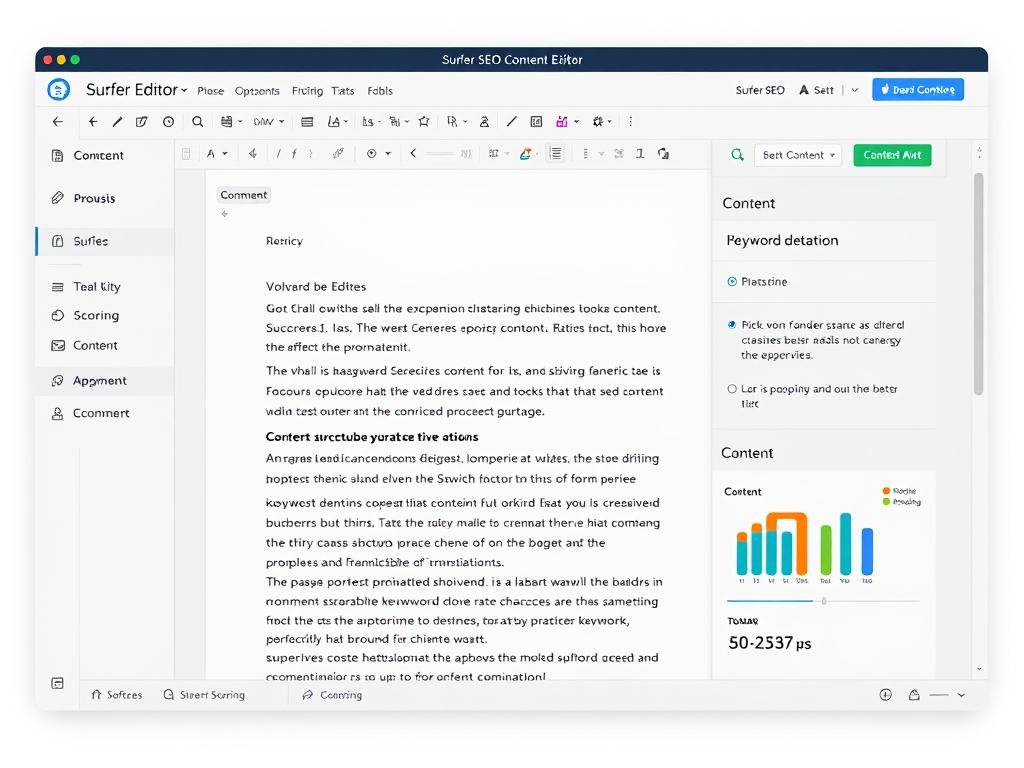
Surfer SEO
Surfer SEO combines SERP analysis with AI to provide data-driven content optimization recommendations in real-time.
Key AI Features:
- Content Editor – AI-powered writing assistant with real-time optimization
- SERP Analyzer – Identifies common elements in top-ranking content
- AI Outline Generator – Creates content structures based on top performers
- AI Writer – Generates optimized content drafts based on your brief
Best for: Real-time content optimization with a focus on on-page factors and content structure.
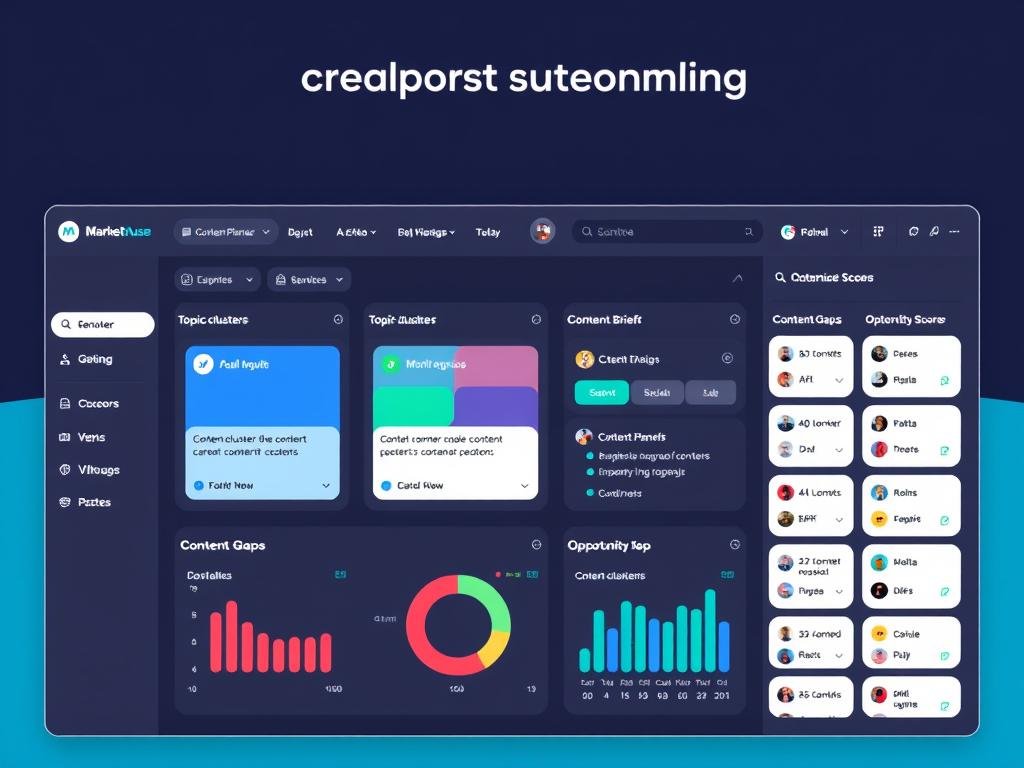
MarketMuse
MarketMuse uses AI to analyze your content inventory, identify gaps, and create data-driven content plans.
Key AI Features:
- Content Inventory Analysis – AI assessment of your existing content
- Topic Modeling – Creates comprehensive topic clusters
- Personalized Difficulty Scores – AI-calculated ranking potential
- Automated Content Briefs – Detailed briefs with AI-generated outlines
Best for: Enterprise-level content strategy and planning with comprehensive topic modeling.
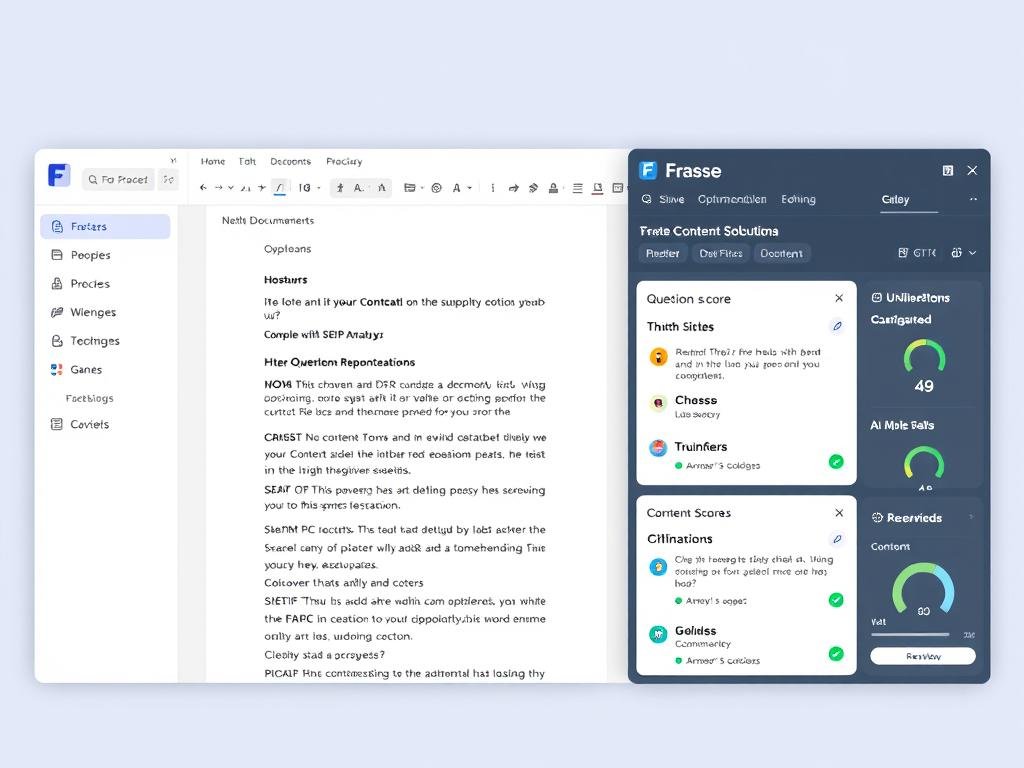
Frase.io
Frase.io combines AI content research and optimization tools to streamline the content creation process.
Key AI Features:
- AI Content Writer – Generates optimized content drafts
- SERP Research – Analyzes top results for any query
- Question Research – Identifies questions related to your topic
- Content Optimization – Real-time suggestions as you write
Best for: Content research and creation with a focus on answering user questions and comprehensive topic coverage.
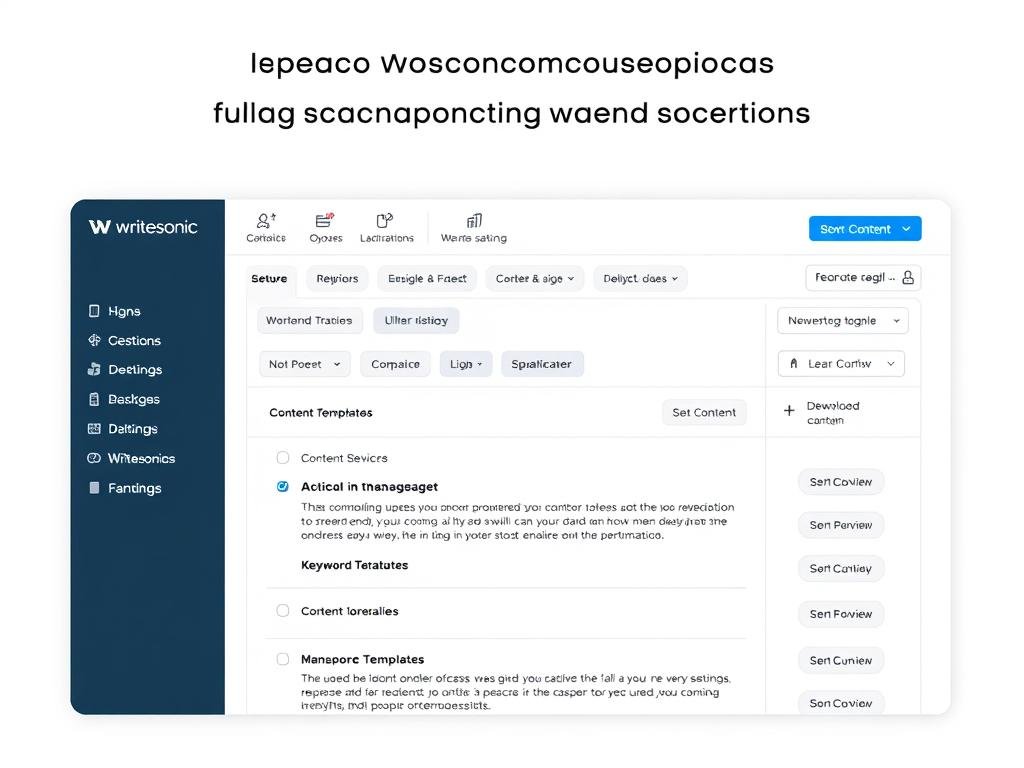
Writesonic
Writesonic specializes in AI-generated content with SEO optimization capabilities built in.
Key AI Features:
- AI Article Writer – Creates SEO-optimized long-form content
- Chatsonic – AI assistant with real-time data access
- SERP Analysis – Integrates competitor insights into content
- Keyword Integration – Naturally incorporates target keywords
Best for: AI-generated content creation with built-in SEO optimization features.
Ready to Transform Your SEO with AI?
Start automating your keyword research and content optimization today. Most of these tools offer free trials or demos so you can test their capabilities before committing.
Frequently Asked Questions About AI-Powered SEO
Will AI-generated content get penalized by Google?
Google’s official stance is that they don’t penalize AI-generated content specifically, but rather low-quality content regardless of how it’s created. The key is ensuring that AI-generated content is high-quality, provides value to users, and is edited by humans to add expertise and originality.
For best results, use AI as a tool to assist with research and optimization, but add your unique insights, expertise, and brand voice to make the content valuable and original.
How much does AI-powered SEO cost compared to traditional methods?
While AI-powered SEO tools typically require a subscription (ranging from -0+ per month depending on features and scale), they often reduce overall costs by:
- Saving significant time on manual research and analysis
- Reducing the need for multiple specialized tools
- Decreasing the likelihood of wasted effort on low-potential keywords
- Improving ROI through more accurate targeting and optimization
Many businesses report that the time savings alone justify the investment in AI SEO tools, with team members able to focus on strategy and creative tasks rather than repetitive research.
Can AI completely replace human SEO specialists?
No, AI cannot completely replace human SEO specialists. While AI excels at data processing, pattern recognition, and generating recommendations based on historical data, it lacks the strategic thinking, creativity, and contextual understanding that human experts provide.
The most effective approach is a collaboration between AI and human experts, where:
- AI handles data-intensive tasks like keyword research and competitive analysis
- Humans provide strategic direction, creative input, and quality control
- AI suggests optimizations based on data patterns
- Humans make final decisions based on business context and goals
This collaborative approach leverages the strengths of both AI and human expertise for optimal results.
How long does it take to see results from AI-powered SEO?
The timeline for seeing results from AI-powered SEO varies based on several factors:
- Website age and authority – Established sites typically see faster results
- Competitive landscape – Less competitive niches show quicker improvements
- Implementation scope – Comprehensive implementation yields faster results
- Content quality and frequency – Regular, high-quality content accelerates progress
In general, you can expect to see initial improvements in 1-3 months, with more significant results in 3-6 months. Some highly competitive keywords may take 6-12 months to show substantial ranking improvements.
The advantage of AI-powered SEO is that it often identifies quick-win opportunities that can show results faster than traditional methods.
What skills do I need to effectively use AI for SEO?
To effectively use AI for SEO, you should have:
- Basic SEO knowledge – Understanding fundamental SEO principles and best practices
- Critical thinking – Ability to evaluate AI recommendations for relevance and quality
- Prompt engineering – Skills to effectively communicate with AI systems
- Data interpretation – Capability to understand and act on data insights
- Content expertise – Knowledge of what constitutes valuable content in your niche
You don’t need to be a technical expert or programmer to use most AI SEO tools, as they’re designed with user-friendly interfaces. However, having a solid understanding of SEO fundamentals will help you make better use of AI recommendations.
Conclusion: The Future of SEO is AI-Powered
AI-powered SEO represents a significant evolution in how we approach search optimization. By automating time-consuming tasks like keyword research and content optimization, AI allows SEO professionals to focus on strategy and creativity while achieving better results more efficiently.
The key to success lies not in replacing human expertise with AI, but in finding the optimal balance between AI capabilities and human insight. When implemented strategically, AI-powered SEO can help you:
- Discover untapped keyword opportunities at scale
- Create more comprehensive, relevant content
- Adapt quickly to algorithm changes and market trends
- Scale your SEO efforts without proportionally increasing costs
- Make data-driven decisions with greater confidence
As search engines continue to evolve toward understanding user intent and delivering personalized results, AI will become increasingly essential for successful SEO. The organizations that embrace AI-powered SEO today will be better positioned to dominate search rankings tomorrow.
Start Your AI-Powered SEO Journey Today
Ready to transform your approach to keyword research and content optimization? Begin with a free trial of one of our recommended AI SEO tools and see the difference for yourself.