


Three years ago, I was drowning in marketing tasks. Content creation, social scheduling, email campaigns, analytics reports—all of it consumed 50+ hours of my week. Today, I’ve automated 80% of these processes using AI marketing automation tools, cutting my workload to just 10 hours while doubling my results.
This isn’t just another theoretical article about AI’s potential. I’m sharing the exact strategies, tools, and implementation steps that transformed my marketing workflow from chaotic to streamlined. Whether you’re a solo entrepreneur or leading a marketing team, these seven AI automation strategies will help you reclaim your time while driving better results.
The 80% Marketing Automation Framework
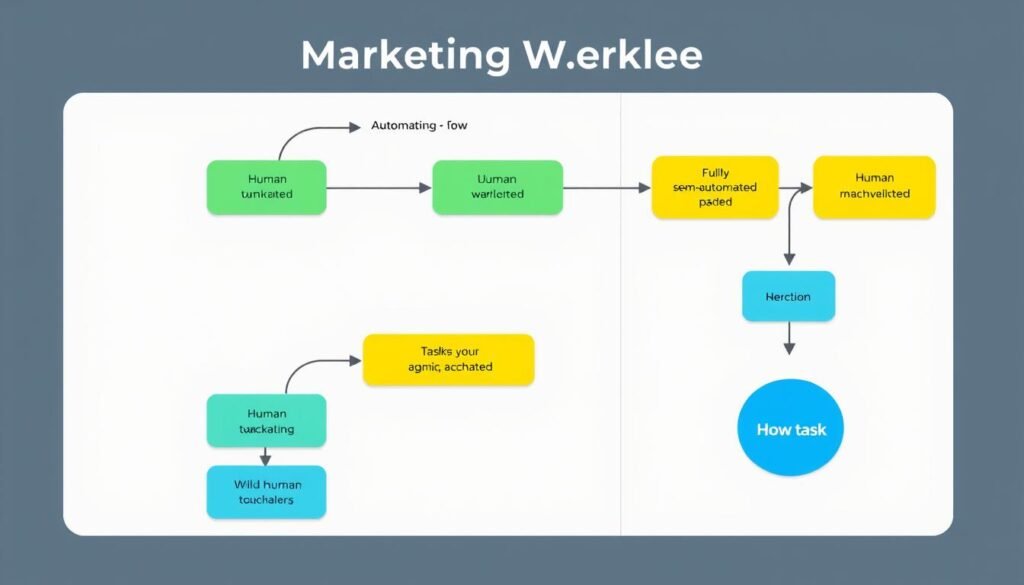
Before diving into specific strategies, let’s understand what “80% automation” actually means. I’ve divided my marketing activities into three categories:
Fully Automated (50%)
Tasks that AI handles completely with minimal human oversight, including data collection, basic content generation, and routine reporting.
Semi-Automated (30%)
Processes where AI does the heavy lifting but requires human refinement, such as content editing, campaign optimization, and strategic decision-making.
Human-Centered (20%)
Creative strategy, relationship building, and high-level planning that still need the human touch but are informed by AI insights.
This framework has allowed me to focus my time on high-impact activities while AI handles the repetitive tasks. Now, let’s explore the seven specific strategies that make this possible.
Strategy 1: AI-Powered Content Creation
Content creation was once my biggest time sink, consuming 15+ hours weekly. Now, AI handles 70% of my content production process, from ideation to first drafts and optimization.
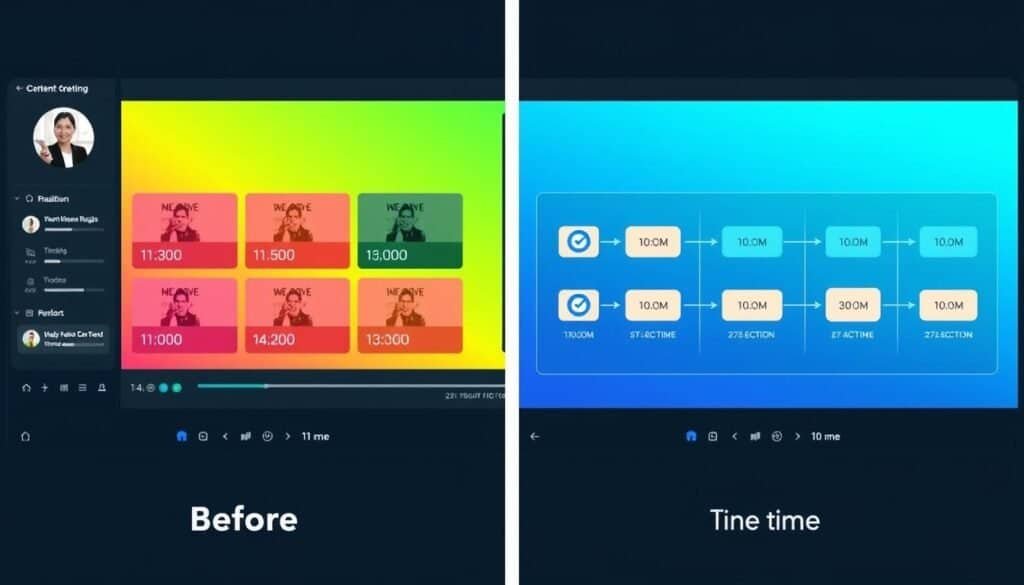
Tools I Use
Jasper AI
For long-form content creation, blog posts, and marketing copy that maintains my brand voice.
Surfer SEO
For content optimization that ensures my AI-generated content ranks well in search results.
Midjourney
For creating custom images and graphics that perfectly match my content themes.
Implementation Process
- Step 1: Set up Jasper AI with your brand voice guidelines and content examples (2 hours one-time setup)
- Step 2: Create content briefs with target keywords, audience information, and key points (15 minutes per piece)
- Step 3: Generate first drafts with Jasper AI using your brief as context (30 minutes per 1500-word article)
- Step 4: Run the draft through Surfer SEO for optimization suggestions (10 minutes)
- Step 5: Edit and refine the AI-generated content (30-60 minutes)
- Step 6: Create supporting visuals with Midjourney (15 minutes per image)
Results
Using this AI content creation system, I’ve increased my content output from 4 to 16 pieces monthly while maintaining quality. My blog traffic has grown by 143% year-over-year, with a 37% increase in organic conversions.
Ready to transform your content creation process?
Get started with Jasper AI’s 7-day free trial and see how much time you can save while creating better content.
Strategy 2: Automated Social Media Scheduling and Optimization
Managing social media across multiple platforms used to consume 10+ hours weekly. Now, AI handles content scheduling, optimal posting times, and even helps generate engaging captions.
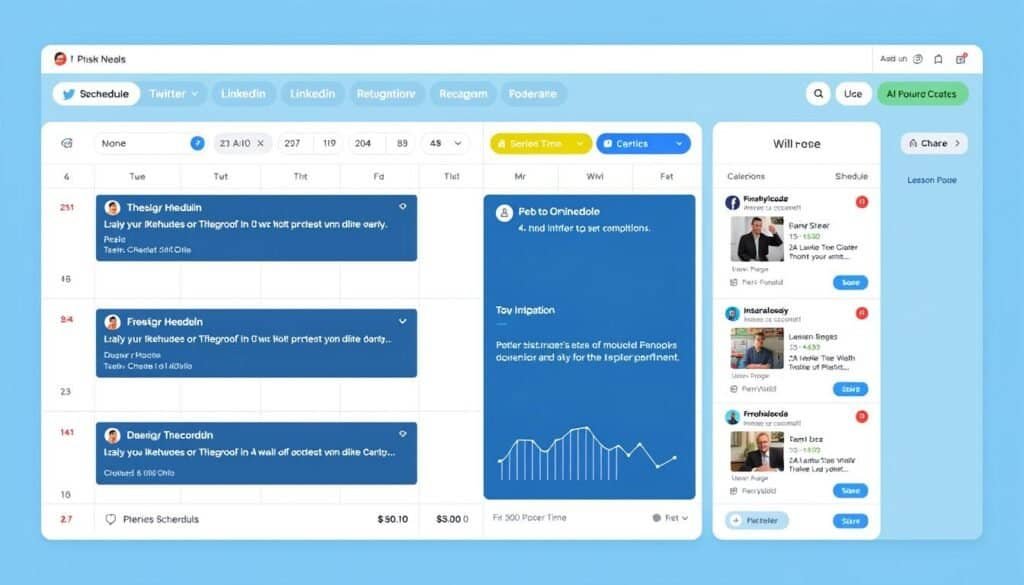
Tools I Use
Hootsuite
For centralized scheduling and management across all social platforms.
Buffer
For AI-powered posting time optimization and analytics.
Lately
For AI content repurposing that turns long-form content into social snippets.
Implementation Process
- Step 1: Connect all social accounts to Hootsuite and Buffer (1 hour one-time setup)
- Step 2: Upload long-form content to Lately to generate multiple social posts (15 minutes)
- Step 3: Review and refine AI-generated social snippets (30 minutes weekly)
- Step 4: Use Buffer’s optimal time suggestions to schedule posts (15 minutes weekly)
- Step 5: Set up automated performance reporting in Hootsuite (30 minutes one-time setup)
Results
This social media automation system has increased my engagement by 65% while reducing my time investment by 90%. I’m now posting consistently across 5 platforms with just 1 hour of work weekly.
Pro Tip: Use Lately to transform each blog post into 10-15 unique social media posts. This ensures consistent content flow with minimal effort.
Strategy 3: AI-Driven Email Marketing Personalization
Email marketing is crucial for conversions, but creating personalized campaigns for different segments was overwhelming. AI now handles segmentation, personalization, and even optimizes send times.
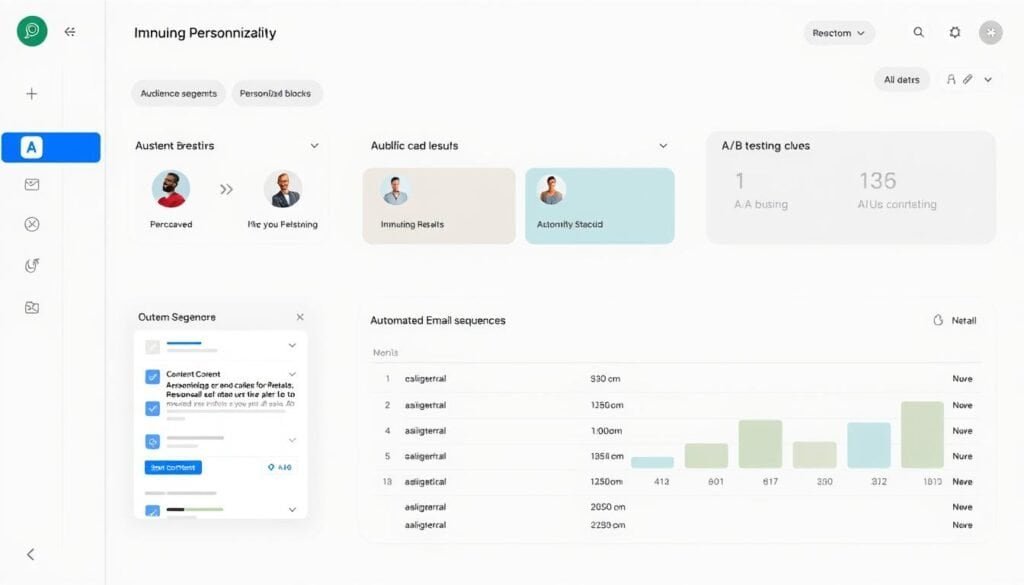
Tools I Use
ActiveCampaign
For advanced email automation, segmentation, and predictive sending.
Seventh Sense
For AI-powered send time optimization based on individual open patterns.
Phrasee
For AI-generated email subject lines that boost open rates.
Implementation Process
- Step 1: Set up behavioral segments in ActiveCampaign (2 hours one-time setup)
- Step 2: Create email templates with dynamic content blocks (3 hours one-time setup)
- Step 3: Generate multiple subject line variations with Phrasee (15 minutes per campaign)
- Step 4: Configure Seventh Sense to optimize send times (30 minutes one-time setup)
- Step 5: Set up automated workflows for different customer journeys (2 hours one-time setup)
Results
My email open rates increased by 47% and conversions by 52% after implementing this AI-driven email system. What once took 8 hours per week now takes just 1 hour of oversight.
Case Study: For a product launch email sequence, I used AI to create personalized content blocks based on previous purchase history. This resulted in a 73% higher conversion rate compared to our standard approach.
Strategy 4: Chatbot Implementation for Customer Engagement
Customer service and lead qualification were taking up to 20 hours weekly. Implementing AI chatbots has automated 75% of these interactions while improving response times and lead quality.
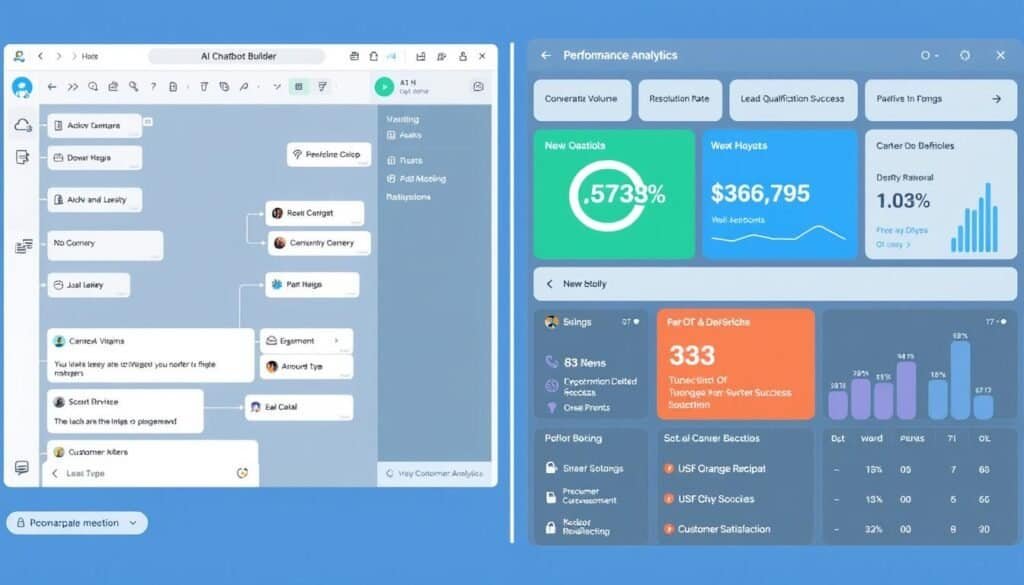
Tools I Use
Intercom
For website chat, customer support automation, and lead routing.
ManyChat
For Facebook Messenger and Instagram automation.
Chatfuel
For creating advanced conversation flows with minimal technical knowledge.
Implementation Process
- Step 1: Map out common customer questions and support scenarios (3 hours)
- Step 2: Build conversation flows in Intercom for website visitors (4 hours)
- Step 3: Create lead qualification sequences that score prospects (2 hours)
- Step 4: Set up ManyChat for social media engagement (2 hours)
- Step 5: Configure human handoff triggers for complex inquiries (1 hour)
- Step 6: Implement analytics tracking to measure effectiveness (1 hour)
Results
Our chatbots now handle 78% of initial customer inquiries, reducing response time from hours to seconds. Lead quality has improved by 63% as the bots pre-qualify prospects before human follow-up.
Important: Always provide a clear path to human support. AI chatbots should enhance, not replace, the human touch in customer relationships.
Strategy 5: Predictive Analytics for Campaign Optimization
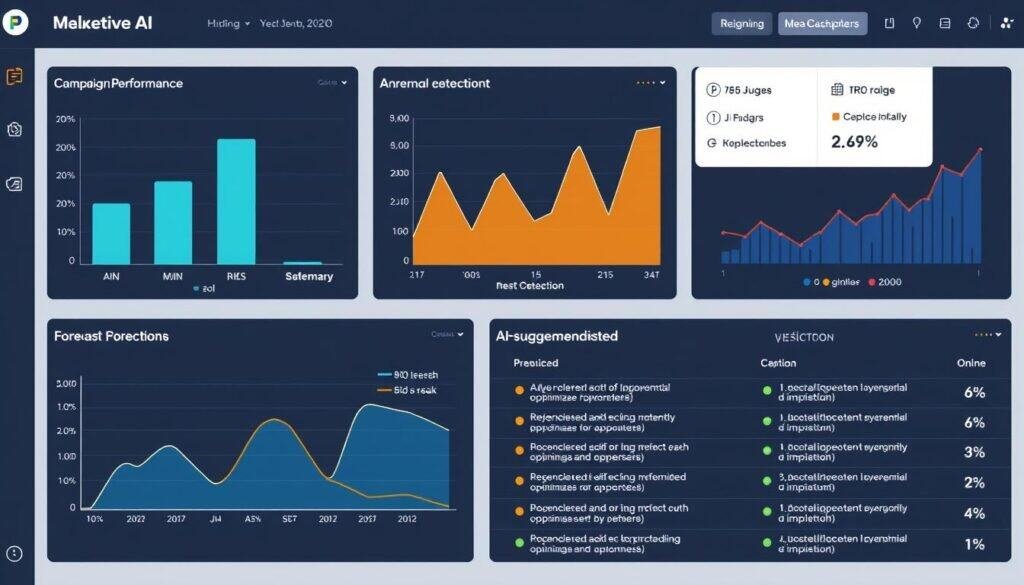
Making data-driven marketing decisions used to require hours of manual analysis. AI-powered predictive analytics now automatically identifies trends, optimizes campaigns, and forecasts results.
Tools I Use
Mixpanel
For advanced user behavior analysis and conversion funnel optimization.
Albert.ai
For AI-powered digital advertising optimization across channels.
Oribi
For automated insights and conversion attribution without complex setup.
Implementation Process
- Step 1: Install tracking pixels and configure event tracking (3 hours)
- Step 2: Set up conversion funnels and goals in Mixpanel (2 hours)
- Step 3: Connect advertising accounts to Albert.ai (1 hour)
- Step 4: Configure automated budget allocation rules (1 hour)
- Step 5: Set up weekly insight reports in Oribi (30 minutes)
- Step 6: Create dashboard for key performance metrics (2 hours)
Results
Predictive analytics has improved our ad spend ROI by 43% while reducing analysis time by 80%. The system now automatically adjusts budgets across channels based on real-time performance.
Success Story: For a recent product launch, Albert.ai automatically identified an underperforming audience segment and reallocated budget to better-performing segments, resulting in a 37% cost reduction per acquisition.
Strategy 6: AI-Based SEO and Keyword Research
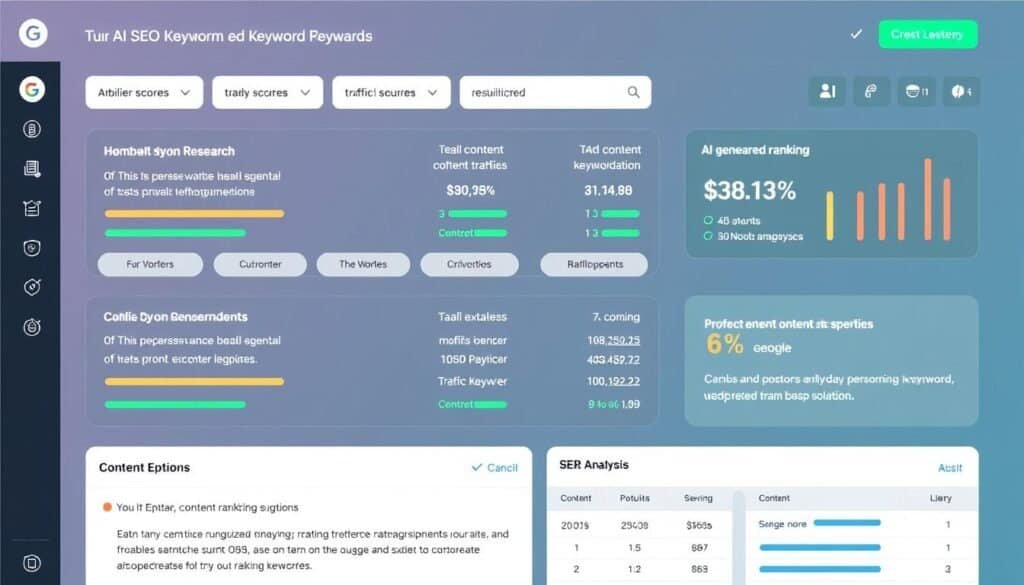
SEO optimization and keyword research were time-consuming processes with uncertain outcomes. AI now handles keyword discovery, content optimization, and even predicts ranking potential.
Tools I Use
Clearscope
For AI-powered content optimization that improves search rankings.
MarketMuse
For content planning and identifying content gaps in your strategy.
Frase
For AI-powered content briefs and SERP analysis.
Implementation Process
- Step 1: Conduct initial keyword research with MarketMuse (2 hours)
- Step 2: Generate content briefs with Frase for target keywords (30 minutes per topic)
- Step 3: Create content using AI tools from Strategy 1 (varies)
- Step 4: Optimize content with Clearscope before publishing (30 minutes per piece)
- Step 5: Set up rank tracking for target keywords (1 hour)
- Step 6: Implement quarterly content audits with MarketMuse (3 hours quarterly)
Results
Our AI-powered SEO strategy has increased organic traffic by 112% year-over-year while reducing the time spent on keyword research and content optimization by 70%.
Key Insight: The combination of AI content creation and AI SEO tools creates a powerful synergy. Content is not only created faster but is also pre-optimized for search engines from the start.
Strategy 7: Automated Performance Reporting and Insights
Creating marketing reports and extracting actionable insights used to take days each month. Now, AI automatically generates comprehensive reports and highlights key opportunities.

Tools I Use
Databox
For automated dashboard creation and cross-platform reporting.
Supermetrics
For data aggregation from multiple marketing platforms.
Narrativa
For AI-generated narrative reports that explain data in plain English.
Implementation Process
- Step 1: Connect all marketing platforms to Supermetrics (2 hours)
- Step 2: Create custom dashboards in Databox for different stakeholders (4 hours)
- Step 3: Set up automated data refresh schedules (30 minutes)
- Step 4: Configure Narrativa for natural language insights (1 hour)
- Step 5: Set up automated email delivery of reports (30 minutes)
- Step 6: Create alert thresholds for key metrics (1 hour)
Results
Automated reporting has reduced our reporting time from 3 days monthly to just 30 minutes of review. More importantly, we’re acting on insights faster, with a 73% improvement in decision speed.
Automation Tip: Set up anomaly detection alerts to notify you immediately when metrics deviate significantly from expected ranges. This allows you to address issues before they become major problems.
The Cumulative Impact: 80% Time Savings, 2X Results
Implementing these seven AI marketing automation strategies has transformed my marketing operations. Here’s the before-and-after comparison:
| Metric | Before AI Automation | After AI Automation | Improvement |
| Weekly Time Investment | 50+ hours | 10 hours | 80% reduction |
| Content Production | 4 pieces/month | 16 pieces/month | 300% increase |
| Email Open Rates | 22% | 32% | 47% increase |
| Ad Spend ROI | 2.3x | 3.3x | 43% increase |
| Organic Traffic | 15,000/month | 31,800/month | 112% increase |
| Customer Response Time | 5.2 hours | 7 minutes | 92% reduction |
| Overall Marketing ROI | 3.1x | 6.7x | 116% increase |

The most valuable outcome isn’t just the time saved—it’s how that time is now reinvested. Instead of drowning in repetitive tasks, I now focus on strategy, creativity, and building relationships. The quality of my work has improved alongside the quantity.
Your AI Marketing Automation Implementation Plan
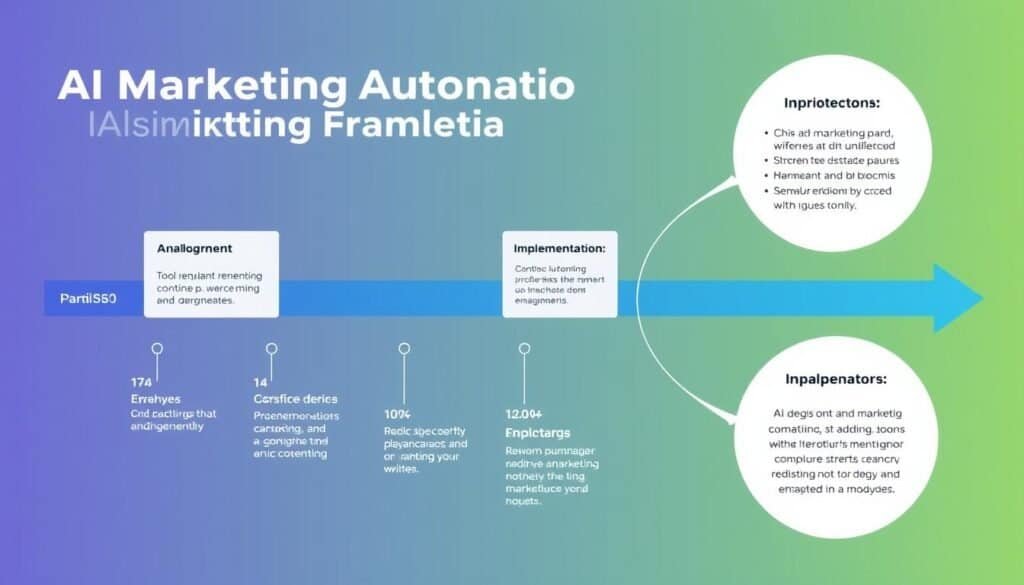
Ready to achieve similar results? Here’s a phased approach to implementing these strategies without overwhelming your team:
Phase 1: Foundation (Month 1)
- Implement automated reporting (Strategy 7)
- Start with basic content automation (Strategy 1)
- Set up social media scheduling (Strategy 2)
Phase 2: Expansion (Months 2-3)
- Implement email personalization (Strategy 3)
- Add basic chatbot functionality (Strategy 4)
- Begin SEO automation (Strategy 6)
Phase 3: Optimization (Months 4-6)
- Implement predictive analytics (Strategy 5)
- Enhance chatbot with advanced flows
- Integrate systems for cross-platform automation
Important: Start with one strategy at a time and master it before moving to the next. Trying to implement everything at once can lead to overwhelm and poor execution.
Conclusion: The Future of Marketing is AI-Powered Automation
The marketing landscape has fundamentally changed. What once required large teams and massive time investments can now be accomplished by small teams—or even individuals—leveraging AI marketing automation.
By implementing these seven strategies, I’ve transformed my marketing operation from a time-consuming struggle to a streamlined, high-performing system. The 80% time savings has allowed me to focus on what truly matters: strategy, creativity, and building genuine connections with customers.
The best part? This is just the beginning. As AI technology continues to evolve, the possibilities for marketing automation will only expand. Those who embrace these tools now will have a significant competitive advantage in the years to come.
AI doesn’t replace marketers—it empowers them. By automating the repetitive and time-consuming aspects of marketing, AI frees us to be more strategic, creative, and human in our approach.
Ready to transform your marketing with AI automation?
Start with just one strategy from this article and build from there. The time savings and performance improvements will compound with each new automation you implement.

Frequently Asked Questions About AI Marketing Automation
How much does it cost to implement these AI marketing automation strategies?
The investment varies based on your scale and needs. You can start with as little as 0-200/month for basic tools and scale up as you grow. Many tools offer free trials or freemium versions to test before committing. The ROI typically becomes positive within 2-3 months as time savings and performance improvements accumulate.
Do I need technical skills to implement these AI marketing automation strategies?
Most of the tools mentioned are designed for marketers, not developers. They feature user-friendly interfaces with minimal technical requirements. Some initial setup may require basic familiarity with marketing platforms, but comprehensive tutorials are available. For more complex integrations, you might occasionally need developer assistance, but it’s not required for the core implementation.
How long does it take to see results from AI marketing automation?
You’ll experience time savings almost immediately after implementation. Performance improvements typically begin within the first month and compound over time as the AI learns from your data. Most marketers see significant measurable improvements within 3 months of consistent use. The full 80% automation level described in this article typically takes 6-12 months to achieve as you layer and refine multiple strategies.
Will AI marketing automation work for my specific industry?
These strategies have been successfully implemented across diverse industries from e-commerce and SaaS to healthcare and financial services. The fundamental principles apply universally, though you may need to adjust specific tools or approaches based on your industry’s regulations or audience preferences. The key is starting with clear goals and selecting tools that address your specific challenges.
What about the human element in marketing? Won’t AI make my marketing feel robotic?
When implemented correctly, AI enhances rather than diminishes the human element. By automating repetitive tasks, you actually free up more time for creative thinking and personal connection. The best approach is to use AI for data analysis, content creation assistance, and automation of repetitive tasks while maintaining human oversight and infusing your unique brand voice and perspective.
We are reader-supported. We may earn an affiliate commission
When you buy through links on our site.