



For e-commerce businesses, inventory management can be the difference between thriving and barely surviving. Too much inventory ties up capital and warehouse space. Too little leads to stockouts and lost sales. Traditional inventory management methods often fall short in today’s dynamic market, leaving businesses struggling with forecasting errors, inefficient replenishment, and dissatisfied customers.
Artificial intelligence is transforming how online retailers handle these challenges. AI inventory management for e-commerce uses machine learning algorithms and predictive analytics to automate decisions, optimize stock levels, and create a more responsive supply chain. This guide will walk you through everything you need to know about implementing AI-powered inventory solutions that can dramatically improve your operational efficiency and bottom line.
Common Inventory Challenges in E-commerce
Before diving into AI solutions, let’s identify the key inventory challenges that e-commerce businesses face daily:
Common inventory challenges that e-commerce businesses face
Demand Forecasting
Predicting customer demand accurately is difficult, especially with seasonal fluctuations, market trends, and changing consumer behavior. Traditional forecasting methods often rely on historical data alone, missing crucial real-time signals.
Stockouts & Overstock
The delicate balance between having enough inventory to meet demand without tying up excessive capital is challenging. Stockouts lead to lost sales and customer dissatisfaction, while overstocking increases carrying costs and risks obsolescence.
Multichannel Complexity
Managing inventory across multiple sales channels (website, marketplaces, social commerce) creates synchronization challenges. Without real-time visibility, businesses risk overselling or maintaining redundant stock across channels.
How AI Transforms Inventory Management
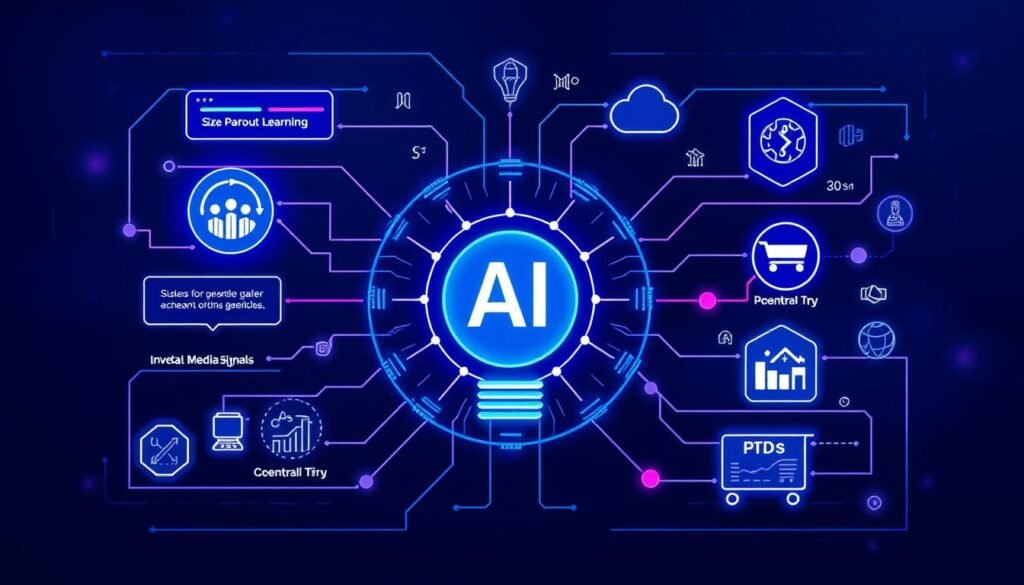
Artificial intelligence offers powerful solutions to these inventory challenges by leveraging data in ways that traditional systems simply cannot. Here’s how AI is revolutionizing inventory management for e-commerce:
Intelligent Demand Forecasting
AI algorithms analyze historical sales data alongside external factors like market trends, competitor pricing, weather patterns, and even social media sentiment to predict future demand with remarkable accuracy. Unlike traditional forecasting, AI systems continuously learn and improve from new data.
Automated Replenishment
AI-powered systems can automatically trigger purchase orders when inventory reaches optimal reorder points. These systems consider lead times, demand volatility, and supplier reliability to maintain ideal stock levels without human intervention.
Dynamic Inventory Allocation
For businesses with multiple warehouses or fulfillment centers, AI can optimize inventory distribution based on regional demand patterns, shipping costs, and delivery time requirements, ensuring products are available where they’re most needed.
Anomaly Detection
AI systems can identify unusual patterns in sales or inventory levels that might indicate issues like theft, data entry errors, or unexpected demand spikes, allowing for rapid intervention before problems escalate.
Pricing Optimization
AI can recommend strategic price adjustments based on inventory levels, helping to accelerate sales of overstocked items or maximize margins on high-demand products with limited stock.
Supply Chain Visibility
AI enhances end-to-end supply chain visibility by integrating data from suppliers, warehouses, and transportation partners, enabling better coordination and reducing disruption risks.
Ready to transform your inventory management?
Discover how AI can help you reduce stockouts, optimize inventory levels, and increase profitability.
Get Your Free AI Readiness AssessmentStep-by-Step Implementation Guide for AI Inventory Management
Implementing AI inventory management for your e-commerce business doesn’t have to be overwhelming. Follow this structured approach to ensure a successful transition:
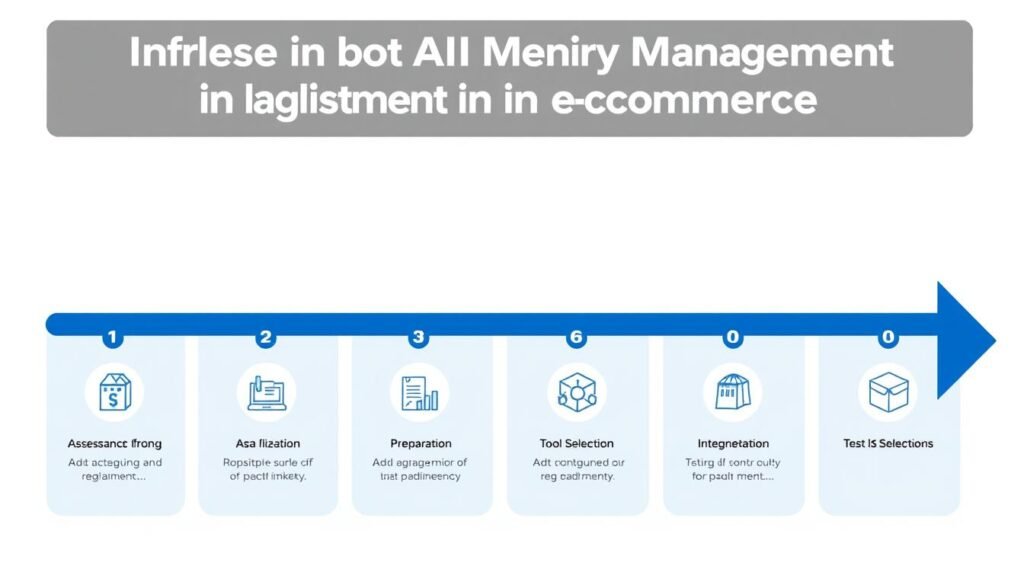
Implementation roadmap for AI inventory management
1. Assess Your Current Inventory Management System
Before implementing AI solutions, evaluate your existing inventory processes to identify specific pain points and opportunities for improvement:
- Audit your current inventory accuracy rates and identify discrepancy patterns
- Calculate key metrics like stockout frequency, inventory turnover, and carrying costs
- Document your existing forecasting methods and their accuracy rates
- Map your current inventory management workflow and identify bottlenecks
- Determine your technical infrastructure and integration capabilities
2. Prepare Your Data Foundation
AI systems rely on quality data to deliver accurate results. Ensure your data is ready for AI implementation:
- Consolidate historical sales data across all channels (minimum 12-24 months recommended)
- Clean and standardize product data, including SKUs, categories, and attributes
- Gather supplier information, including lead times and reliability metrics
- Collect customer data that might influence purchasing patterns
- Ensure your data storage and processing systems can handle AI requirements
Pro Tip: The quality of your AI implementation is directly proportional to the quality of your data. Invest time in data preparation to achieve better results.
3. Choose the Right AI Inventory Management Tool
Selecting the appropriate AI inventory solution depends on your business size, complexity, and specific needs:
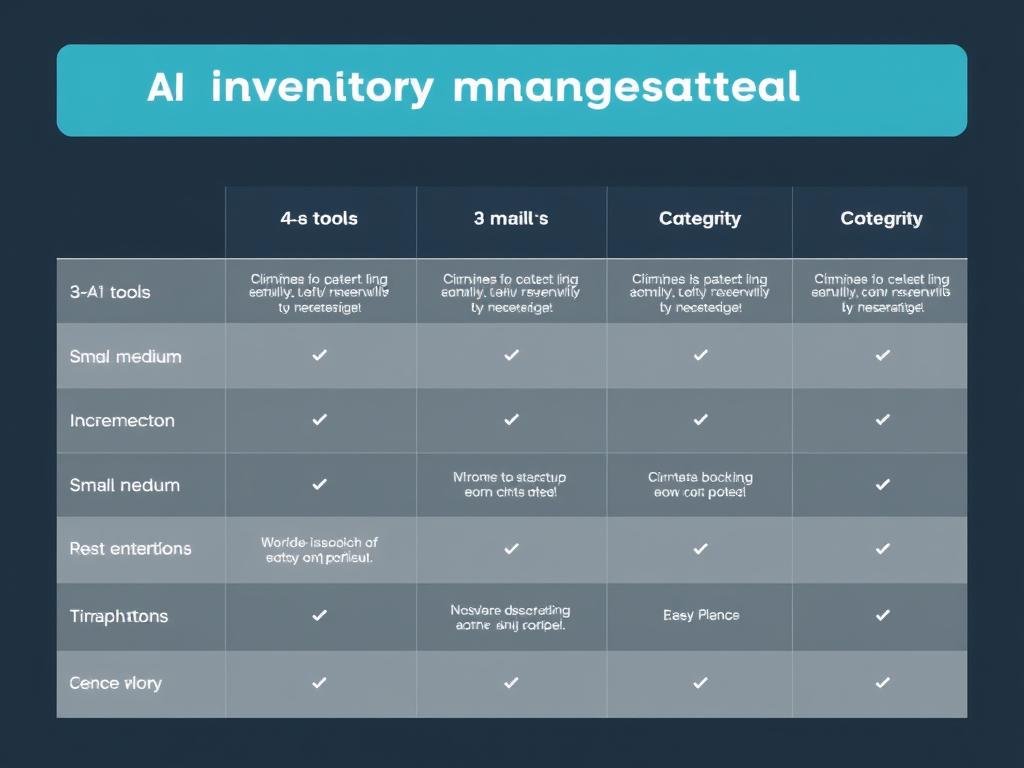
For Small E-commerce Businesses (Up to $2M annual revenue)
Focus on user-friendly solutions that integrate with popular e-commerce platforms and provide essential AI capabilities without requiring extensive technical expertise:
Zoho Inventory with AI Analytics
Best for Beginners
Zoho offers an accessible entry point to AI-powered inventory management with intuitive demand forecasting and automated reordering capabilities. Its strength lies in its easy integration with popular e-commerce platforms and straightforward implementation.
- AI-driven demand forecasting based on historical sales patterns
- Automated reorder point calculations
- Seamless integration with major e-commerce platforms
- Visual analytics dashboard with inventory insights
- Starting at $79/month with AI features
For Mid-Size E-commerce Businesses ($2M-$25M annual revenue)
Look for solutions with more advanced AI capabilities that can handle multi-channel operations and provide deeper analytical insights:
Netstock AI Inventory Optimization
Best for Multi-Channel
Netstock offers robust AI-powered inventory management specifically designed for growing e-commerce businesses. Its strength is in balancing sophisticated AI capabilities with practical usability.
- Machine learning demand forecasting with 90+ algorithms
- Automated inventory classification and prioritization
- Multi-location inventory optimization
- Supply chain risk monitoring and alerts
- Custom pricing based on business size and complexity
For Enterprise E-commerce Operations ($25M+ annual revenue)
Enterprise solutions offer comprehensive AI capabilities with advanced customization options and integration with complex supply chain systems:
Blue Yonder Luminate Planning
Enterprise-Grade
Blue Yonder’s Luminate Planning platform delivers sophisticated AI-powered inventory management for large e-commerce operations with complex supply chains. Its cognitive capabilities and end-to-end visibility make it ideal for enterprise implementations.
- Cognitive demand planning with external data integration
- Scenario planning and simulation capabilities
- End-to-end supply chain visibility and optimization
- Autonomous inventory replenishment
- Enterprise pricing with customized implementation
4. Integrate AI Tools with Your E-commerce Platform
Successful integration ensures seamless data flow between your AI inventory system and other business platforms:
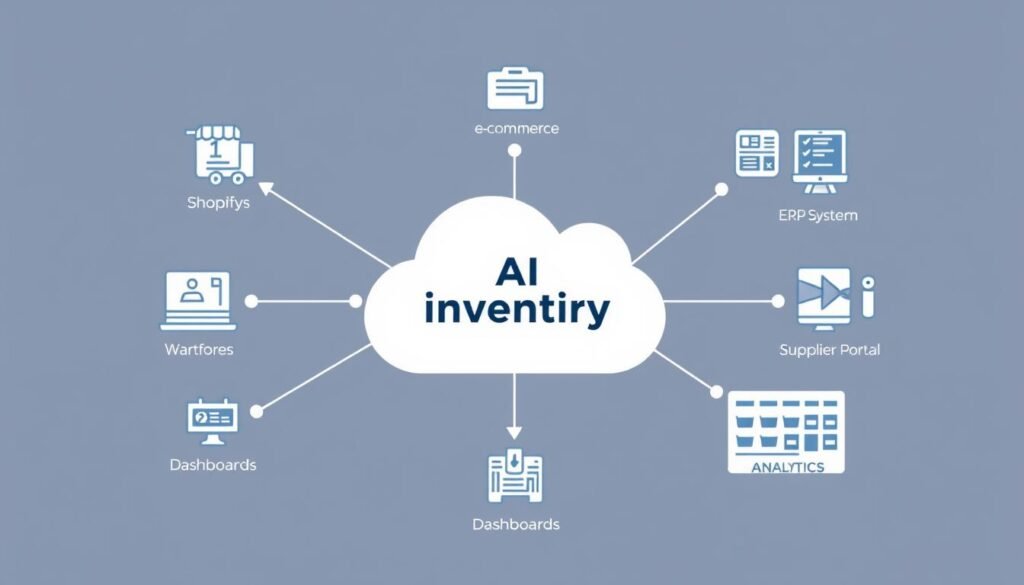
Integration architecture for AI inventory management
E-commerce Platform Integration
Connect your AI inventory system with your e-commerce platform (Shopify, WooCommerce, Magento, etc.) to ensure real-time synchronization of orders, product information, and inventory levels across all sales channels.
ERP/Accounting Integration
Integrate with your ERP or accounting system to maintain financial accuracy and ensure that inventory valuations, cost of goods sold, and other financial metrics remain consistent across systems.
Warehouse Management Integration
Connect with your warehouse management system to enable real-time inventory tracking, optimize picking routes, and ensure physical inventory matches digital records.
“The true power of AI inventory management comes from seamless integration across your entire business ecosystem. When your AI system can access data from all touchpoints, it can make truly intelligent decisions that optimize your entire supply chain.”
5. Train Your Team and Test the System
Proper training and testing are crucial for successful AI implementation:

Staff Training Approach
- Provide role-specific training for inventory managers, purchasers, and warehouse staff
- Focus on how to interpret AI recommendations and when to override them
- Create standard operating procedures for AI-assisted inventory workflows
- Develop a feedback loop for continuous improvement of the AI system
System Testing Protocol
- Run the AI system in parallel with existing processes before full implementation
- Test across different product categories and sales channels
- Validate forecasting accuracy against historical data
- Simulate extreme scenarios (demand spikes, supply disruptions) to test system resilience
Need help training your team?
Our AI implementation specialists can provide customized training programs for your staff to ensure smooth adoption.
Book a Training Consultation6. Monitor, Optimize, and Scale
AI inventory management is not a “set it and forget it” solution. Continuous monitoring and optimization are essential:
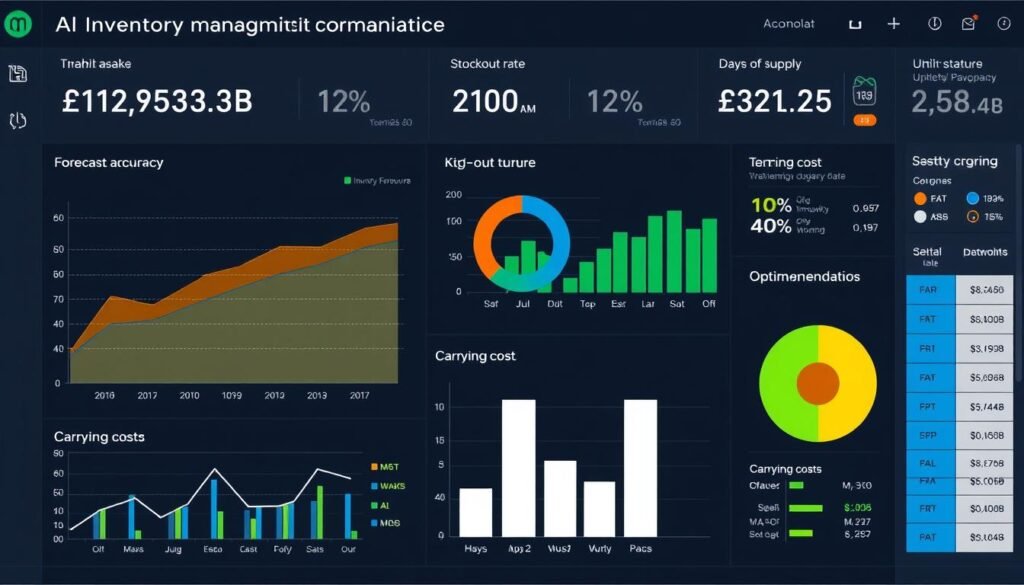
AI inventory performance monitoring dashboard
Key Performance Indicators
Track these essential metrics to evaluate your AI inventory system’s performance:
- Forecast accuracy (comparing predicted vs. actual demand)
- Stockout rate reduction
- Inventory turnover improvement
- Carrying cost reduction
- Order fulfillment rate
Continuous Optimization
Refine your AI system to improve performance over time:
- Regularly review and adjust AI parameters based on performance
- Incorporate new data sources to enhance prediction accuracy
- Optimize inventory rules for different product categories
- Fine-tune reorder points and safety stock calculations
Scaling Your AI Capabilities
Expand your AI inventory management as your business grows:
- Extend AI capabilities to new product lines or categories
- Implement advanced features like supplier management and risk assessment
- Integrate with additional sales channels and marketplaces
- Develop custom AI models for unique business requirements
Real-World Success Stories: AI Inventory Management in Action
Learn how e-commerce businesses have transformed their operations with AI-powered inventory management:
Fashion Retailer Reduces Stockouts by 78%

A mid-sized fashion e-commerce company was struggling with frequent stockouts during seasonal peaks, resulting in lost sales and customer dissatisfaction. After implementing an AI inventory management solution:
- Stockout incidents decreased by 78% within the first three months
- Inventory carrying costs reduced by 23% through optimized stock levels
- Customer satisfaction scores improved by 15% due to better product availability
- Revenue increased by 32% year-over-year with the same inventory investment
The AI system was particularly effective at predicting demand for seasonal fashion items by analyzing social media trends alongside historical sales data.
Electronics Retailer Optimizes Multi-Channel Inventory
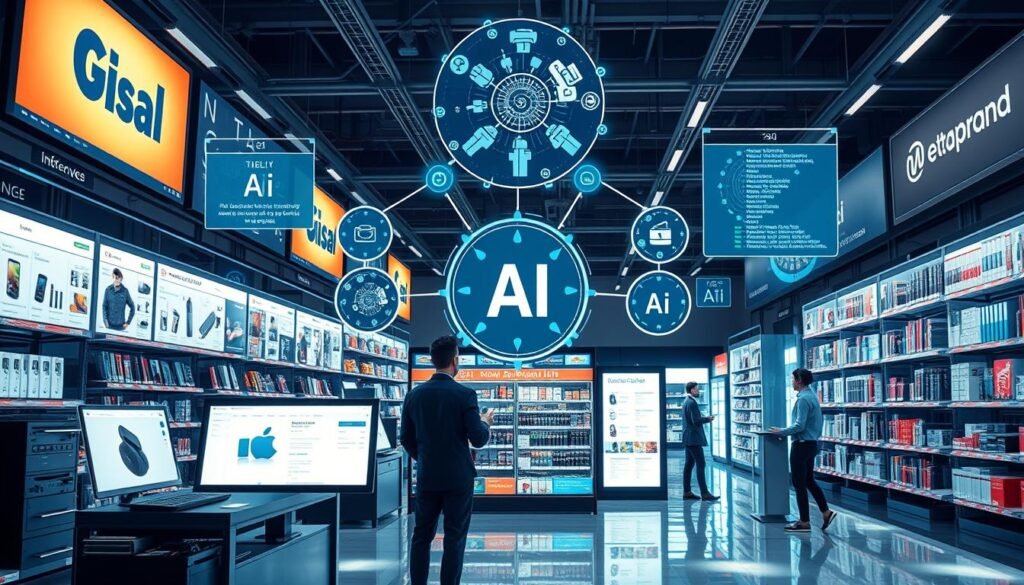
An electronics retailer selling through their website, Amazon, eBay, and two physical stores was struggling to maintain accurate inventory across all channels. After implementing an AI inventory management system:
- Overselling incidents dropped to near-zero across all channels
- Inventory was dynamically allocated to channels based on profitability and demand
- Warehouse space utilization improved by 35% through optimized stocking
- Overall inventory investment decreased by 27% while maintaining sales volume
The AI system’s ability to synchronize inventory across channels and predict channel-specific demand patterns was key to their success.
Want results like these for your business?
Our team can help you implement AI inventory management tailored to your specific e-commerce needs.
Schedule Your Strategy SessionBest Practices for AI Inventory Management Success
Follow these proven strategies to maximize the benefits of your AI inventory management implementation:
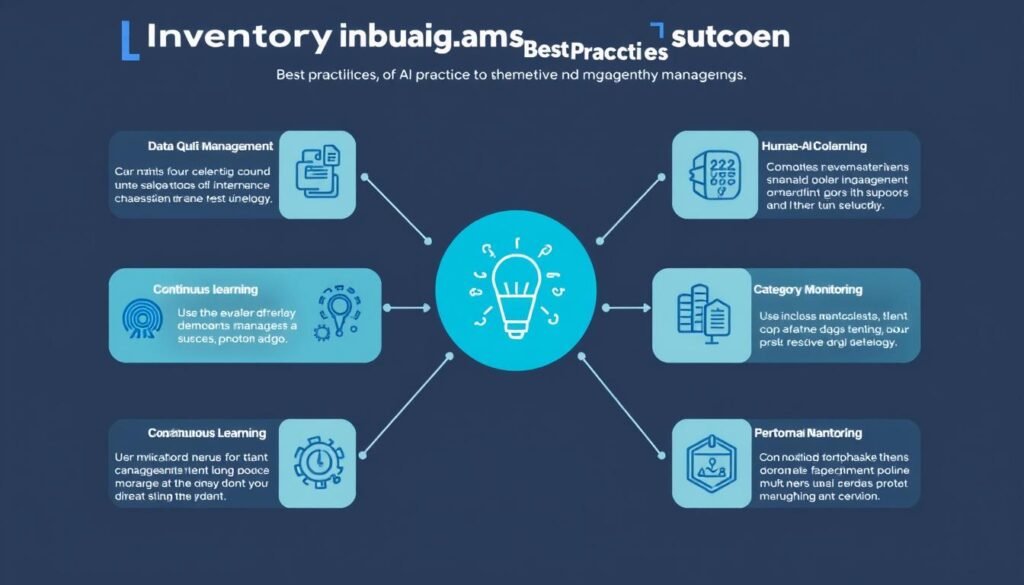
Key best practices for successful AI inventory management
Prioritize Data Quality
The accuracy of AI predictions depends directly on the quality of your data. Implement rigorous data governance practices:
- Establish data validation rules to catch errors at entry points
- Perform regular data audits to identify and correct inconsistencies
- Standardize product data across all systems and channels
- Implement automated data cleaning processes
Balance Automation with Human Oversight
While AI can automate many inventory decisions, human expertise remains valuable:
- Define clear parameters for when human review is required
- Establish override protocols for exceptional circumstances
- Create feedback mechanisms for improving AI recommendations
- Maintain institutional knowledge alongside AI systems
Implement Category-Specific Strategies
Different product categories may require different inventory approaches:
- Segment products by demand patterns, margin, and criticality
- Apply different forecasting models to different product categories
- Adjust safety stock levels based on category-specific factors
- Create custom replenishment rules for each category
Embrace Continuous Learning
AI systems improve over time with proper training and feedback:
- Regularly review AI recommendations against actual outcomes
- Feed performance data back into the system for refinement
- Update models to account for new market conditions
- Invest in ongoing AI training and development
Monitor External Factors
Incorporate external data sources to enhance prediction accuracy:
- Track market trends and competitor activities
- Monitor social media for emerging product interests
- Consider economic indicators that may impact demand
- Account for seasonal and weather-related factors
Start Small and Scale
Begin with focused implementation before expanding:
- Pilot AI inventory management with a subset of products
- Validate results before expanding to additional categories
- Add complexity gradually as your team gains experience
- Document learnings to inform future expansion
“The most successful AI inventory implementations we’ve seen start with clear business objectives, focus on data quality, and maintain a balance between automation and human judgment. It’s not about replacing your team’s expertise—it’s about augmenting it.”
Future Trends in AI Inventory Management for E-commerce
Stay ahead of the curve by understanding these emerging trends in AI-powered inventory management:
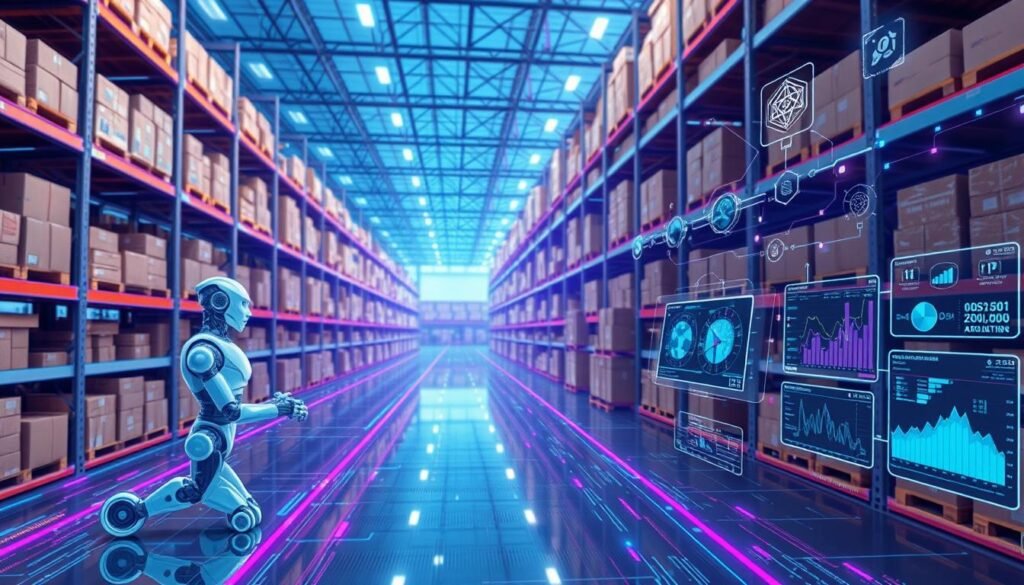
Emerging technologies shaping the future of AI inventory management
Autonomous Supply Chains
The future of inventory management is moving toward fully autonomous supply chains where AI systems not only make recommendations but execute decisions with minimal human intervention. These systems will coordinate across procurement, warehousing, and fulfillment to create self-optimizing supply networks.
Digital Twins
Digital twin technology creates virtual replicas of physical supply chains, allowing businesses to simulate scenarios and test strategies before implementation. This enables more precise inventory optimization and risk management by visualizing the impact of potential decisions.
Blockchain Integration
Blockchain technology is being integrated with AI inventory systems to enhance transparency and traceability throughout the supply chain. This combination improves inventory verification, reduces counterfeit risks, and builds consumer trust.
Edge Computing
Edge computing brings AI processing closer to the data source, enabling real-time inventory decisions even in locations with limited connectivity. This is particularly valuable for businesses with distributed warehouse networks or retail locations.
Computer Vision
AI-powered computer vision is revolutionizing physical inventory management by automatically counting stock, detecting misplaced items, and monitoring shelf conditions through camera systems, reducing the need for manual inventory counts.
Hyper-Personalized Inventory
Advanced AI is enabling inventory strategies tailored to individual customer preferences and behaviors. This approach optimizes stock not just for general demand but for the specific customers a business serves, improving satisfaction and loyalty.
Preparing for the Future: While these technologies are still evolving, e-commerce businesses should begin laying the groundwork now by investing in scalable AI platforms, prioritizing data quality, and developing the technical expertise needed to adopt these innovations as they mature.
Frequently Asked Questions About AI Inventory Management
How much does AI inventory management typically cost?
AI inventory management costs vary widely based on business size and solution complexity. Entry-level solutions for small e-commerce businesses typically range from 0-500 per month. Mid-market solutions generally cost 0-2,500 per month, while enterprise implementations can range from ,500-10,000+ monthly. Many providers offer tiered pricing based on SKU count, order volume, or revenue. Implementation costs and potential customization should also be factored into your budget.
How long does it take to implement an AI inventory management system?
Implementation timelines typically range from 1-3 months for small businesses using cloud-based solutions to 6-12 months for enterprise-level implementations. The timeline depends on factors like data quality, integration complexity, and customization requirements. Most implementations follow a phased approach, starting with core functionality and adding advanced features over time.
Will AI inventory management replace my existing team?
AI inventory management is designed to augment rather than replace your team. It automates routine tasks and provides data-driven insights, allowing your staff to focus on strategic decisions and exception handling. Most successful implementations involve close collaboration between AI systems and human expertise, with staff roles evolving to focus more on system oversight, strategy, and customer experience.
How accurate are AI demand forecasts compared to traditional methods?
AI demand forecasting typically achieves 25-50% higher accuracy than traditional statistical methods. While results vary by industry and product type, most businesses see forecast accuracy improvements of at least 10-15 percentage points after implementing AI. The advantage of AI forecasting grows over time as the system learns from new data and adapts to changing market conditions.
Can AI inventory management work for businesses with limited historical data?
Yes, though with some limitations. Modern AI systems can work with as little as 6-12 months of historical data by leveraging transfer learning and external data sources. For new products, AI can use data from similar items to generate initial forecasts. As more data becomes available, the system continuously improves its accuracy. Some providers offer specialized solutions for businesses with limited historical data.
Transform Your E-commerce Operations with AI Inventory Management
AI inventory management represents a significant competitive advantage for e-commerce businesses in today’s fast-paced market. By implementing these advanced systems, you can dramatically improve forecast accuracy, reduce stockouts and overstock situations, optimize working capital, and enhance customer satisfaction through better product availability.
The journey to AI-powered inventory management may seem complex, but with the right approach and partners, businesses of all sizes can successfully implement these solutions and realize substantial benefits. Start with clear objectives, focus on data quality, choose the right tools for your specific needs, and commit to continuous improvement.
As AI technology continues to evolve, early adopters will gain increasing advantages in operational efficiency, customer experience, and profitability. The time to begin your AI inventory management journey is now.
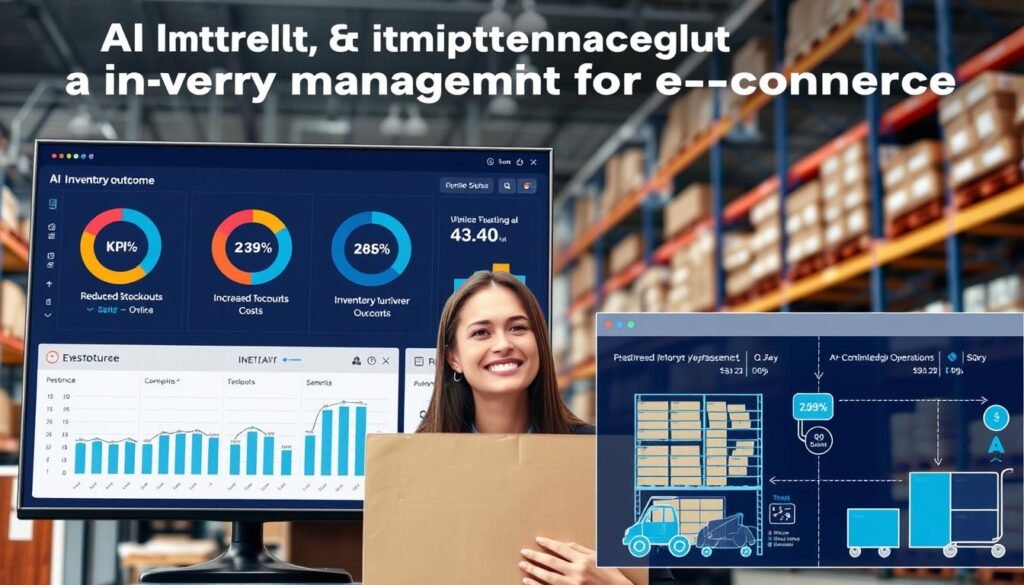
Ready to revolutionize your inventory management?
Our team of AI implementation specialists can help you select and implement the right solution for your e-commerce business.
Get Your Free Consultation