


Ready to harness the power of AI for your e-commerce business?
Discover how AI implementation can transform your store operations and boost your bottom line.
Explore AI Implementation OptionsThe Current Landscape of Artificial Intelligence in E-commerce
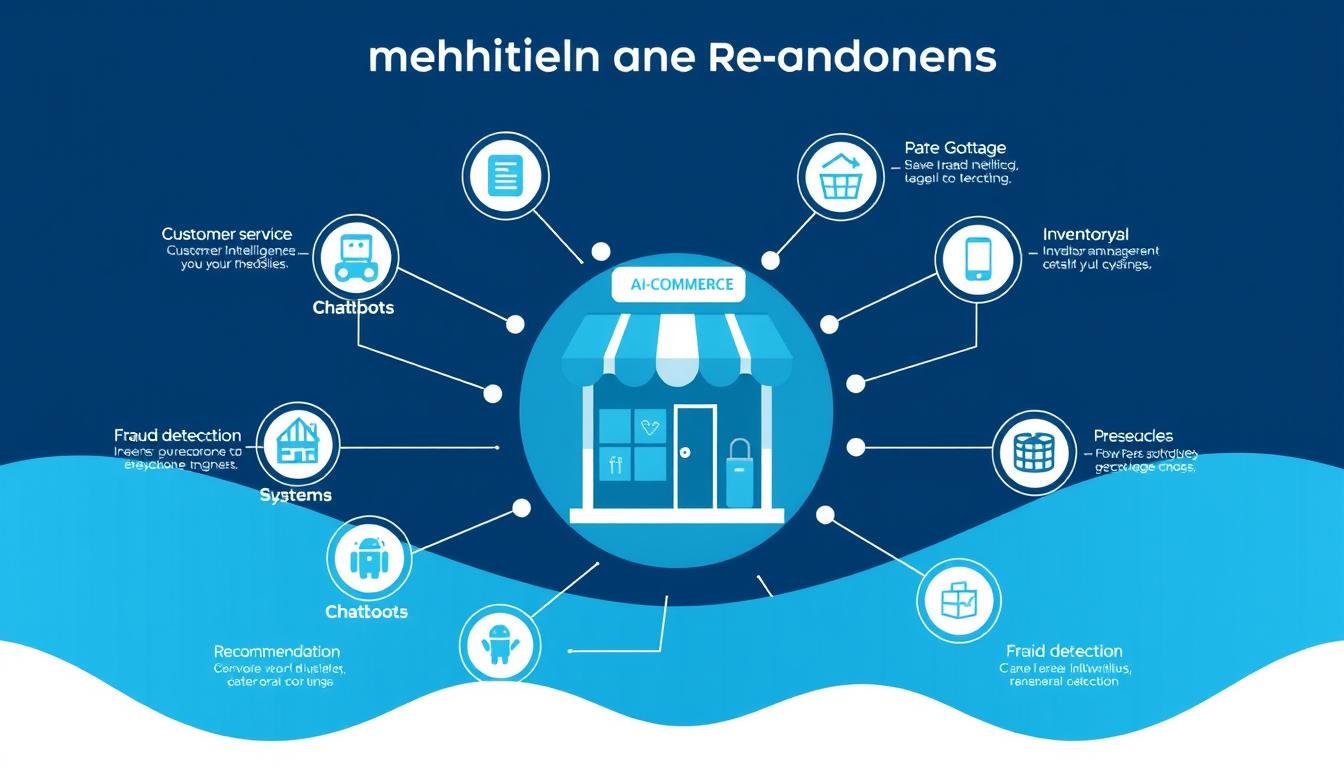
Artificial intelligence has moved beyond simple automation to become a strategic asset for e-commerce businesses. According to recent studies, e-commerce companies implementing AI solutions see an average 25% increase in operational efficiency and up to 30% growth in revenue.The ecosystem of AI applications in modern e-commerce operations
- Personalized shopping experiences that adapt to individual customer preferences
- Intelligent inventory management that predicts demand and prevents stockouts
- Automated customer service that resolves issues 24/7
- Dynamic pricing strategies that maximize profit margins
- Fraud detection systems that protect both businesses and customers
AI-Powered Inventory Management and Demand Forecasting
One of the most impactful applications of artificial intelligence in e-commerce is revolutionizing how businesses manage inventory and predict future demand. Traditional forecasting methods often fall short, leading to costly overstocking or revenue-draining stockouts.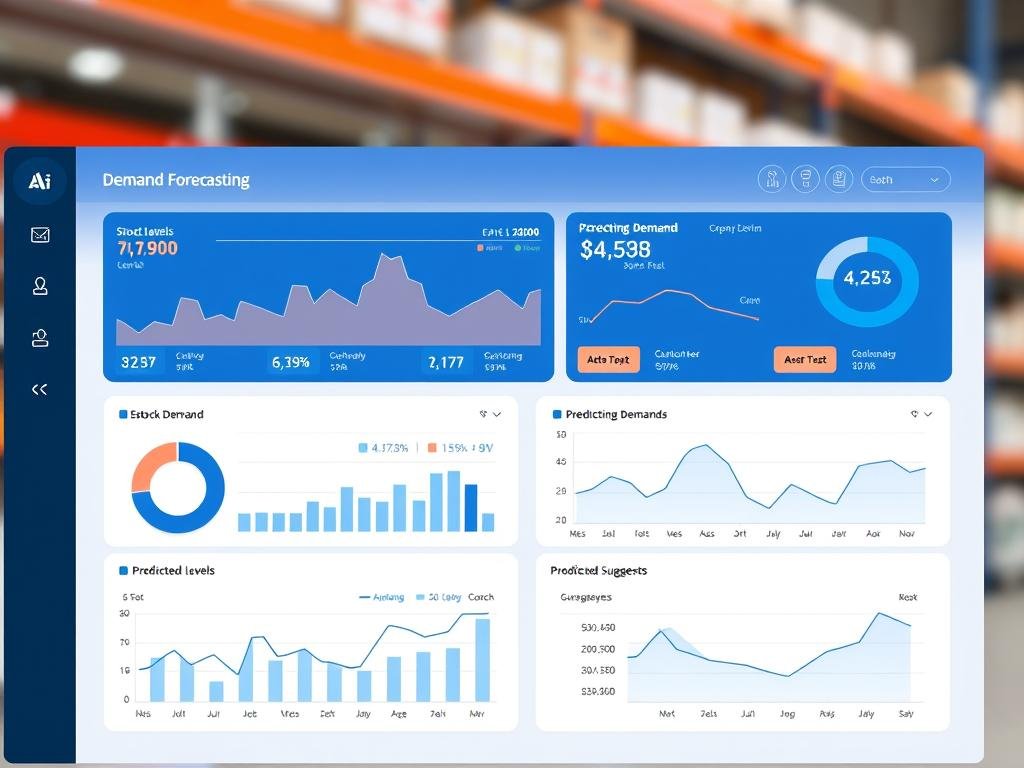
AI-powered inventory management dashboard with predictive analytics
How AI Transforms Inventory Management
Predictive Demand Forecasting
AI algorithms analyze historical sales data, seasonal trends, market conditions, and even social media sentiment to predict future demand with remarkable accuracy. These systems continuously learn and improve, identifying patterns that human analysts might miss.Dynamic Safety Stock Calculation
Rather than using fixed safety stock levels, AI systems calculate optimal inventory buffers based on demand volatility, supplier reliability, and business priorities—automatically adjusting as conditions change.Automated Replenishment
AI-driven systems can automatically trigger purchase orders when inventory reaches predetermined thresholds, considering lead times, order minimums, and cost optimizations to maintain ideal stock levels.Supply Chain Optimization
Machine learning algorithms can identify bottlenecks and inefficiencies in your supply chain, recommending adjustments to reduce costs and improve delivery times.Implementation Steps for AI Inventory Management
- Audit your current inventory data quality and collection methods
- Select an AI inventory solution that integrates with your existing systems
- Start with a single product category to test and refine the system
- Establish clear KPIs to measure success (reduced holding costs, fewer stockouts)
- Gradually expand to additional product categories as you validate results
Optimize Your Inventory Management with AI
Discover how AI-powered forecasting can reduce costs and prevent stockouts.
Get Your Free AI Inventory AssessmentCreating Personalized Customer Experiences Through AI Recommendations
Personalization has moved from a nice-to-have feature to an essential component of successful e-commerce. AI-powered recommendation engines analyze customer behavior, purchase history, and browsing patterns to deliver highly relevant product suggestions that significantly increase conversion rates and average order values.
How AI-powered recommendation engines analyze customer data to deliver personalized suggestions
Key Benefits of AI-Powered Personalization
| Benefit | Impact | Implementation Complexity |
| Increased Conversion Rates | 15-30% improvement | Medium |
| Higher Average Order Value | 20-50% increase | Medium |
| Improved Customer Retention | 10-25% higher repeat purchase rate | Medium-High |
| Reduced Cart Abandonment | 5-15% reduction | Low-Medium |
| Enhanced Customer Satisfaction | Significant improvement in NPS scores | Low |
Types of AI-Powered Recommendation Engines
Collaborative Filtering
Recommends products based on similar customers’ preferences and behaviors. “Customers who bought this also bought…”Content-Based Filtering
Suggests products with similar attributes to those a customer has shown interest in. “You might also like…”Hybrid Approaches
Combines multiple recommendation methods for more accurate and diverse suggestions.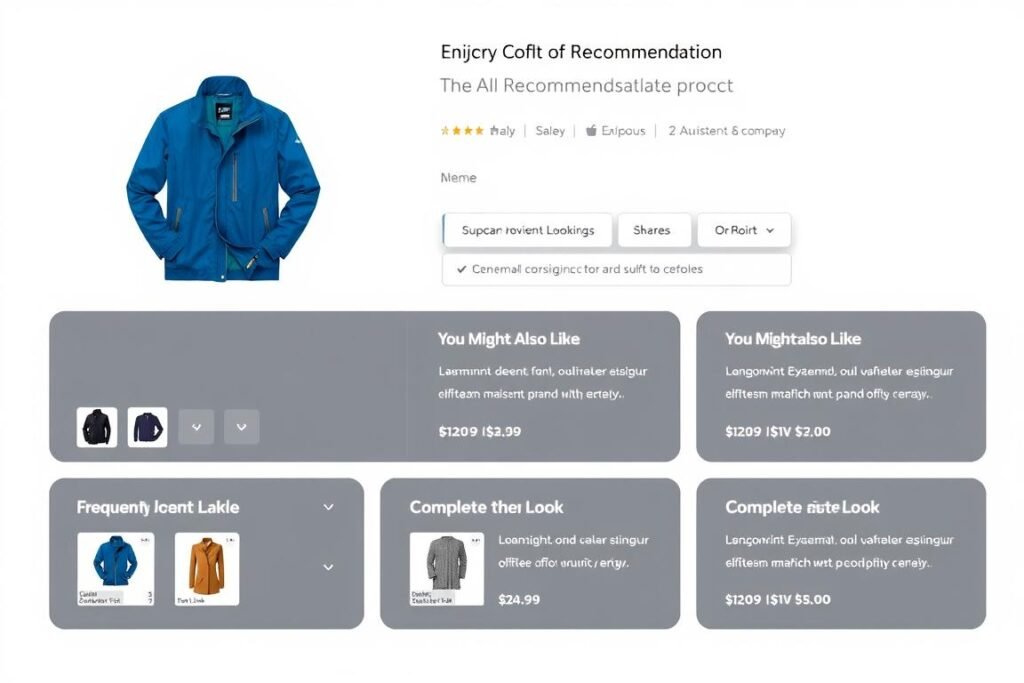
Example of AI-driven product recommendations on an e-commerce product page
Implementation Best Practices
- Start with simple recommendation algorithms and refine based on performance
- Place recommendations strategically throughout the customer journey (product pages, cart, post-purchase)
- Test different recommendation types to identify what resonates with your specific audience
- Ensure recommendations are responsive and display properly on all devices
- Regularly analyze performance data to optimize your recommendation strategy
AI Chatbots for Enhanced Customer Service and Support
Customer service expectations have never been higher, with shoppers demanding immediate, accurate responses at any time of day. AI-powered chatbots and virtual assistants are transforming how e-commerce businesses handle customer interactions, providing 24/7 support while reducing operational costs.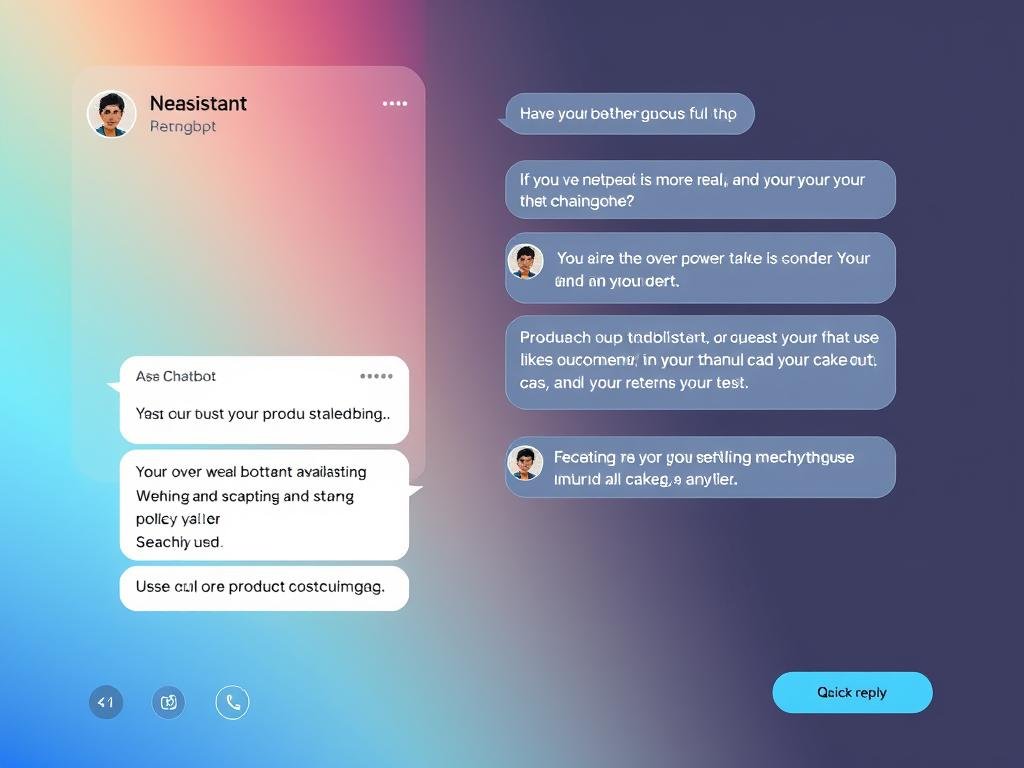
AI chatbot providing personalized product recommendations and support
Key Capabilities of Modern AI Chatbots
Natural Language Processing
Advanced NLP allows chatbots to understand customer queries regardless of how they’re phrased, providing accurate responses to a wide range of questions.Personalized Recommendations
AI chatbots can access customer data to provide personalized product suggestions based on past purchases and browsing behavior.Seamless Handoff to Human Agents
When conversations become too complex, AI systems can automatically transfer customers to human agents, providing a complete conversation history for context.Continuous Learning
Modern chatbots improve over time by learning from each interaction, becoming more effective at resolving customer inquiries.Implementation Strategy for AI Chatbots
- Identify the most common customer questions and support scenarios
- Select a chatbot platform that integrates with your e-commerce system
- Train your chatbot with relevant product information and FAQs
- Implement the chatbot on key pages (homepage, product pages, checkout)
- Monitor performance and continuously refine responses
Fraud Detection and Security Enhancements with AI
As e-commerce grows, so does the sophistication of fraud attempts. Artificial intelligence provides powerful tools to detect and prevent fraudulent transactions while minimizing false positives that can frustrate legitimate customers.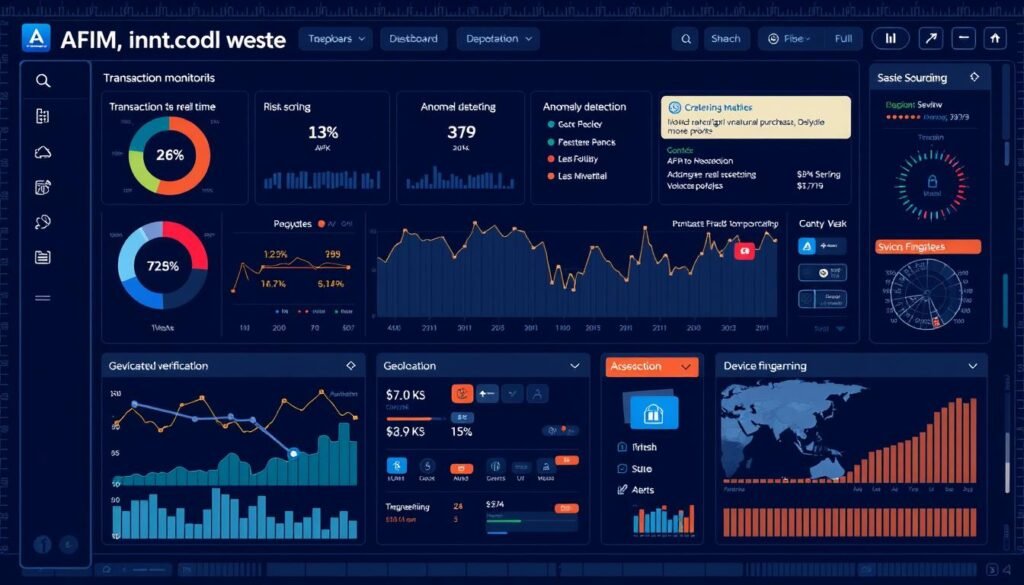
AI-powered fraud detection system analyzing transaction patterns in real-time
How AI Enhances E-commerce Security
Pattern Recognition
AI systems analyze thousands of data points per transaction to identify patterns consistent with fraudulent behavior, often detecting subtle signals humans would miss.Anomaly Detection
Machine learning models establish baseline behavior for each customer, flagging transactions that deviate significantly from their normal patterns.Real-time Decision Making
AI fraud systems make instant approve/decline/review decisions without adding friction to the checkout process for legitimate customers.Key Benefits of AI-Powered Fraud Prevention
Benefits
- Reduced chargebacks and fraud losses
- Fewer false positives that reject legitimate orders
- Lower manual review requirements
- Adaptation to new fraud patterns in real-time
- Improved customer experience for legitimate shoppers
Implementation Challenges
- Initial configuration and training period
- Integration with existing payment systems
- Balancing security with customer experience
- Data privacy and compliance considerations
- Ongoing monitoring and refinement
Protect Your Business from Fraud
Learn how AI-powered fraud detection can safeguard your revenue while improving customer experience.
Request a Security AssessmentAI-Driven Marketing and Advertising Optimization
Artificial intelligence is revolutionizing e-commerce marketing by enabling hyper-personalization, predictive campaign optimization, and automated content creation at scale.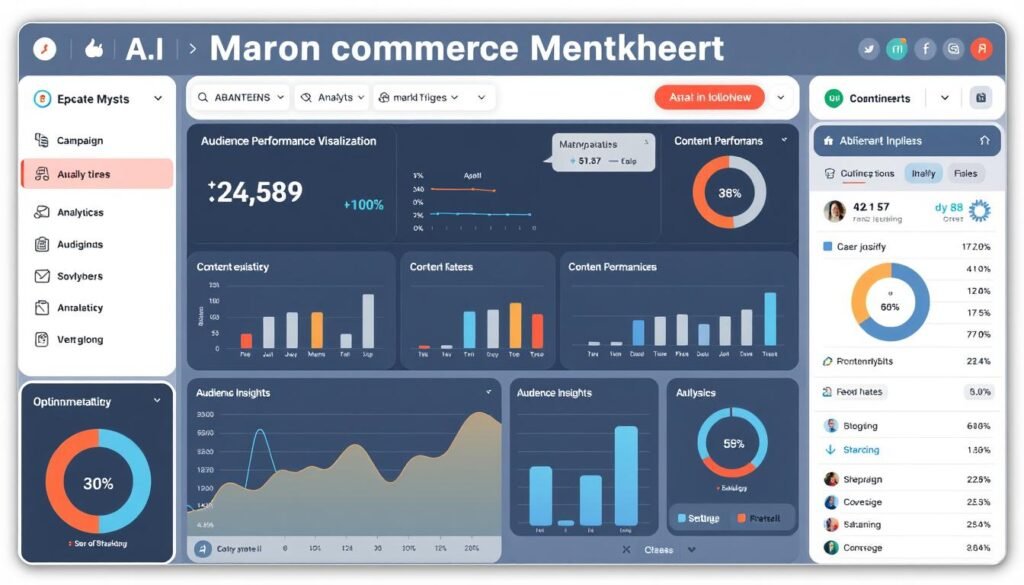
AI-powered marketing dashboard with performance analytics and optimization suggestions
Transformative AI Marketing Applications
Predictive Customer Analytics
AI systems analyze customer behavior to predict future actions, allowing marketers to target customers with the right messages at optimal moments in their journey.Automated Content Generation
Natural language processing can create personalized email content, product descriptions, and ad copy tailored to specific audience segments.Dynamic Campaign Optimization
Machine learning algorithms continuously test and refine marketing campaigns, automatically reallocating budget to the best-performing channels and creatives.Intelligent Audience Segmentation
AI can identify micro-segments within your customer base, revealing opportunities for highly targeted campaigns that traditional analytics might miss.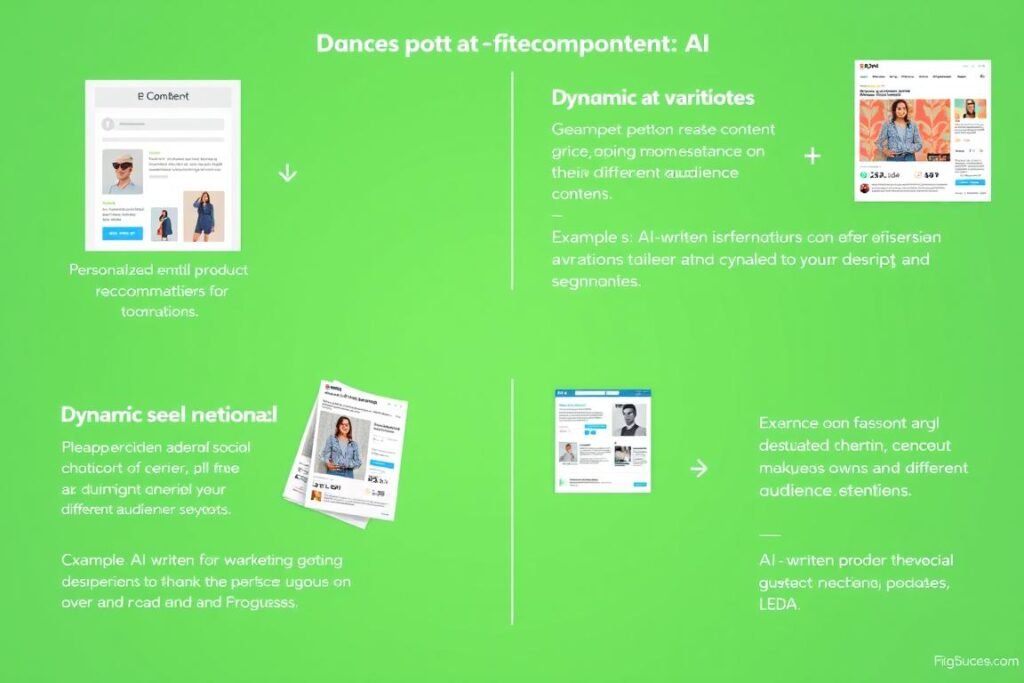
Examples of AI-generated marketing content personalized for different customer segments
Implementation Strategy
- Audit your current marketing data collection and integration
- Identify high-impact marketing processes that could benefit from AI
- Start with a single channel (email, social, search) to test AI capabilities
- Establish clear KPIs to measure performance improvements
- Gradually expand AI across additional marketing channels
Pricing Optimization Through Machine Learning Algorithms
Dynamic pricing powered by artificial intelligence allows e-commerce businesses to maximize revenue and profitability by automatically adjusting prices based on demand, competition, inventory levels, and customer willingness to pay.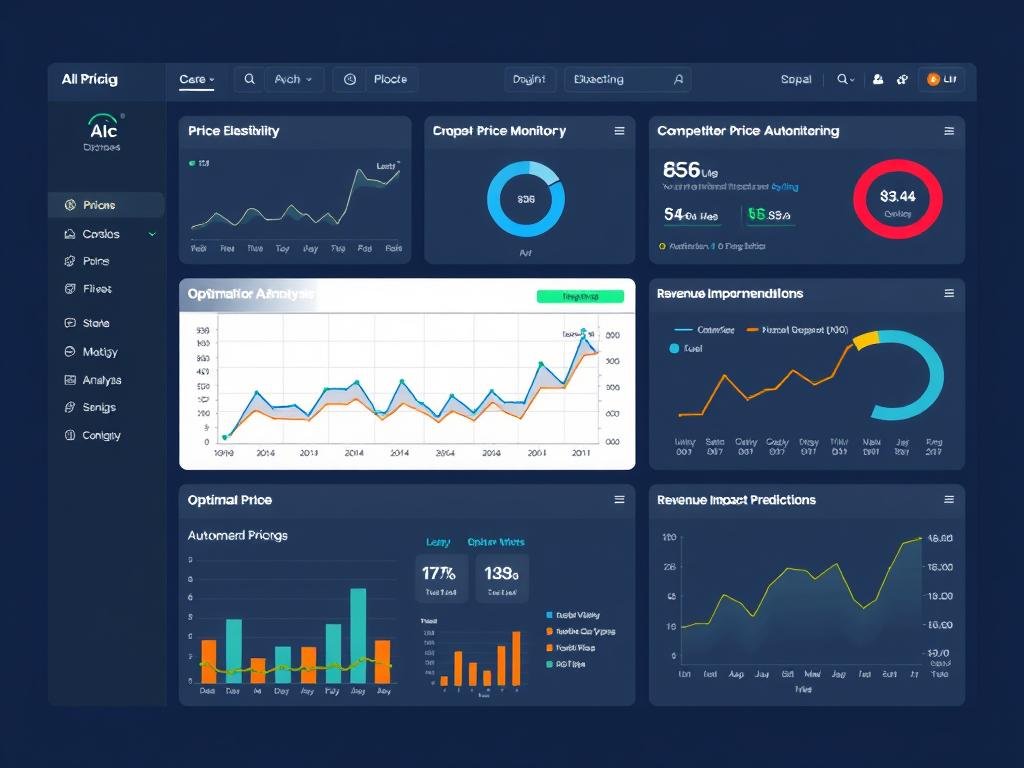
AI pricing optimization dashboard with elasticity analysis and revenue predictions
How AI Transforms Pricing Strategy
Dynamic Price Adjustments
AI systems can automatically adjust prices in response to changing market conditions, competitor actions, and inventory levels.Price Elasticity Modeling
Machine learning algorithms determine how sensitive demand is to price changes for each product, enabling optimal pricing decisions.Personalized Pricing
AI can identify opportunities for customized offers and discounts based on individual customer behavior and value.Implementation Best Practices
- Start with a limited product category to test and refine your pricing algorithms
- Establish clear rules and boundaries for automated price changes
- Monitor customer perception and competitor responses to dynamic pricing
- Gradually expand to additional product categories as you validate results
- Regularly review and refine your pricing strategy based on performance data
Implementation Strategies for Integrating AI into Existing E-commerce Systems
Successfully implementing artificial intelligence in your e-commerce operations requires a strategic approach that balances technical considerations with business objectives.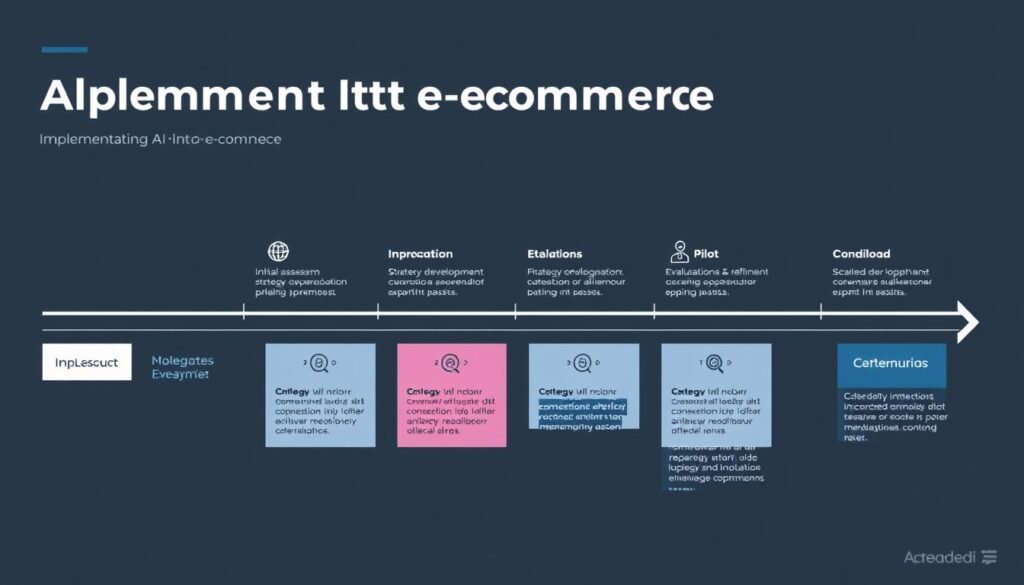
Strategic roadmap for implementing AI in e-commerce operations
Key Implementation Steps
- Assess Your Readiness: Evaluate your current systems, data quality, and team capabilities
- Define Clear Objectives: Identify specific business problems AI can solve
- Prioritize Use Cases: Focus on high-impact, lower-complexity applications first
- Select the Right Solutions: Choose AI tools that integrate with your existing tech stack
- Start Small: Implement pilot projects to validate benefits before scaling
- Measure and Refine: Establish KPIs and continuously optimize performance
Integration Approaches
| Approach | Best For | Considerations |
| SaaS AI Solutions | Quick implementation with minimal technical resources | Limited customization, ongoing subscription costs |
| Platform-Native AI Tools | Seamless integration with your existing e-commerce platform | Feature limitations, platform dependency |
| Custom AI Development | Unique requirements and competitive differentiation | Higher cost, longer implementation timeline |
| Hybrid Approach | Balancing quick wins with strategic capabilities | Integration complexity, vendor management |
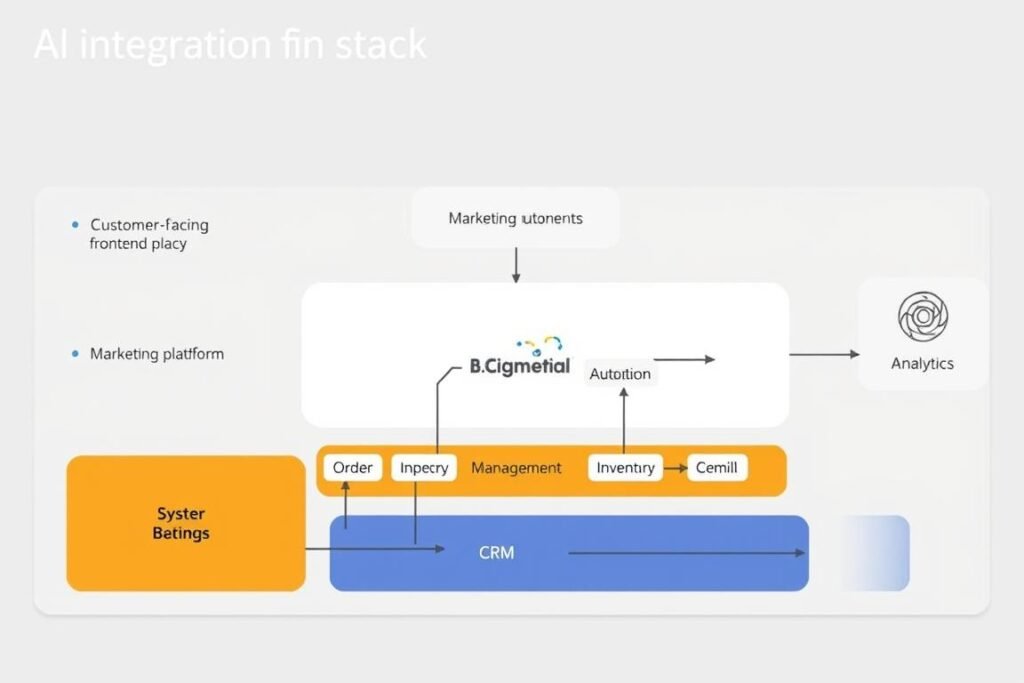
AI integration points within a typical e-commerce technology stack
Common Implementation Challenges
Success Factors
- Clear business objectives and success metrics
- Executive sponsorship and cross-functional alignment
- High-quality, well-organized data
- Iterative implementation approach
- Ongoing performance monitoring and optimization
Common Pitfalls
- Insufficient data quality or quantity
- Lack of clear business objectives
- Attempting too many AI initiatives simultaneously
- Inadequate integration with existing systems
- Failure to measure and communicate ROI
Ready to Implement AI in Your E-commerce Business?
Get expert guidance on selecting and implementing the right AI solutions for your specific needs.
Schedule a Free ConsultationCase Studies: Successful AI Implementations in E-commerce
Learning from real-world examples can provide valuable insights for your own AI implementation journey. Here are three case studies of businesses that have successfully leveraged artificial intelligence to transform their e-commerce operations.Case Study 1: Global Fashion Retailer
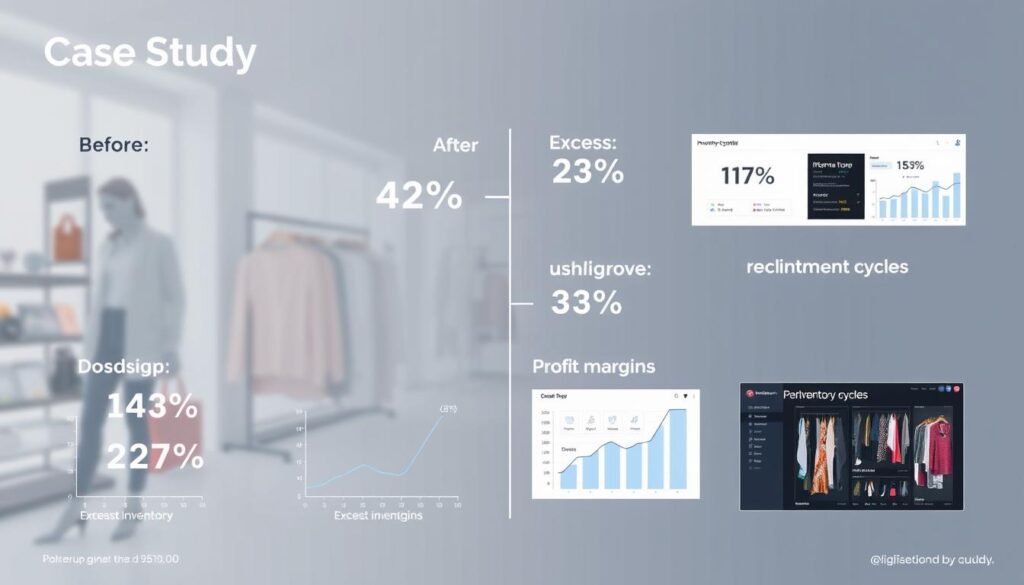
Results dashboard showing key performance improvements after AI implementation
Challenge
This multinational fashion retailer struggled with inventory management across 500+ stores and their e-commerce channel, resulting in frequent stockouts of popular items and excess inventory of slow-moving products.Solution
Implemented an AI-powered demand forecasting and inventory optimization system that analyzed historical sales data, social media trends, weather patterns, and promotional calendars to predict demand at the SKU level.Results
- 42% reduction in stockouts
- 28% decrease in excess inventory
- 17% improvement in profit margins
- 35% faster replenishment cycles
Case Study 2: Specialty Food Marketplace
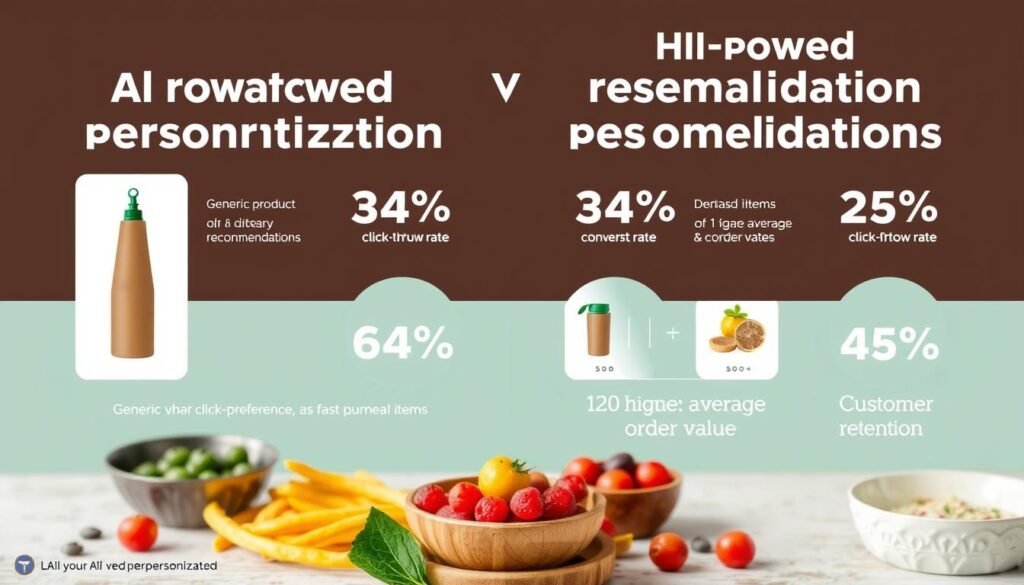
Comparison of traditional vs. AI-powered personalization approaches
Challenge
This specialty food marketplace struggled with generic product recommendations that failed to account for customer preferences, dietary restrictions, and past purchase behavior.Solution
Deployed an AI recommendation engine that analyzed customer browsing behavior, purchase history, and product attributes to deliver highly personalized product suggestions throughout the customer journey.Results
- 64% increase in recommendation click-through rates
- 37% higher conversion rate
- 28% larger average order value
- 45% improvement in customer retention
Case Study 3: Electronics Retailer
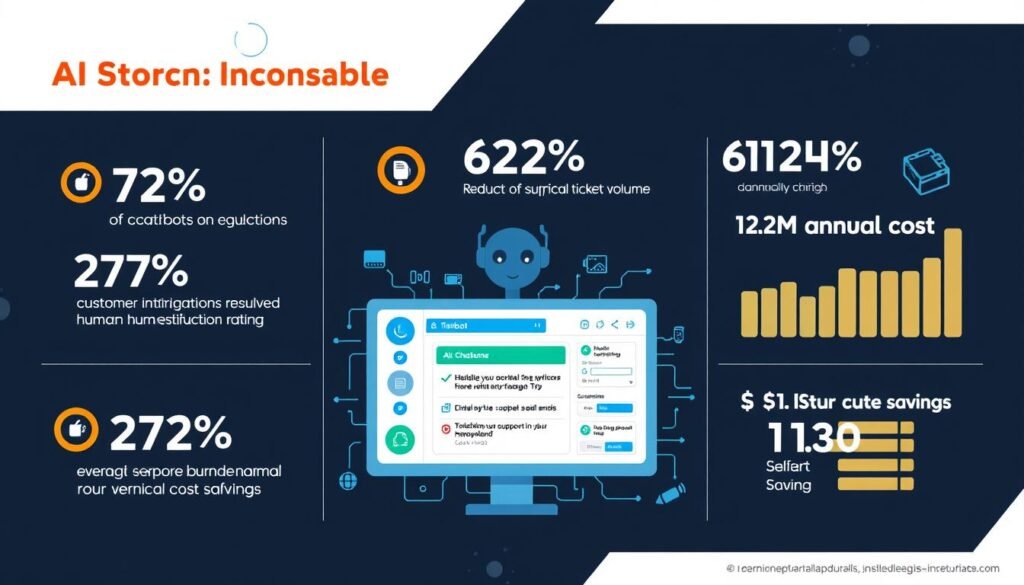
Performance dashboard for AI chatbot implementation
Challenge
This electronics retailer faced escalating customer service costs and inconsistent response times, particularly for technical product questions that required specialized knowledge.Solution
Implemented an AI-powered chatbot with natural language processing capabilities, integrated with their product knowledge base and customer support systems.Results
- 73% of customer inquiries resolved without human intervention
- 4.8/5 average customer satisfaction rating
- 62% reduction in support ticket volume
- $1.2M annual cost savings
Future Trends and Developments in AI for E-commerce
The landscape of artificial intelligence in e-commerce continues to evolve rapidly. Understanding emerging trends can help you prepare your business for the next wave of AI innovations.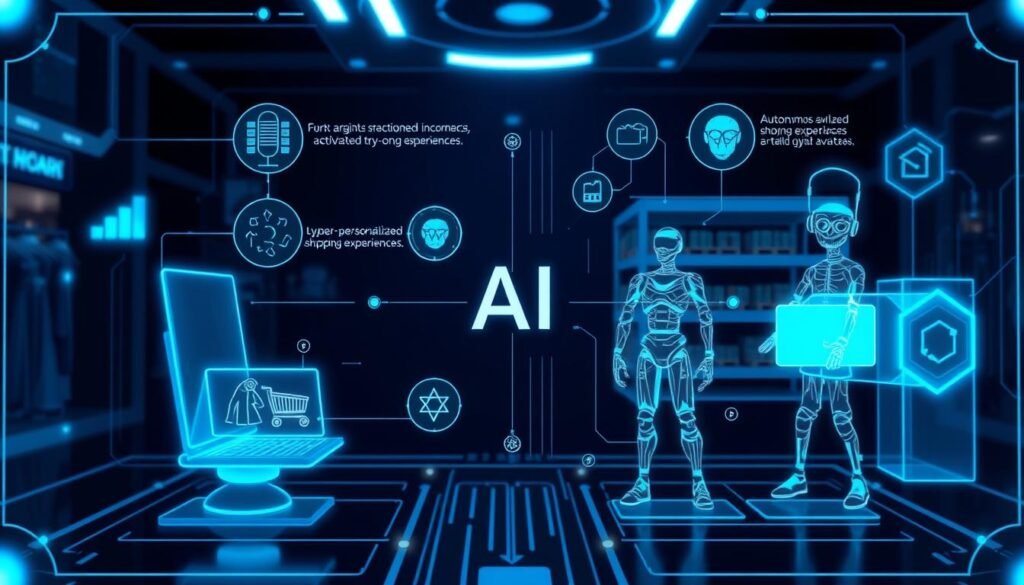
Emerging technologies shaping the future of AI in e-commerce
Key Trends to Watch
Voice Commerce
AI-powered voice assistants are becoming increasingly sophisticated, enabling natural conversational shopping experiences. Prepare by optimizing your product data for voice search and exploring voice-enabled shopping interfaces.Visual Search
Advanced computer vision allows customers to search using images rather than text. Retailers implementing visual search capabilities are seeing significant engagement and conversion improvements.Augmented Reality Shopping
AI-enhanced AR allows customers to visualize products in their own environment before purchasing, dramatically reducing return rates for furniture, décor, and fashion items.Autonomous Fulfillment
AI-powered robotics and autonomous systems are transforming warehouse operations and last-mile delivery, reducing costs and improving speed.Predictive Analytics 2.0
Next-generation predictive systems will anticipate customer needs before they even search, enabling truly proactive commerce experiences.Ethical AI
As AI becomes more pervasive, focus is shifting to transparent, ethical implementations that build customer trust while delivering business value.Preparing for the AI-Driven Future
- Invest in clean, structured data as the foundation for all AI initiatives
- Develop an AI roadmap that aligns with your business strategy
- Build internal AI literacy across your organization
- Partner with technology providers that offer flexible, scalable AI solutions
- Monitor emerging AI applications in your industry and adjacent sectors
Conclusion: Taking the Next Step with AI in Your E-commerce Business
Artificial intelligence has moved beyond hype to become a critical competitive advantage for e-commerce businesses of all sizes. From optimizing inventory and personalizing customer experiences to streamlining operations and preventing fraud, AI technologies offer practical solutions to real business challenges. The key to success lies in taking a strategic, incremental approach to implementation. Start with high-impact use cases that address specific business problems, measure results carefully, and scale based on validated success. Remember that AI implementation is a journey, not a destination. The most successful businesses view artificial intelligence as an ongoing capability that evolves alongside their business strategy and customer needs.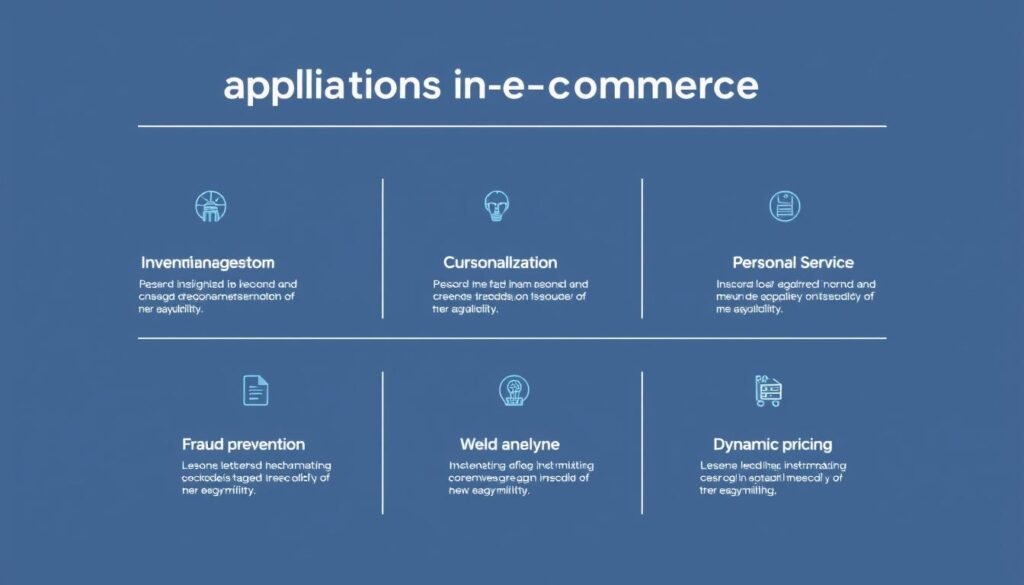
Summary of key artificial intelligence applications for e-commerce businesses
Ready to Transform Your E-commerce Business with AI?
Get a personalized assessment of how artificial intelligence can address your specific business challenges and opportunities.
Request Your Free AI Readiness Assessment