


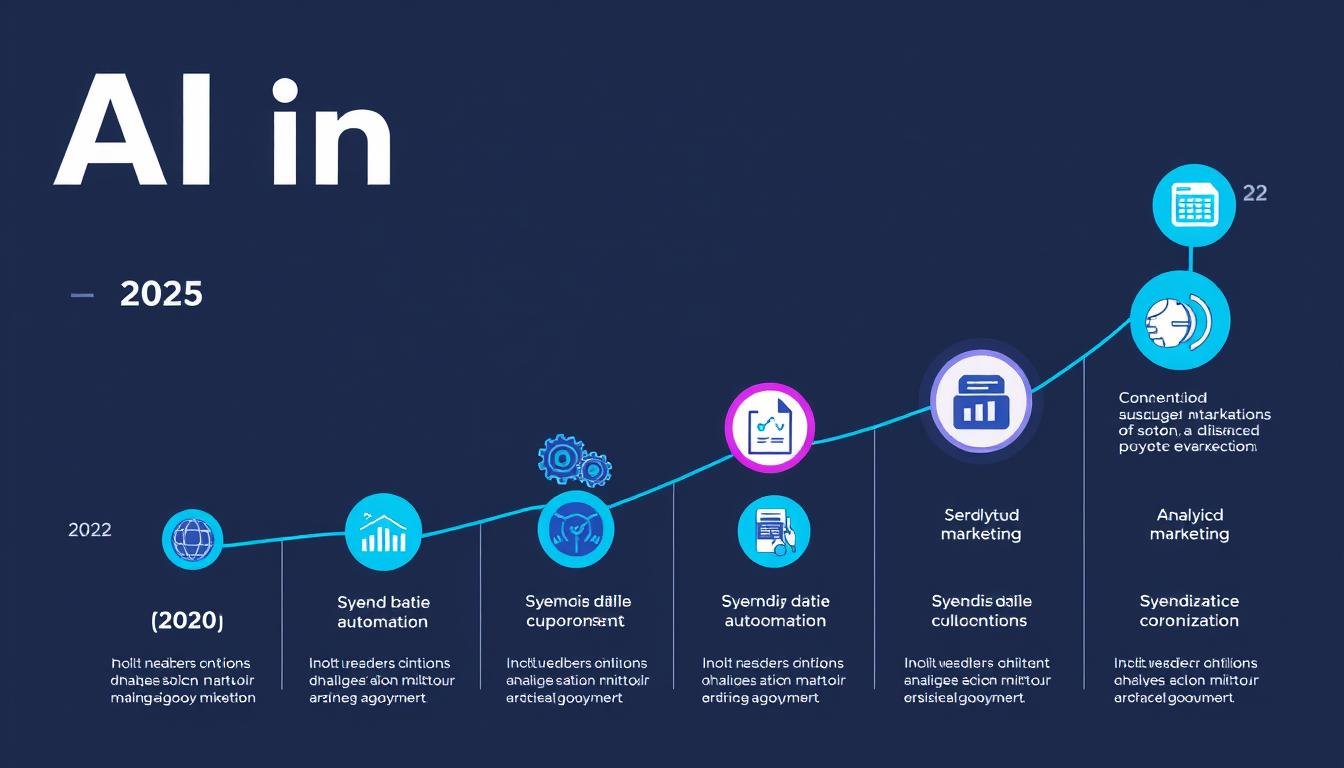

The marketing world has changed a lot with artificial intelligence leading the way. By 2025, AI marketing tools will no longer be just new ideas. They are key parts of good marketing plans.
These tools help businesses do simple tasks, understand customers better, make interesting content, and give personal experiences. They also help improve how well marketing works.
Marketers who use best AI marketing tools in 2025 get ahead of the game. This guide looks at the top AI marketing tools for 2025. It talks about what they do, their benefits, and how they can help your marketing.
The Evolution of AI in Marketing for 2025
The integration of AI in marketing has accelerated dramatically since 2023, with 2025 marking a pivotal year in adoption and sophistication. Today’s AI marketing tools leverage advanced machine learning algorithms, natural language processing, and predictive analytics to transform how businesses connect with their audiences.
Key trends driving AI marketing in 2025 include:
Hyper-personalization: AI now enables true one-to-one marketing at scale, analyzing thousands of data points to deliver precisely targeted content and offers. Generative AI maturity: Content creation tools have evolved beyond basic text generation to produce sophisticated, brand-aligned content across multiple formats. Predictive customer journey mapping: AI can now accurately forecast customer behavior and needs, allowing for proactive marketing interventions. Autonomous campaign optimization: Many platforms now automatically adjust campaigns in real-time based on performance data without human intervention.
Ethical AI frameworks: Leading tools now incorporate built-in safeguards for privacy, bias prevention, and ethical use of customer data. According to recent industry research, organizations implementing AI marketing tools in 2025 are seeing an average 32% increase in conversion rates and 27% reduction in customer acquisition costs. This significant performance improvement explains why 78% of marketing leaders now consider AI capabilities essential when evaluating new marketing technologies.
How We Selected the Best AI Marketing Tools for 2025 Our comprehensive evaluation process for identifying the top AI marketing tools in 2025 involved rigorous testing and analysis based on the following criteria:
Performance & Capabilities AI sophistication: Quality and accuracy of AI algorithms Feature depth: Comprehensive toolset for specific marketing functions Automation potential: Ability to reduce manual workload Learning curve: Ease of implementation and daily use Integration & Scalability Ecosystem compatibility: Integration with existing marketing stacks API flexibility: Options for custom connections and workflows Scalability: Performance with growing data volumes and user bases Future-readiness: Ongoing development and innovation roadmap Business Value ROI potential: Demonstrable return on investment Pricing structure: Value relative to cost and feature access Success stories: Documented results from real-world implementations Support quality: Available resources for implementation and troubleshooting User Experience Interface design: Intuitive navigation and workflow Accessibility: Usability for team members with varying technical skills Customization: Ability to adapt to specific business needs Training requirements: Learning resources and onboarding support Each tool in our list has been personally tested by our team of marketing technology experts, with additional input from industry professionals actively using these solutions. We’ve categorized the tools to help you quickly identify the best options for your specific marketing needs.
Best AI Tools for Content Creation
Content creation remains one of the most resource-intensive aspects of marketing. The following AI tools excel at generating high-quality content while significantly reducing production time and costs.
-
Jasper AI
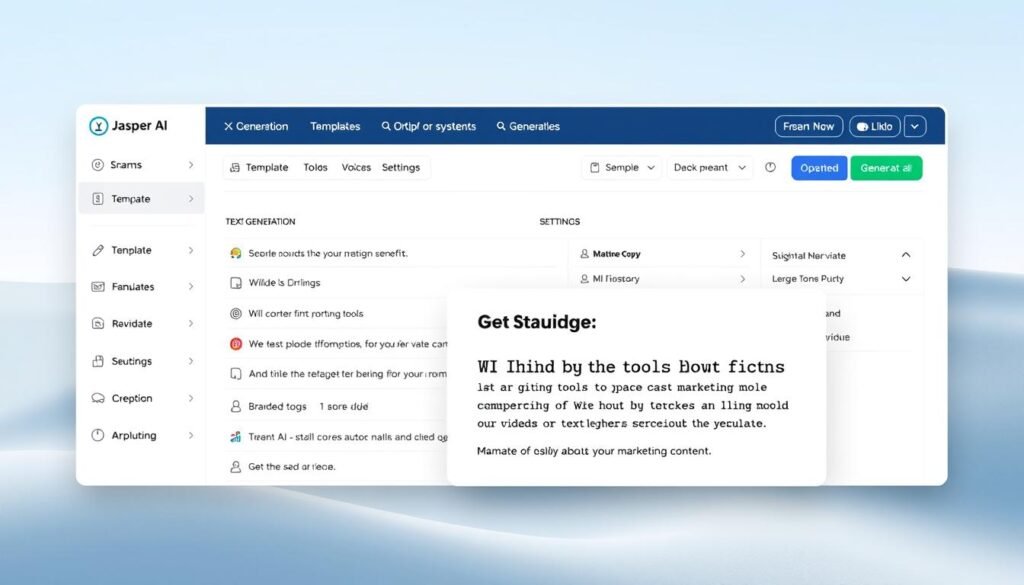
Jasper AI has established itself as the premier AI content creation platform for marketing teams. In 2025, it offers significantly improved capabilities for generating blog posts, social media content, ad copy, product descriptions, and email campaigns that align perfectly with brand voice.
Pros
- Advanced brand voice customization that maintains consistency across all content
- Over 50 specialized templates for different marketing content types
- Built-in SEO optimization with keyword integration and readability analysis
- Collaborative features for marketing teams to work together on content
- Plagiarism detection and factual accuracy verification
Cons
- Higher pricing tier compared to some competitors
- May require human editing for highly technical content
- Learning curve to master all advanced features
Jasper AI excels at maintaining brand consistency while scaling content production. The platform’s ability to learn from existing brand materials and improve over time makes it particularly valuable for growing marketing teams.
Pricing: Starts at $49/month for the Creator plan, with Business plans at $125/month. Enterprise pricing available for larger teams.
Ready to scale your content creation?
Try Jasper AI free for 7 days and experience how AI can transform your marketing content strategy.
2. ContentShake AI
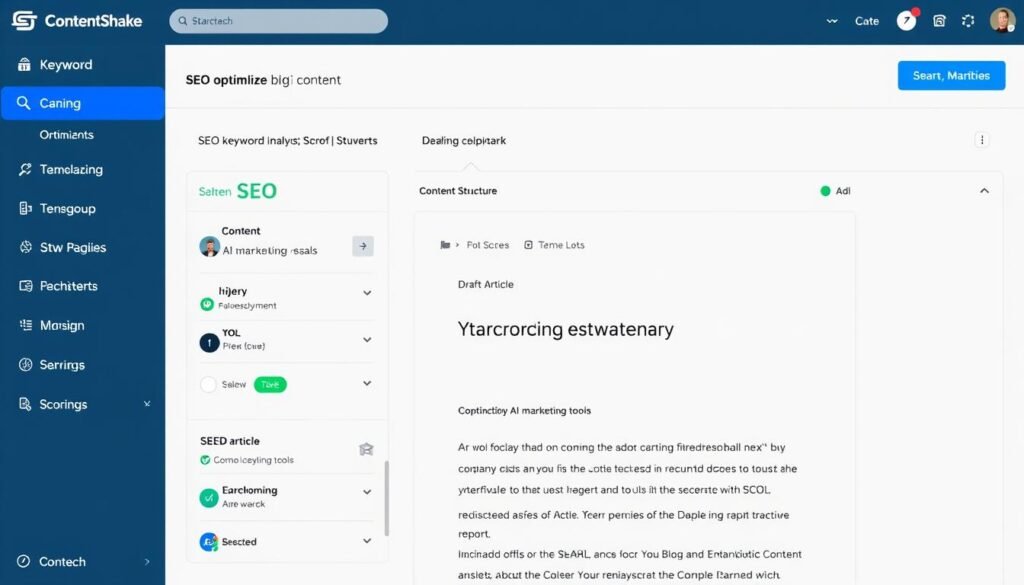
ContentShake AI combines SEO expertise with content generation, making it an excellent choice for marketing teams focused on organic traffic growth. The platform leverages Semrush’s extensive SEO data to create content that’s not just engaging but also optimized for search engines.
Pros
- Integrated SEO data from Semrush for keyword-optimized content
- Generates complete blog posts with proper structure and formatting
- Supports content creation in 7 languages for global marketing
- One-click publishing to WordPress and other CMS platforms
- Content scoring system to ensure quality and SEO performance
Cons
- More focused on blog content than other marketing formats
- Requires Semrush subscription for full functionality
- Limited customization for non-blog content types
ContentShake AI stands out for its ability to create SEO-optimized blog content that actually ranks. The integration with Semrush data provides a significant advantage for content marketers focused on organic traffic growth.
Pricing: Available as part of Semrush plans starting at $129.95/month, with dedicated ContentShake plans from $69/month.
3. Synthesia
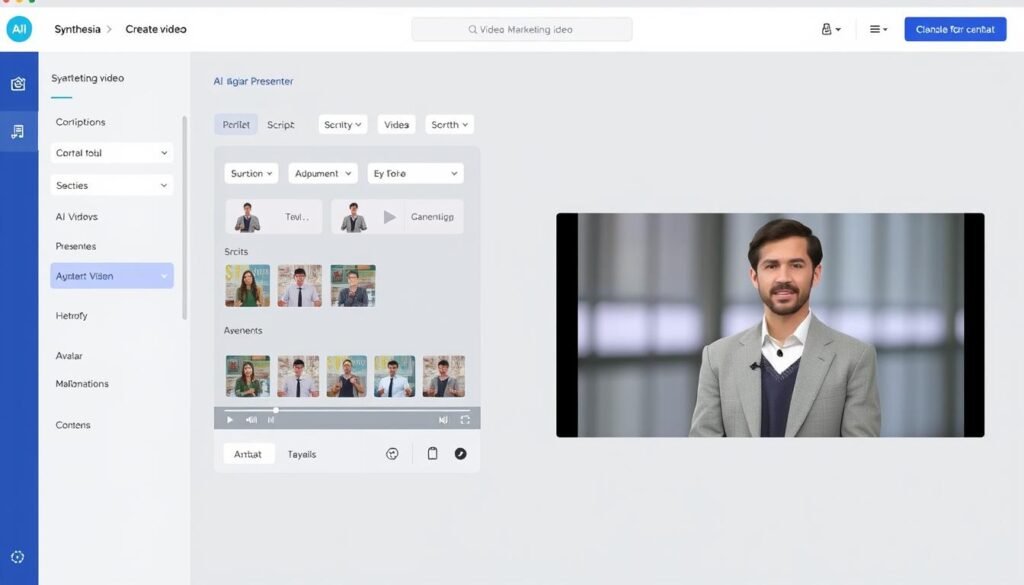
Synthesia has revolutionized video marketing by making professional video production accessible to all marketing teams. The platform allows you to create studio-quality videos with AI avatars speaking your script in over 140 languages, eliminating the need for traditional video production resources.
Pros
- Create professional videos by simply typing your script
- Over 230 diverse AI avatars and 140+ language options
- Custom avatar creation for brand consistency
- Extensive template library for different marketing video types
- No video equipment, studio, or editing skills required
Cons
- Limited to talking-head style videos
- Some avatars may still appear slightly synthetic
- Advanced customization requires higher-tier plans
Synthesia excels at democratizing video content creation, allowing marketing teams of any size to produce professional video content without specialized skills or equipment. It’s particularly valuable for creating product demos, explainer videos, and multilingual content.
Pricing: Free plan available with limited features. Paid plans start at $29/month.
Transform your video marketing strategy
Create your first AI video for free and see how Synthesia can revolutionize your marketing content.
Best AI Tools for Customer Insights and Analytics
Understanding your audience is fundamental to effective marketing. These AI tools excel at extracting actionable insights from customer data to inform your marketing strategy.
4. GWI Spark

GWI Spark leverages AI to transform market research, providing marketers with deep consumer insights based on proprietary survey data from nearly a million consumers across 50+ markets. Unlike tools that scrape public data, GWI Spark offers unique, high-quality insights you can’t find elsewhere.
Pros
- Access to proprietary consumer data not available on public sources
- Intuitive chat-based interface for asking complex research questions
- Custom chart generation for presentations and reports
- Real-time insights on consumer behavior and preferences
- Data-backed validation for marketing strategies and campaigns
Cons
- Higher price point than some analytics tools
- Learning curve to maximize the platform’s capabilities
- Limited historical data compared to some competitors
GWI Spark is particularly valuable for marketing teams needing reliable consumer insights for strategy development, content creation, and campaign planning. The platform’s ability to provide original, data-backed insights gives marketers a significant competitive advantage.
Pricing: Custom pricing based on organization size and needs. Contact for a demo.
5. Adobe Experience Platform
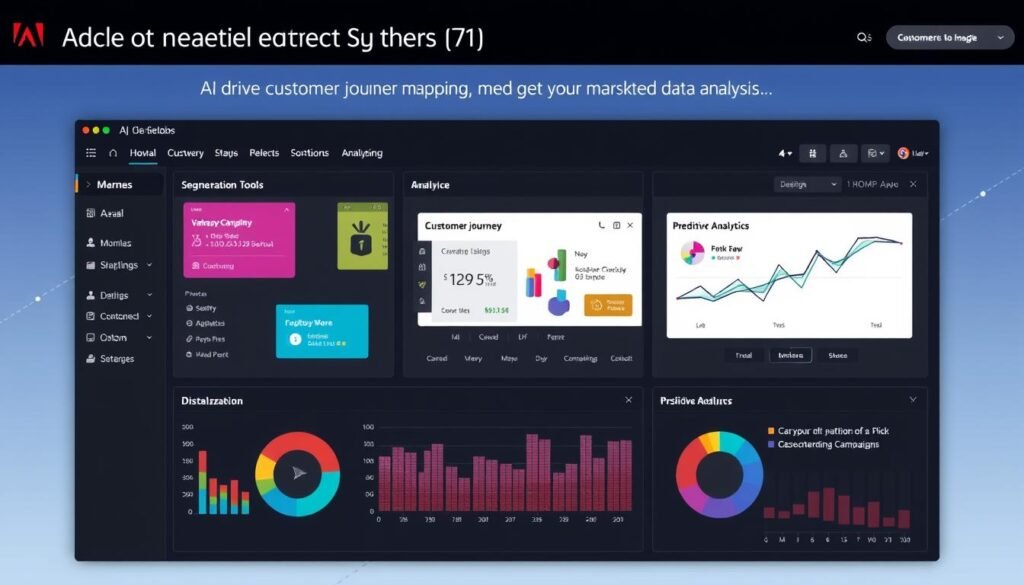
Adobe Experience Platform (AEP) stands as the enterprise gold standard for AI-driven customer data management and experience orchestration. The platform consolidates data from multiple sources to create comprehensive customer profiles that power personalized experiences across all touchpoints.
Pros
- Unified customer profiles combining data from all sources
- AI-powered segmentation and targeting capabilities
- Real-time personalization across all customer touchpoints
- Seamless integration with Adobe’s Creative Cloud and Marketing Cloud
- Enterprise-grade security and compliance features
Cons
- Significant investment required for full implementation
- Complex setup and configuration process
- Best suited for enterprise-level organizations
Adobe Experience Platform excels at creating unified customer experiences across all channels. Its AI capabilities, powered by Adobe Sensei, provide sophisticated pattern recognition and predictive insights that help marketers anticipate customer needs and behaviors.
Pricing: Enterprise pricing model. Contact Adobe for custom quotes.
Best AI Tools for Advertising
AI has revolutionized digital advertising by enabling more precise targeting, creative optimization, and campaign management. These tools represent the cutting edge of AI-powered advertising in 2025.
8. The Trade Desk
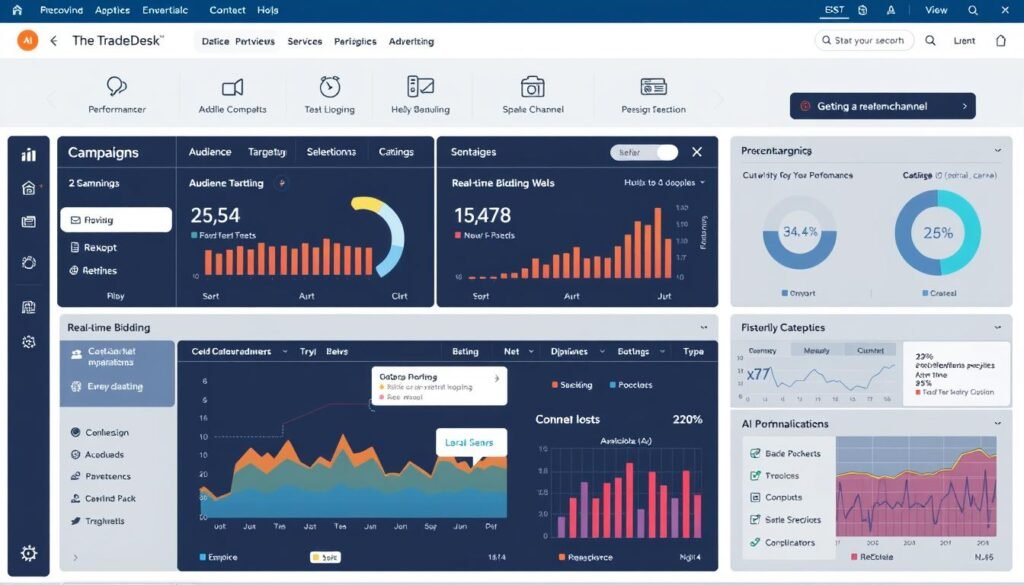
The Trade Desk has established itself as the leading AI-powered demand-side platform (DSP) for programmatic advertising. Its Koa AI technology enables advertisers to buy and optimize digital advertising across multiple channels with unprecedented precision and efficiency.
Pros
- Advanced AI-driven audience targeting and segmentation
- Cross-channel campaign optimization in real-time
- Predictive analytics for campaign performance
- Transparent reporting and attribution
- Extensive integration with data providers and marketing platforms
Cons
- Significant learning curve for new users
- Best suited for larger advertising budgets
- Requires dedicated management for optimal results
The Trade Desk excels at helping advertisers reach their target audiences across display, video, audio, and connected TV with AI-optimized campaigns. Its predictive capabilities and real-time optimization make it particularly valuable for complex, multi-channel advertising strategies.
Pricing: Custom pricing based on advertising spend. Contact for details.
9. AdCreative.ai
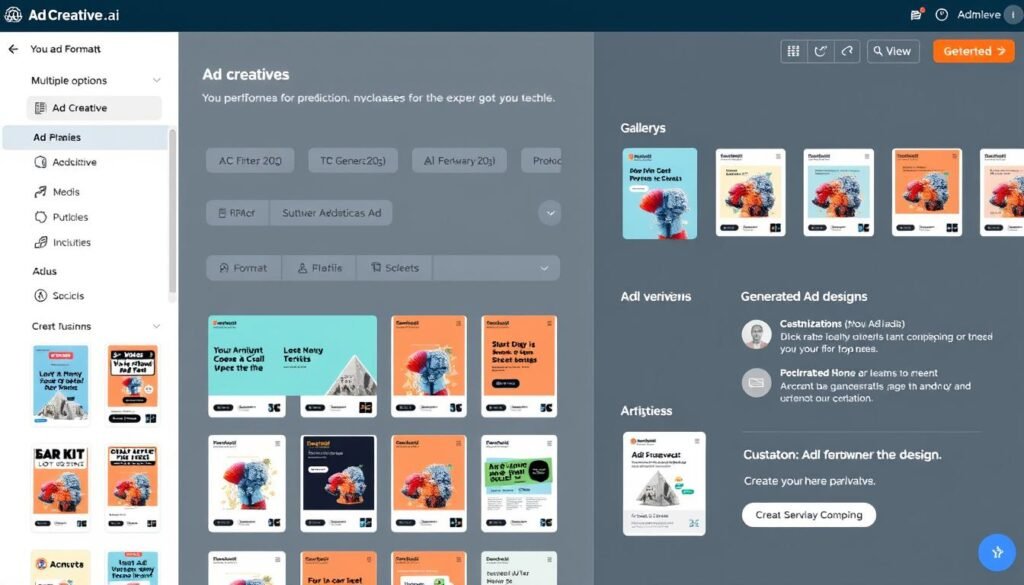
AdCreative.ai has transformed ad creative development with its AI-powered platform that generates and optimizes ad creatives for multiple platforms. The tool creates conversion-focused ads that consistently outperform human-designed alternatives in A/B testing.
Pros
- Generates high-converting ad creatives in seconds
- Platform-specific formats for Facebook, Instagram, Google, etc.
- Performance prediction before launching campaigns
- Brand customization and template creation
- Continuous improvement based on performance data
Cons
- Limited customization for highly specific brand guidelines
- Best results require some human direction and refinement
- Monthly creative limits on lower-tier plans
AdCreative.ai excels at eliminating the creative bottleneck in digital advertising. By generating multiple high-performing ad variations quickly, it allows marketers to test more creative approaches and optimize based on real performance data.
Pricing: Plans start at $29/month for basic features, with advanced capabilities available on higher tiers.
Supercharge your ad creative process
Try AdCreative.ai free and generate your first high-converting ads in minutes.
Best AI Tools for Email Marketing
Email remains one of the highest-ROI marketing channels, and AI has made it even more effective. These tools leverage artificial intelligence to optimize email campaigns for better engagement and conversion.
10. Klaviyo

Klaviyo has evolved into a comprehensive AI-powered email marketing platform particularly well-suited for ecommerce businesses. Its predictive analytics and customer data platform capabilities enable highly personalized email campaigns that drive significant revenue.
Pros
- AI-driven segmentation based on purchase behavior and engagement
- Predictive analytics for customer lifetime value and churn risk
- Dynamic content personalization at scale
- Automated flows for abandoned carts, welcome series, etc.
- Seamless integration with major ecommerce platforms
Cons
- Pricing scales with contact list size
- Primary focus on ecommerce may limit value for other industries
- Advanced features require technical implementation
Klaviyo excels at turning customer data into revenue-generating email campaigns. Its AI capabilities help marketers identify the right audience segments, optimal sending times, and most effective content for each customer.
Pricing: Free plan available for up to 250 contacts. Paid plans start at $20/month and scale with list size.
11. ActiveCampaign
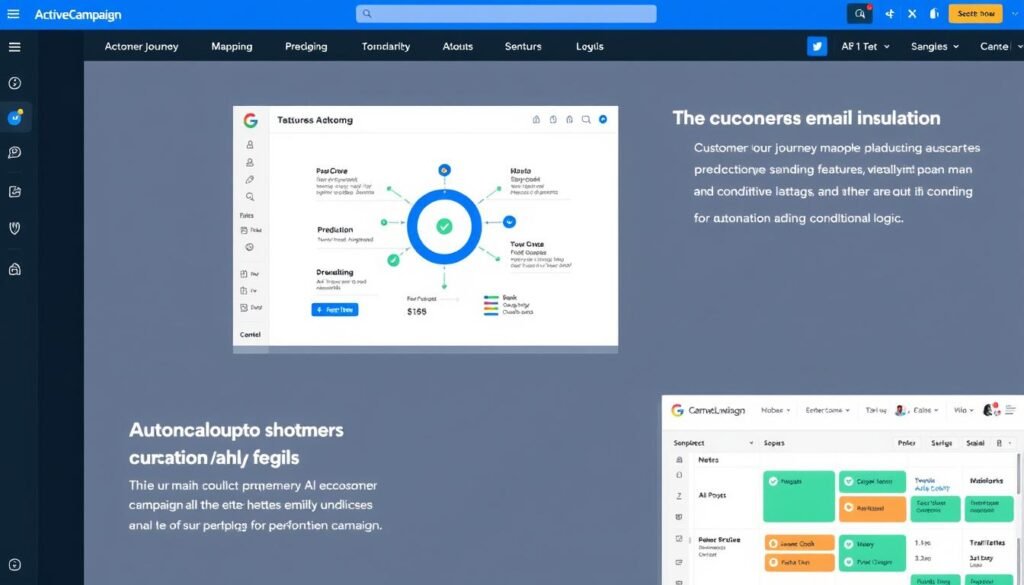
ActiveCampaign combines email marketing, marketing automation, and CRM capabilities with powerful AI features. Its predictive sending, content optimization, and automated segmentation capabilities make it a versatile tool for businesses of all types.
Pros
- Predictive sending determines optimal delivery time for each recipient
- AI-powered content recommendations for higher engagement
- Automated customer journey mapping and optimization
- Advanced segmentation based on behavior and attributes
- Over 900 integrations with other marketing tools
Cons
- Complex automation builder has learning curve
- Higher pricing than basic email platforms
- Some advanced features require technical setup
ActiveCampaign excels at creating personalized customer experiences through intelligent automation. Its AI capabilities help marketers deliver the right message to the right person at the right time, driving higher engagement and conversion rates.
Pricing: Plans start at $29/month (billed annually) for up to 1,000 contacts, with features and price increasing with list size and plan tier.
Best AI Tools for Marketing Analytics
Data-driven decision making is essential for modern marketing success. These AI tools help marketers extract actionable insights from their marketing data to optimize performance and ROI.
12. Triple Whale
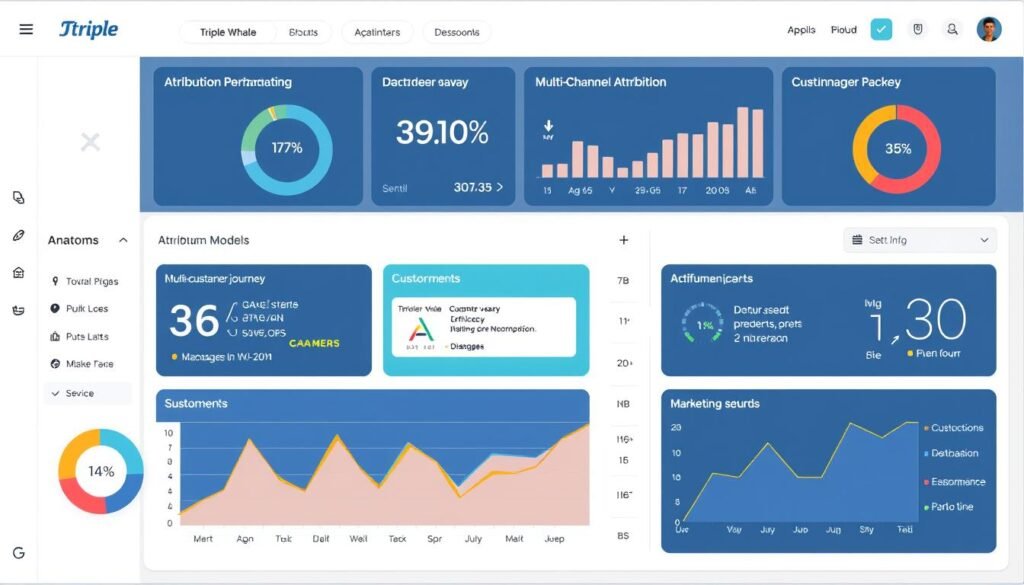
Triple Whale has emerged as the leading AI-powered analytics and attribution platform for ecommerce brands. It brings data from multiple ad networks and marketing channels into one place, providing clear visibility into marketing performance and ROI.
Pros
- AI-driven attribution modeling across all marketing channels
- Unified dashboard for all marketing and sales data
- Predictive analytics for campaign performance
- Customer journey tracking and analysis
- Real-time performance monitoring and alerts
Cons
- Primarily focused on ecommerce businesses
- Higher pricing point for small businesses
- Some advanced features require technical implementation
Triple Whale excels at solving the attribution challenge for ecommerce marketers. Its AI capabilities provide accurate insights into which marketing channels and campaigns are driving revenue, enabling more effective budget allocation and optimization.
Pricing: Plans start at $99/month for basic features, with advanced capabilities available on higher tiers.
13. Tableau with Einstein AI
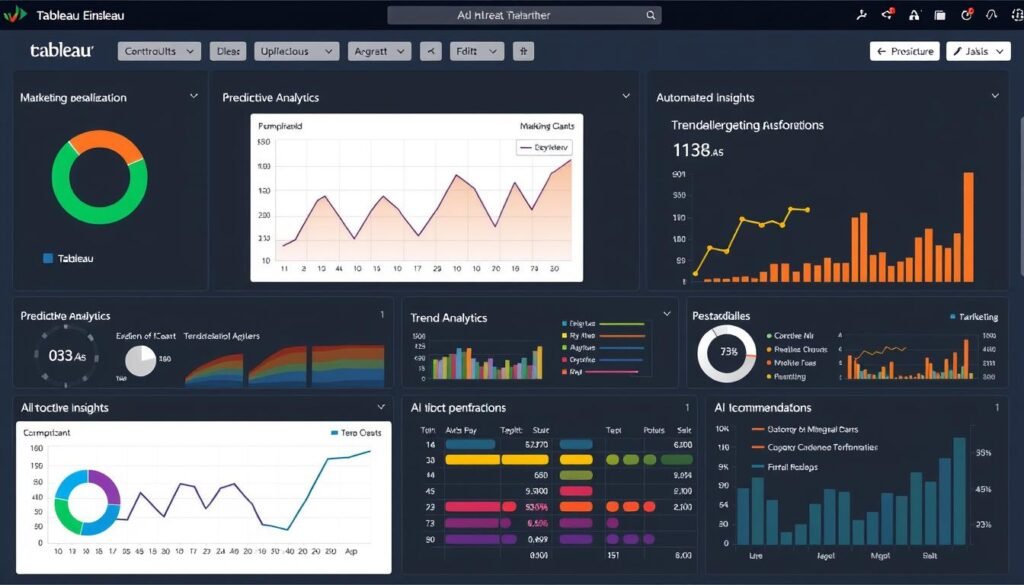
Tableau’s integration with Einstein AI has transformed this popular data visualization platform into a powerful predictive analytics tool for marketers. The combination provides not just visualization of what happened but AI-powered insights into why it happened and what will likely happen next.
Pros
- AI-powered data analysis and insight generation
- Natural language queries for data exploration
- Predictive forecasting for marketing metrics
- Automated anomaly detection and alerting
- Beautiful, interactive visualizations for reporting
Cons
- Significant learning curve for advanced features
- Higher price point than basic analytics tools
- May require data preparation for optimal results
Tableau with Einstein AI excels at making complex marketing data accessible and actionable. Its AI capabilities help marketers identify trends, spot opportunities, and make data-driven decisions without requiring advanced analytical skills.
Pricing: Tableau Creator licenses start at $70/user/month, with Einstein AI features available at additional cost.
Transform your marketing analytics
Try Tableau with Einstein AI free for 14 days and discover insights you’ve been missing.
Best AI Tools for Marketing Automation
Marketing automation has evolved significantly with AI integration. These tools help marketers create sophisticated, personalized customer journeys with minimal manual intervention.
14. HubSpot Marketing Hub
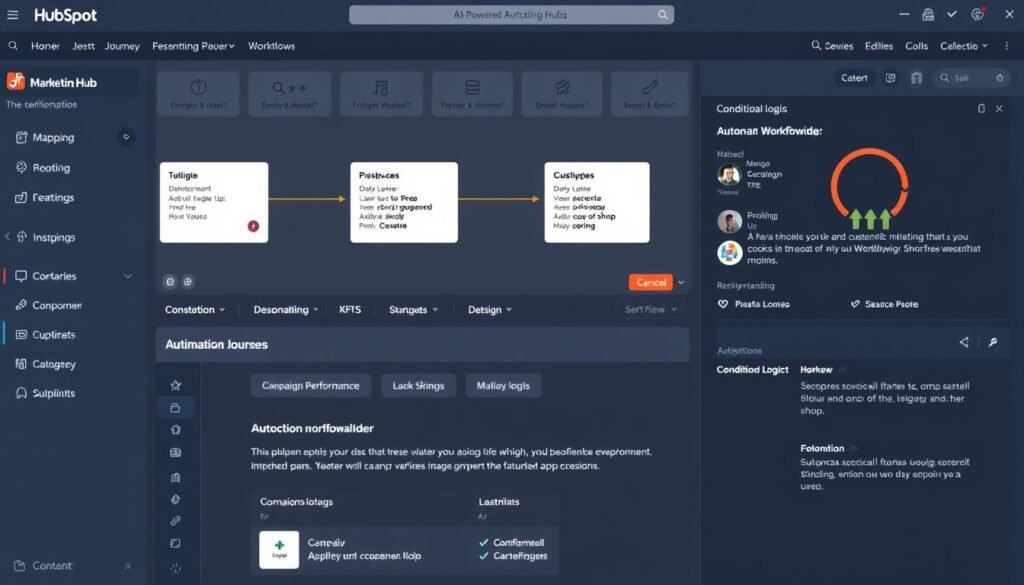
HubSpot’s Marketing Hub has integrated advanced AI capabilities throughout its platform, making it a comprehensive solution for AI-powered marketing automation. From content creation to lead scoring and campaign optimization, AI enhances every aspect of the marketing workflow.
Pros
- AI-powered content suggestions and optimization
- Predictive lead scoring and qualification
- Automated customer journey mapping and optimization
- Personalization at scale across all marketing channels
- Seamless integration with HubSpot CRM and Sales Hub
Cons
- Advanced AI features require higher-tier plans
- Significant investment for full platform capabilities
- Complex setup for sophisticated automation workflows
HubSpot Marketing Hub excels at providing an integrated, AI-enhanced marketing platform that grows with your business. Its comprehensive capabilities make it particularly valuable for companies looking to consolidate their marketing technology stack.
Pricing: Starter plan begins at $20/month, with Professional ($890/month) and Enterprise ($3,600/month) plans offering advanced AI features.
15. Gumloop
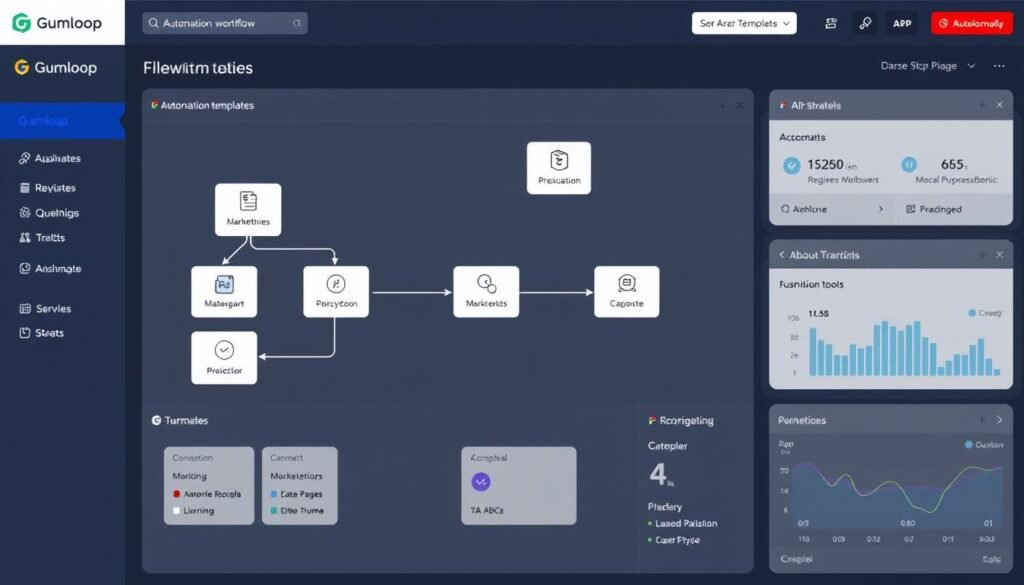
Gumloop has emerged as a powerful AI automation platform that connects any LLM model (like GPT-4, Claude, Grok) to your internal tools and workflows without coding. It’s essentially Zapier with an AI layer, allowing marketers to create sophisticated automations powered by artificial intelligence.
Pros
- Built-in access to latest AI models without API keys
- Powerful web and app scraping capabilities
- Continuous AI agents that run automatically
- Clean, intuitive user interface
- Extensive integration options with marketing tools
Cons
- Newer platform with evolving feature set
- Advanced workflows require strategic planning
- Limited community resources compared to established tools
Gumloop excels at creating AI-powered workflows that automate complex marketing tasks. Its ability to connect AI models directly to your marketing tools opens up new possibilities for automation and efficiency.
Pricing: Free plan available with generous limits. Paid plans start at $29/month with discount code MARKETERMILK for 20% off.
Comparison of the Best AI Marketing Tools in 2025
To help you choose the right AI marketing tools for your specific needs, we’ve created this comprehensive comparison table highlighting key features, pricing, and best use cases.
| Tool | Category | Key AI Features | Pricing | Best For | Ease of Use |
| Jasper AI | Content Creation | Brand voice customization, SEO optimization, factual accuracy | From $49/month | Marketing teams scaling content production | 4.7/5 |
| ContentShake AI | Content Creation | SEO-optimized content, structure suggestions, multilingual support | From $69/month | SEO-focused content marketing | 4.5/5 |
| Synthesia | Video Creation | AI avatars, 140+ languages, template library | Free plan; from $29/month | Video content without production resources | 4.8/5 |
| GWI Spark | Customer Insights | Proprietary consumer data, chat interface, custom charts | Custom pricing | Market research and audience insights | 4.3/5 |
| Adobe Experience Platform | Customer Insights | Unified customer profiles, real-time personalization | Enterprise pricing | Enterprise omnichannel marketing | 3.8/5 |
| Brandwatch | Social Media | Sentiment analysis, trend tracking, crisis management | Custom pricing | Social listening and brand monitoring | 4.2/5 |
| Hootsuite with Einstein AI | Social Media | Content recommendations, optimal posting times | From $99/month | Social media management and optimization | 4.6/5 |
| The Trade Desk | Advertising | Audience targeting, cross-channel optimization | Custom pricing | Programmatic advertising at scale | 3.9/5 |
| AdCreative.ai | Advertising | Ad creative generation, performance prediction | From $29/month | Ad creative optimization | 4.7/5 |
| Klaviyo | Email Marketing | Predictive analytics, segmentation, personalization | Free plan; from $20/month | Ecommerce email marketing | 4.4/5 |
| ActiveCampaign | Email Marketing | Predictive sending, content optimization | From $29/month | Marketing automation across channels | 4.1/5 |
| Triple Whale | Analytics | Attribution modeling, unified dashboard | From $99/month | Ecommerce marketing analytics | 4.3/5 |
| Tableau with Einstein AI | Analytics | Predictive analytics, natural language queries | From $70/user/month | Data visualization and insights | 4.0/5 |
| HubSpot Marketing Hub | Automation | Content suggestions, lead scoring, personalization | From $20/month | Integrated marketing platform | 4.5/5 |
| Gumloop | Automation | LLM integration, continuous AI agents | Free plan; from $29/month | Custom AI marketing workflows | 4.6/5 |
How to Choose the Right AI Marketing Tool for Your Business in 2025

Selecting the right AI marketing tools requires careful consideration of your specific business needs, goals, and constraints. Follow this framework to make informed decisions:
1. Identify Your Primary Marketing Challenges
Begin by clearly defining the marketing challenges you’re trying to solve. Are you struggling with content creation efficiency? Need better customer insights? Looking to optimize ad spend? The specific problems you’re facing should guide your tool selection.
2. Assess Your Technical Capabilities
Evaluate your team’s technical skills and capacity for implementing new tools. Some AI platforms require significant technical expertise for setup and management, while others offer more user-friendly interfaces. Choose tools that align with your team’s capabilities or budget for additional support.
3. Consider Integration Requirements
Examine how new AI tools will fit into your existing marketing technology stack. Prioritize solutions that offer seamless integration with your current CRM, analytics, content management, and communication platforms to avoid creating data silos.
4. Evaluate ROI Potential
Calculate the potential return on investment for each tool by considering:
- Time savings from automation and efficiency improvements
- Potential revenue increases from improved targeting and conversion
- Cost reductions in existing processes or tools that could be replaced
- Implementation and ongoing maintenance costs
5. Start Small and Scale
Consider beginning with one or two high-impact AI tools rather than overhauling your entire marketing stack at once. This approach allows you to demonstrate value, build internal expertise, and expand your AI capabilities gradually.
Pro Tip: Many AI marketing tools offer free trials or limited free plans. Take advantage of these opportunities to test different solutions before committing to paid subscriptions. This hands-on experience is invaluable for determining which tools truly meet your needs.
6. Prioritize Data Privacy and Ethics
Ensure that any AI marketing tools you adopt comply with relevant data privacy regulations and align with ethical AI practices. Review the vendor’s data handling policies, security measures, and commitment to responsible AI use.
7. Consider Scalability
Select tools that can grow with your business. Will the platform support your needs as your customer base expands? Can it handle increasing data volumes? Does the pricing model allow for cost-effective scaling?
Need help selecting the right AI marketing tools?
Subscribe to our newsletter for expert guidance on building your optimal AI marketing stack for 2025 and beyond.
Frequently Asked Questions About AI Marketing Tools
Is AI replacing human marketers?
No, AI is augmenting human marketers rather than replacing them. AI excels at processing large volumes of data, identifying patterns, automating repetitive tasks, and generating content at scale. However, human marketers remain essential for strategy development, creative direction, emotional intelligence, ethical oversight, and interpreting AI insights within broader business contexts.
The most successful marketing teams in 2025 are those that effectively combine human creativity and strategic thinking with AI-powered efficiency and data analysis. This collaboration allows marketers to focus on higher-value activities while leveraging AI for execution and optimization.
What industries benefit most from AI marketing tools?
While all industries can benefit from AI marketing tools, those seeing the most significant impact include:
- E-commerce: Personalized product recommendations, customer journey optimization, and dynamic pricing
- Financial services: Customer segmentation, personalized financial advice, and compliance-friendly content
- Healthcare: Patient education content, personalized health communications, and regulatory-compliant marketing
- Travel and hospitality: Dynamic pricing, personalized travel recommendations, and seasonal demand forecasting
- SaaS and technology: Lead scoring, content personalization, and customer success prediction
Industries with large customer datasets, complex customer journeys, and high content demands typically see the greatest ROI from AI marketing tools.
How much should I budget for AI marketing tools in 2025?
Budget allocation for AI marketing tools varies widely based on business size, industry, and specific needs. As a general guideline:
- Small businesses (under
Frequently Asked Questions About AI Marketing Tools
Is AI replacing human marketers?
No, AI is augmenting human marketers rather than replacing them. AI excels at processing large volumes of data, identifying patterns, automating repetitive tasks, and generating content at scale. However, human marketers remain essential for strategy development, creative direction, emotional intelligence, ethical oversight, and interpreting AI insights within broader business contexts.
The most successful marketing teams in 2025 are those that effectively combine human creativity and strategic thinking with AI-powered efficiency and data analysis. This collaboration allows marketers to focus on higher-value activities while leveraging AI for execution and optimization.
What industries benefit most from AI marketing tools?
While all industries can benefit from AI marketing tools, those seeing the most significant impact include:
- E-commerce: Personalized product recommendations, customer journey optimization, and dynamic pricing
- Financial services: Customer segmentation, personalized financial advice, and compliance-friendly content
- Healthcare: Patient education content, personalized health communications, and regulatory-compliant marketing
- Travel and hospitality: Dynamic pricing, personalized travel recommendations, and seasonal demand forecasting
- SaaS and technology: Lead scoring, content personalization, and customer success prediction
Industries with large customer datasets, complex customer journeys, and high content demands typically see the greatest ROI from AI marketing tools.
How much should I budget for AI marketing tools in 2025?
Budget allocation for AI marketing tools varies widely based on business size, industry, and specific needs. As a general guideline:
- Small businesses (under $1M revenue): 5-10% of marketing budget, focusing on 1-3 core AI tools
- Mid-sized businesses ($1M-$10M revenue): 10-15% of marketing budget, implementing 3-5 specialized AI tools
- Enterprise businesses ($10M+ revenue): 15-25% of marketing budget, deploying comprehensive AI marketing suites
Many AI marketing tools offer tiered pricing based on usage, making them accessible to businesses of all sizes. Start with tools that address your most pressing marketing challenges and expand your AI capabilities as you demonstrate ROI.
How can I measure the ROI of AI marketing tools?
Measuring the ROI of AI marketing tools requires tracking both direct and indirect benefits:
- Time savings: Track hours saved on tasks like content creation, campaign optimization, and reporting
- Performance improvements: Measure increases in key metrics like conversion rates, click-through rates, and engagement
- Cost reductions: Calculate savings from reduced ad spend waste, lower customer acquisition costs, and consolidated tools
- Revenue impact: Attribute revenue increases to specific AI-powered campaigns and initiatives
Establish baseline metrics before implementing AI tools and regularly compare performance to these benchmarks. Many AI platforms include built-in analytics that help quantify their impact on your marketing results.
What skills do marketers need to work effectively with AI tools?
To maximize the value of AI marketing tools, marketers should develop the following skills:
- Data literacy: Understanding data sources, quality, and interpretation
- Prompt engineering: Crafting effective instructions for generative AI tools
- Critical thinking: Evaluating AI outputs and recommendations
- Systems thinking: Understanding how different tools and data sources interact
- Ethical awareness: Recognizing potential biases and ethical implications of AI use
- Adaptability: Willingness to continuously learn as AI capabilities evolve
Many AI tool providers offer training resources, certifications, and communities to help marketers develop these skills. Investing in AI literacy for your marketing team is essential for successful implementation.
M revenue):
5-10% of marketing budget, focusing on 1-3 core AI tools
- Mid-sized businesses (
Frequently Asked Questions About AI Marketing Tools
Is AI replacing human marketers?
No, AI is augmenting human marketers rather than replacing them. AI excels at processing large volumes of data, identifying patterns, automating repetitive tasks, and generating content at scale. However, human marketers remain essential for strategy development, creative direction, emotional intelligence, ethical oversight, and interpreting AI insights within broader business contexts.
The most successful marketing teams in 2025 are those that effectively combine human creativity and strategic thinking with AI-powered efficiency and data analysis. This collaboration allows marketers to focus on higher-value activities while leveraging AI for execution and optimization.
What industries benefit most from AI marketing tools?
While all industries can benefit from AI marketing tools, those seeing the most significant impact include:
- E-commerce: Personalized product recommendations, customer journey optimization, and dynamic pricing
- Financial services: Customer segmentation, personalized financial advice, and compliance-friendly content
- Healthcare: Patient education content, personalized health communications, and regulatory-compliant marketing
- Travel and hospitality: Dynamic pricing, personalized travel recommendations, and seasonal demand forecasting
- SaaS and technology: Lead scoring, content personalization, and customer success prediction
Industries with large customer datasets, complex customer journeys, and high content demands typically see the greatest ROI from AI marketing tools.
How much should I budget for AI marketing tools in 2025?
Budget allocation for AI marketing tools varies widely based on business size, industry, and specific needs. As a general guideline:
- Small businesses (under $1M revenue): 5-10% of marketing budget, focusing on 1-3 core AI tools
- Mid-sized businesses ($1M-$10M revenue): 10-15% of marketing budget, implementing 3-5 specialized AI tools
- Enterprise businesses ($10M+ revenue): 15-25% of marketing budget, deploying comprehensive AI marketing suites
Many AI marketing tools offer tiered pricing based on usage, making them accessible to businesses of all sizes. Start with tools that address your most pressing marketing challenges and expand your AI capabilities as you demonstrate ROI.
How can I measure the ROI of AI marketing tools?
Measuring the ROI of AI marketing tools requires tracking both direct and indirect benefits:
- Time savings: Track hours saved on tasks like content creation, campaign optimization, and reporting
- Performance improvements: Measure increases in key metrics like conversion rates, click-through rates, and engagement
- Cost reductions: Calculate savings from reduced ad spend waste, lower customer acquisition costs, and consolidated tools
- Revenue impact: Attribute revenue increases to specific AI-powered campaigns and initiatives
Establish baseline metrics before implementing AI tools and regularly compare performance to these benchmarks. Many AI platforms include built-in analytics that help quantify their impact on your marketing results.
What skills do marketers need to work effectively with AI tools?
To maximize the value of AI marketing tools, marketers should develop the following skills:
- Data literacy: Understanding data sources, quality, and interpretation
- Prompt engineering: Crafting effective instructions for generative AI tools
- Critical thinking: Evaluating AI outputs and recommendations
- Systems thinking: Understanding how different tools and data sources interact
- Ethical awareness: Recognizing potential biases and ethical implications of AI use
- Adaptability: Willingness to continuously learn as AI capabilities evolve
Many AI tool providers offer training resources, certifications, and communities to help marketers develop these skills. Investing in AI literacy for your marketing team is essential for successful implementation.
M-M revenue):
10-15% of marketing budget, implementing 3-5 specialized AI tools
- Enterprise businesses (M+ revenue): 15-25% of marketing budget, deploying comprehensive AI marketing suites
Many AI marketing tools offer tiered pricing based on usage, making them accessible to businesses of all sizes. Start with tools that address your most pressing marketing challenges and expand your AI capabilities as you demonstrate ROI.
How can I measure the ROI of AI marketing tools?
Measuring the ROI of AI marketing tools requires tracking both direct and indirect benefits:
- Time savings: Track hours saved on tasks like content creation, campaign optimization, and reporting
- Performance improvements: Measure increases in key metrics like conversion rates, click-through rates, and engagement
- Cost reductions: Calculate savings from reduced ad spend waste, lower customer acquisition costs, and consolidated tools
- Revenue impact: Attribute revenue increases to specific AI-powered campaigns and initiatives
Establish baseline metrics before implementing AI tools and regularly compare performance to these benchmarks. Many AI platforms include built-in analytics that help quantify their impact on your marketing results.
What skills do marketers need to work effectively with AI tools?
To maximize the value of AI marketing tools, marketers should develop the following skills:
- Data literacy: Understanding data sources, quality, and interpretation
- Prompt engineering: Crafting effective instructions for generative AI tools
- Critical thinking: Evaluating AI outputs and recommendations
- Systems thinking: Understanding how different tools and data sources interact
- Ethical awareness: Recognizing potential biases and ethical implications of AI use
- Adaptability: Willingness to continuously learn as AI capabilities evolve
Many AI tool providers offer training resources, certifications, and communities to help marketers develop these skills. Investing in AI literacy for your marketing team is essential for successful implementation.
AI Marketing Trends Beyond 2025
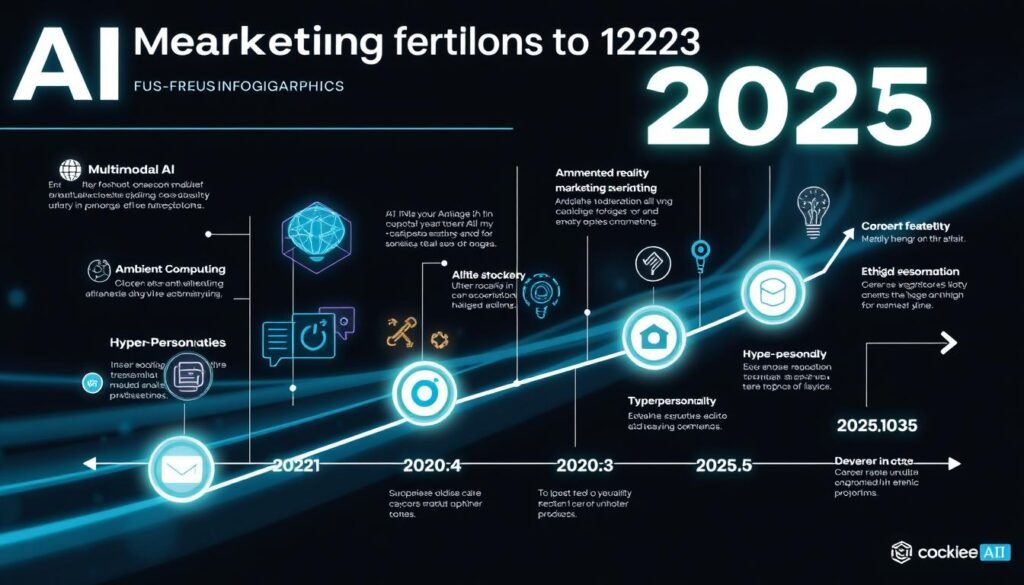
As we look beyond 2025, several emerging trends will shape the future of AI in marketing:
Multimodal AI Marketing
AI systems will increasingly work across text, image, video, and audio simultaneously, creating truly integrated marketing experiences. This multimodal approach will enable more natural interactions with customers and more sophisticated content creation capabilities.
Ambient Computing in Marketing
Marketing will extend beyond screens to ambient computing environments, with AI orchestrating seamless experiences across smart homes, vehicles, wearables, and public spaces. This will create new opportunities for contextual marketing that feels helpful rather than intrusive.
Augmented Reality Marketing
As AR devices become mainstream, AI will power immersive marketing experiences that blend digital content with the physical world. Virtual try-ons, interactive product demonstrations, and location-based experiences will transform how consumers discover and evaluate products.
Predictive Experience Design
AI will evolve from reactive to truly predictive, anticipating customer needs before they’re expressed. This will enable proactive marketing that delivers solutions at precisely the right moment in the customer journey.
Ethical AI Frameworks
As AI becomes more powerful, ethical considerations will move from optional to essential. Marketing platforms will incorporate robust frameworks for privacy, consent, transparency, and fairness, with regulatory compliance built into their core functionality.
“The future of AI in marketing isn’t just about automation and efficiency—it’s about creating more human, more helpful, and more meaningful connections between brands and customers. The technology will become increasingly invisible, while the experiences it enables will become more visible and valuable.”
Organizations that embrace these emerging trends while maintaining a focus on customer value and ethical practices will be well-positioned to thrive in the AI-powered marketing landscape beyond 2025.
Conclusion: Building Your AI Marketing Stack for 2025
The best AI marketing tools in 2025 offer unprecedented capabilities to understand customers, create compelling content, optimize campaigns, and measure results. By strategically implementing these tools, marketers can achieve significant improvements in efficiency, personalization, and performance.
Remember that successful AI implementation is not just about the technology—it’s about how these tools enhance your marketing strategy and customer relationships. Start with clear objectives, choose tools that address your specific challenges, and continuously measure the impact on your marketing results.
As AI continues to evolve, stay informed about emerging capabilities and best practices. The organizations that thrive will be those that effectively combine human creativity and strategic thinking with AI-powered efficiency and insights.
Transform your marketing with AI
Ready to leverage the power of AI in your marketing strategy? Start with a free trial of one of our top recommended tools.
We are reader-supported. We may earn an affiliate commission
When you buy through links on our site.

Best AI Tools for Social Media Marketing
Social media management has become increasingly complex. These AI tools help marketers optimize their social presence, engage audiences more effectively, and measure performance accurately.
6. Brandwatch
Brandwatch has evolved into the premier AI-powered social listening and analytics platform. It helps marketing teams monitor brand mentions, track sentiment, identify emerging trends, and understand audience perceptions across social media and the broader web.
Pros
Cons
Brandwatch excels at providing deep social insights that inform content strategy, campaign planning, and brand positioning. Its AI capabilities help marketers stay ahead of conversations and trends that impact their brand.
Pricing: Custom pricing based on needs and scale. Contact for a demo.
7. Hootsuite with Einstein AI
Hootsuite’s integration with Einstein AI has transformed this familiar social media management platform into a powerful AI-driven marketing tool. The platform now offers intelligent content recommendations, optimal posting times, and automated performance optimization.
Pros
Cons
Hootsuite with Einstein AI is ideal for marketing teams looking to enhance their existing social media workflow with intelligent automation and optimization. The familiar interface combined with powerful AI capabilities makes it accessible for teams of all sizes.
Pricing: Plans start at $99/month, with Einstein AI features available on Professional plans and above.
Elevate your social media strategy
Try Hootsuite with Einstein AI free for 30 days and see how AI can transform your social media performance.
Start Free Trial